
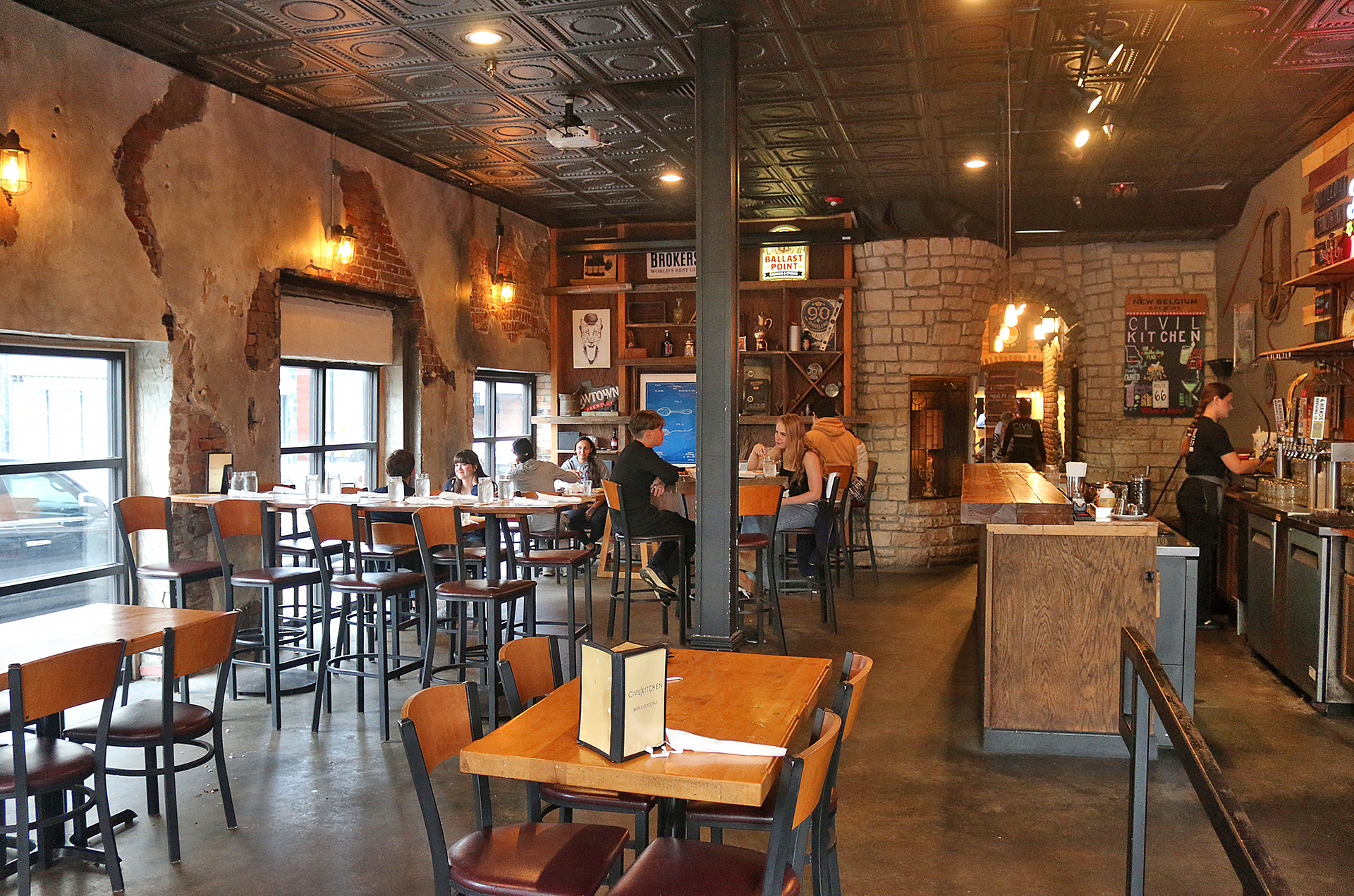

Dining is an inherent part of the travel experience — but challenges are on the plate for the future of restaurants, which are facing a long arduous road ahead of them.
Challenges Are On The Plate For The Future of Restaurants
The headroom between revenue and cost is shrinking for restaurants despite increases in sales and traffic, according to the 2026 Independent Restaurant Industry Report — which was released yesterday, Monday, February 23, 2026 by both The James Beard Foundation and Deloitte — which means that not much elasticity is left for dining establishments to simply increase prices because guests are spending less money on dining for various reasons.
Many independent restaurants are especially vulnerable to weathering the bleaker times that confront them, as independent restaurants which raised the prices of items on their menus by greater than ten percent in 2025 were more likely to see their profits decline because diners are becoming more sensitive to the cost of dining out. If the price of the main entrée increases significantly enough, the customer may compensate by either deferring on ordering extra items; or ordering fewer of those extra items, which could include appetizers, alcoholic beverages, extra side dishes, and desserts in order to save money.
Furthermore, the rapid proliferation of the use of glucagon-like peptide-1 — or GLP-1 — receptor agonists has resulted in some diners reducing their food and beverage intake overall. Approximately twelve percent of adults in the United States claim that they are taking GLP-1 weight-loss drugs. Food manufacturers and restaurant chains have already been forced to rethink their offerings because of the ever-growing popularity of weight-loss drugs — and with the approval of a GLP-1 pill that is both more affordable and more accessible, the changes could potentially further ramp up.
This trend unfortunately signals that raising prices on items on the menu can only go so far as being the only way to offset inflation on the cost of food, increases in labor in terms of salaries and benefits, and the volatility of supply chains. For some restaurants, the ceiling has already been reached with regard to the ability to increase prices further on their menu items. Aggressively increasing prices could result in compressing traffic during which total profitability can suffer despite an increase in revenue per guest. The owners of restaurants are forced to conjure strategies and plans that could help future-proof their businesses.
According to the aforementioned report:
- 60 percent of restaurants that were the best performers cited experiential dining and community-driven dining as a key influence on their operations — meaning that customers were seeking more than just going to a restaurant, eating a meal, and then leaving
- 45 percent of restaurants that incorporated the approach of experiential dining and community-driven dining by their operators reported increases in the volume of customers — as compared to 36 percent who did not incorporate that approach
What this could potentially mean for you is that your favorite restaurants in the United States may be forced to cut costs and change your experiences of dining at them — or risk going out of business altogether.
Final Boarding Call
I find myself dining out less these days because I usually do not believe I am getting value for my money. Costs are high, service is fairly good to mediocre, the ambiance is not always conducive to enjoying a meal, and the quality of the food just does not seem to be as good in general. I like to leave a restaurant feeling satisfied and content — yet I find that that has been occurring fewer times lately for many of the aforementioned reasons, which may be why I do not enjoy dining out as much as I used to enjoy it in the past.
Restaurants can no longer solely increase the prices on their menu items in order to survive — let alone profit — as that strategy by itself will no longer fix the profit and loss picture to gain a competitive advantage. They must:
- Incorporate a sharper strategy in terms of their menus so that items have greater appeal and a better perception of value to customers
- Apply leaner operations with greater discipline and control over tightening their costs — such as the following items that are defined as the primary drivers of margins:
- Reducing waste
- Improve optimization of labor
- Menu engineering
- Procurement strategy
- Offer smarter scheduling that is more convenient to customers while sacrificing as little cost as possible
- Strengthen the aspect of community into the dining experience so that guests actually do feel like guests who belong in the dining establishment — such as:
- Intentionally building one-to-one relationships with local guests and followers
- Activating restaurant spaces for “pop-ups” and community events outside of normal operating hours
- Publishing plans for the community on a regular basis in order to demonstrate sustained engagement
- Embrace, build, and better cultivate the loyalty of their guests
Loyalty of their guests: does that sound familiar? How many times have you gone out of your way to patronize an airline, a lodging company, a rental car company, or some other entity in the travel industry because the perceived loyalty aspect of a membership program? Although the membership programs of companies in the travel industry no longer feel like a loyalty programs, what measures and incentives would result in you being more loyal to certain restaurants?
Restaurants must figure out ways to increase the experience which has perceived value to attract diners, who are fatigued by paying $20.00 for an uninspiring small hamburger with lackluster service in a noisy environment — and people are becoming significantly more frustrated with the generally annoying practice of leaving gratuities in the United States. I would not be the least bit surprised if the increasingly aggressive tactics of scoring higher gratuities have turned off a number of customers in recent years.
For servers who believe that the customers they serve should be required to leave an increased amount for a gratuity for the meal they enjoyed or stay home…
…well…be careful what you wish for, for that wish just may come true…
Photograph ©2025 by Brian Cohen.
