
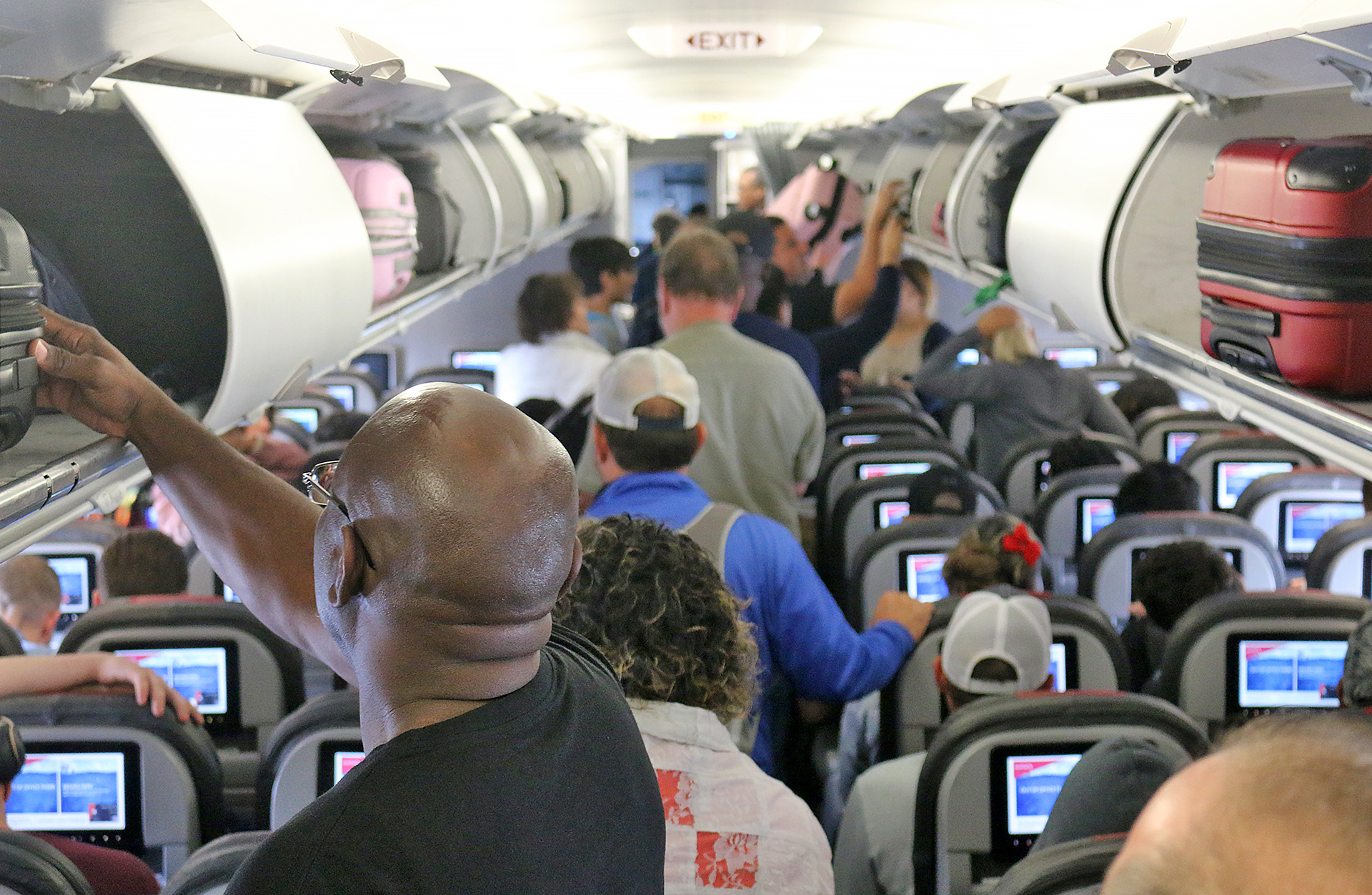

Note: This article pertaining to How to Get Off the Airplane and Through Customs and Immigration in 12 Minutes? Yeah, Right… was originally published on Sunday, November 23, 2014 at 1:10 in the afternoon and has been updated.
During the final approach of the airplane which is about to land on the runway at your destination airport, your mind probably cannot help after living on an airplane for sixteen straight hours but think about how you can leave the airplane and get through the airport as quickly as possible.
How to Get Off the Airplane and Through Customs and Immigration in 12 Minutes? Yeah, Right…
This article on how to get off of the airplane by Hanya Yanagihara of Condé Nast Traveller magazine purports to help you do just that in six easy steps:
- Get ready
- Have everything within reach
- Bolt
- Run like…well…I will say heck here
- Take advantage of any people-movers
- Be alert
In my opinion, I found the description to the Bolt part to border on obnoxious, which was somewhat admitted by the writer:
“Once the seatbelt sign goes off, get into the aisle and scoot as far ahead as you can. This is sort of obnoxious, but on the other hand, you’re keeping the traffic moving and not blocking the lane out of some misguided and antiquated sense of politeness. No one benefits from your dawdling.”
Although the author acknowledges that sometimes “there’s no quick way to make it through immigration: Different airports have gluts of incoming flights at different times of day, and short of rearranging your flight schedule to ensure you’ll land at a low-traffic hour, there’s nothing you can do”, other factors are missing from the article if you really must exit the aircraft and get through the customs and immigration area as quickly as possible.
1. Choose an Aisle Seat.
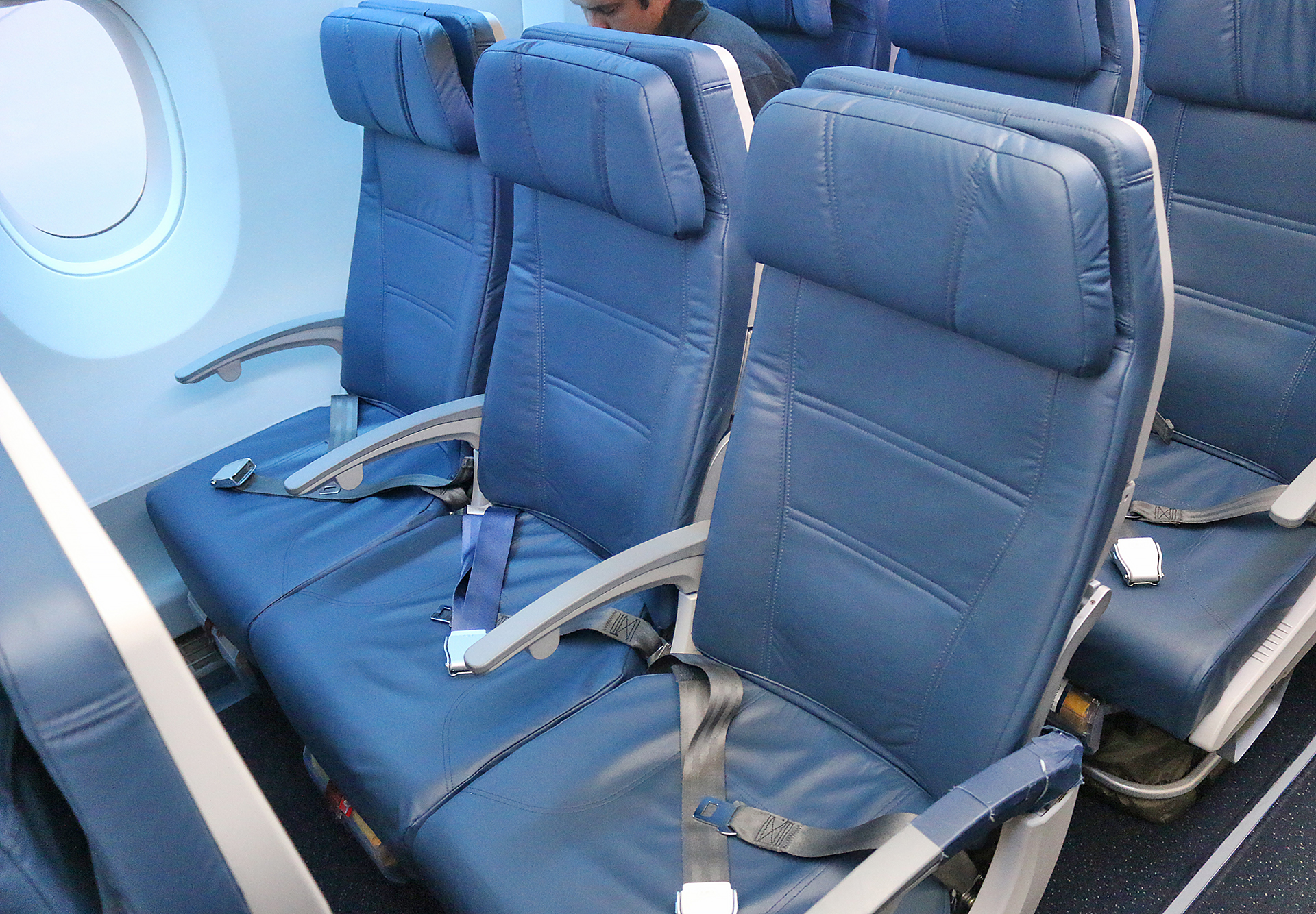
While sitting in the premium class cabin does usually give you a head start of getting off of the aircraft faster — as those seats are usually closer to the exit and passengers assigned to that cabin are usually given the opportunity to exit the aircraft first — so does an aisle seat. I prefer window seats — but most of the time while I was on my unexpected trip around the world back in 2014 through which I sat mostly in a seat by the window, I was unfortunate enough to sit with people assigned to the aisle and middle seats whom I call camels, as they seemingly never needed to use the lavatory, get a drink of water, or stand up to stretch. They typically block the egress of the person sitting in the window seat; but then again, that is one of the trade-offs of sitting in a window seat in the first place.
Those same people also seem to be in no hurry to get up once it is time to collect your belongings to prepare to leave the aircraft. They sit there and either play with their portable electronic devices, chat with a fellow passenger, read a chapter in a book, or close their eyes for a quick nap — again, blocking egress of the person sitting in the window seat from accessing the aisle to leave.
If leaving the aircraft is of the utmost importance to you, your best bet is to choose an aisle seat — preferably near the exit to be used to leave the aircraft — for a better chance of leaving the aircraft more quickly, as well as going to the lavatory and standing up to stretch any time you want when the fasten seat belt sign is not illuminated.
2. Put Your Bag Under the Seat in Front of You
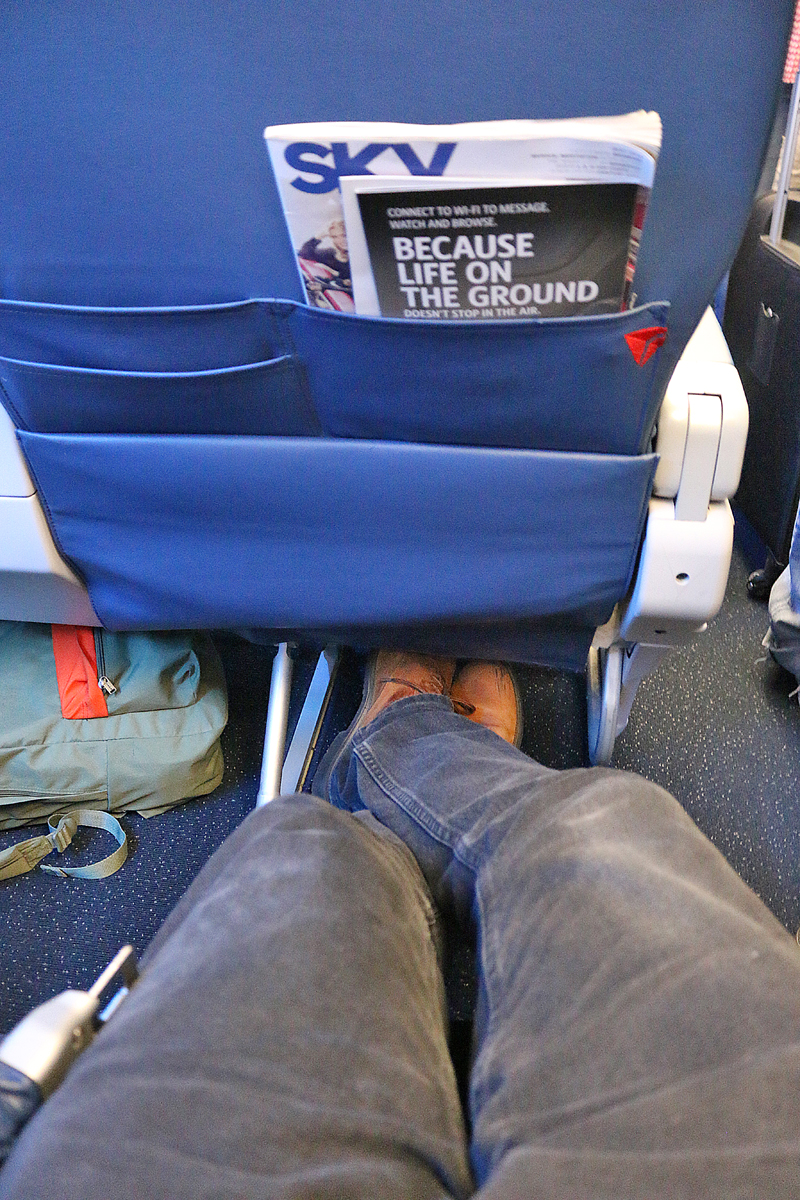
I will give the opposite advice written in the aforementioned article, based on my experience: if leg room is not vital to you during the last 30 minutes of your flight and your baggage is small enough, take it out of the overhead bin and place it under the seat in front of you. This will save you precious seconds required to get your bag out of the overhead bin when it is time to leave. You will have whatever you might need inside of the bag readily accessible to you if necessary; or you can wait until the aircraft taxis to the gate when you can collect your belongings which you have used during the flight — not the baggage itself — while seated and prepare to exit the aircraft once it reaches the gate and stops.
3. Completely Fill Out Your Paperwork — If Paperwork Is Even Offered
While this step does have a cursory mention in the aforementioned article, I cannot stress enough its importance: take the time to properly fill out the paperwork after it has been given to you aboard the airplane. Once the paperwork — a customs form, a landing card, or some other official document required by the country in which you are about to enter where you need to answer all of the questions — has been completed, insert it next to the page in your passport where your photograph and information are displayed. This serves two purposes: the paperwork is readily accessible; and because it is usually larger than the passport itself, it can act as a bookmark where you can instantly open up to the correct page when requested as you pass through customs.
On my first flight to China during my unintentional trip around the world, the flight attendant did not give me a landing card to fill out; so I thought it did not pertain to me. While I was in the long but briskly-moving line at customs and immigration at the international airport in Shanghai, something told me that I needed one. I asked an employee, who confirmed that I indeed did need one to fill out. Fortunately for me, it only required a moment to complete; and the employee let me advance straight to customs and immigration personnel to review my documents so that I did not have to wait in line all over again.
The required completion of paperwork is slowly becoming obsolete, though, as more countries and independent territories offer the completion of forms electronically — often in the comfort of your own home.
4. Aisle Etiquette
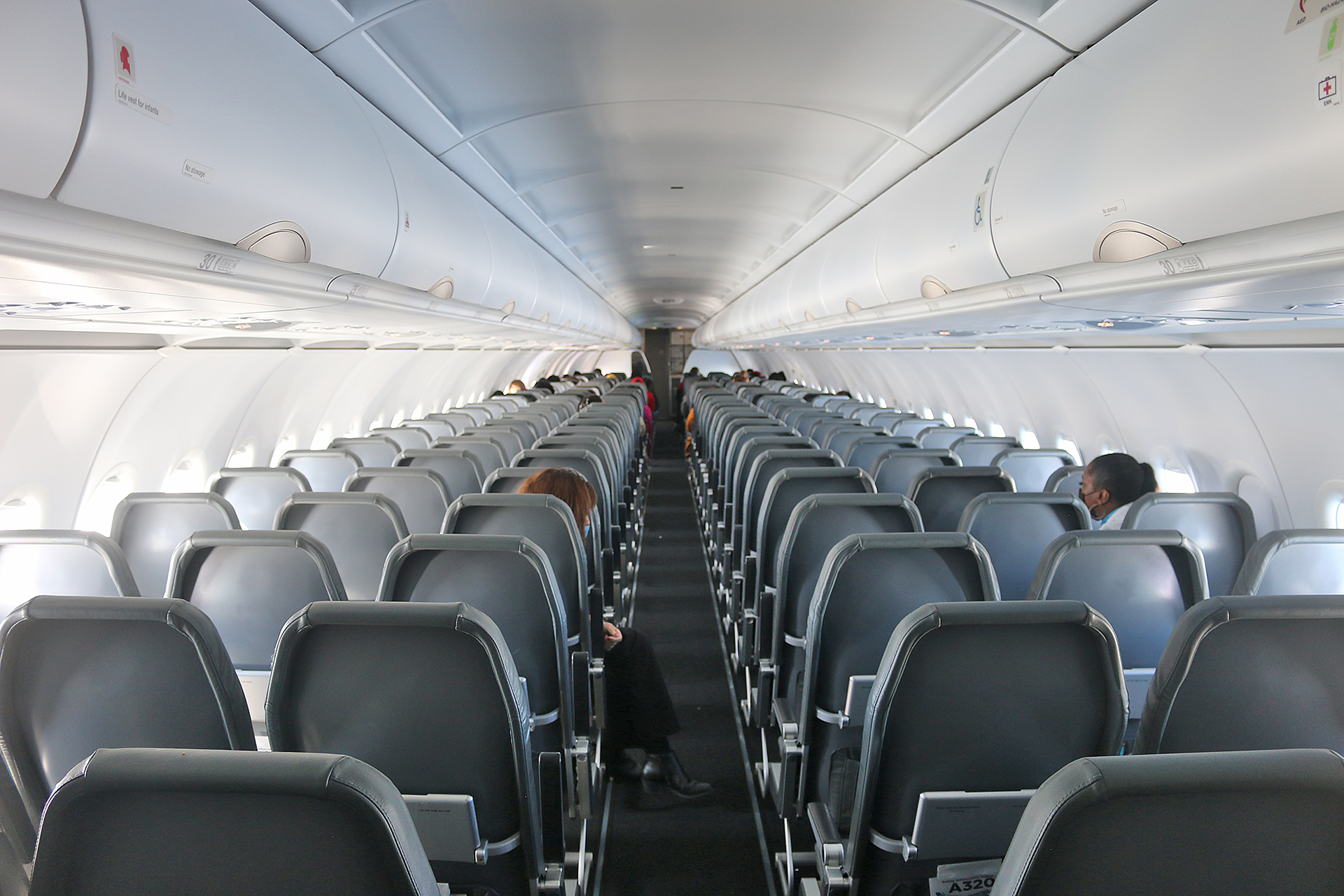
Enter the aisle as soon as possible once the members of the flight crew give the indication that it is safe to do so — but do not knock out someone else in the process. I will normally stand in the aisle and allow passengers in the rows in front of mine to leave; but if the aisle is still clear and there is no signs of the passengers being ready to deplane, I will walk forward as far as possible so as to leave the airplane a minute or two earlier, as that can be the difference in waiting in the line significantly longer to go through customs and immigration — and yes, it can be done without being obnoxious about it. In fact, there have been times where the passengers in the rows ahead of mine have graciously waved me on. However, my rule of thumb is that if I am already in the aisle and another passenger wants to retrieve a belonging which is within my reach, I will usually reach for it, retrieve it and pass it on to them — which usually results in a quicker exit for both of us. For me, I am able to strike a balance between being courteous and respectful while getting to where I want to go as quickly as possible.
5. Ramp Etiquette
Only once have I been admonished for passing a fellow passenger on the ramp leading to the customs area inside of the airport; but I was indeed in a hurry at that time. Normally, I will only pass fellow passengers when there is enough room to do so or if they are moving significantly slower — otherwise, I stay in my place. Conversely, I have at times also allowed passengers in a hurry to pass me by stepping aside. Again, it is important for me to strike a balance between being courteous and respectful while getting to where I want to go as quickly as possible.
6. Taking Advantage of People Movers
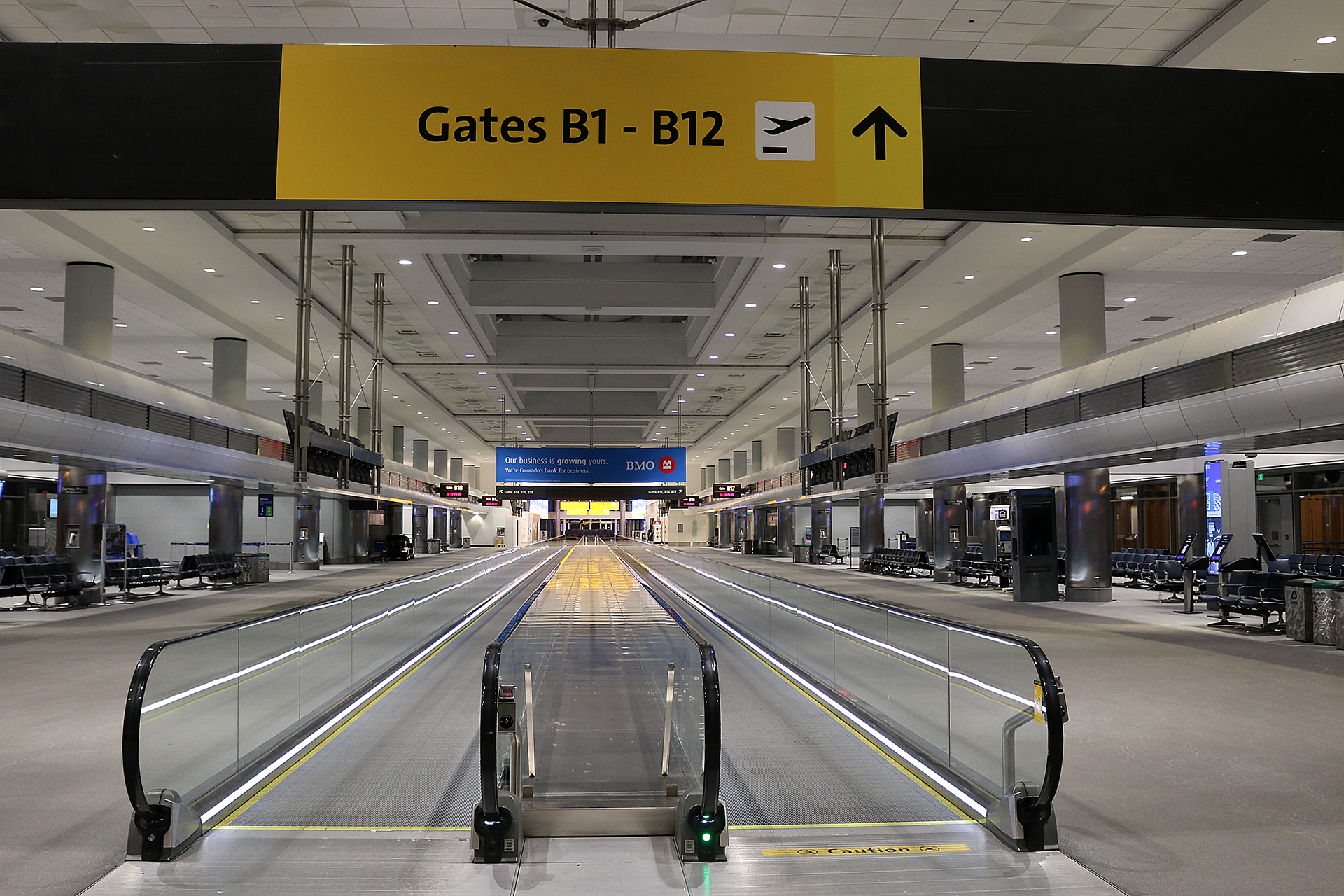
As the aforementioned article suggests, I use people movers of all kinds — such as escalators and moving sidewalks — to get to wherever I am going faster, as I walk at my typically brisk New York pace while using them. However, scope out the people movers before entering onto one of them, as all you need to slow you down is a crowd of fellow passengers who significantly unknowingly block them. I have often found that it is simply faster for me to just walk alongside the people movers. This is especially useful when crowds are using escalators to go downstairs but the stairs are virtually empty, meaning that the stairs are almost always faster for me — up or down.
7. Be Alert
This does not always work; but in addition to what the aforementioned article recommends — once you ensure that you enter the proper line as to whether you are a citizen or a foreigner — scope out the lines at the customs and immigration area. See which ones have a person, family or group which looks like they will need a significant amount of time to be processed. Try to ascertain which customs officials seem to be working faster than others. Despite trying, I admittedly tend to find the lines which take the longest to be processed anyway — but perhaps you will have better luck.

Having nobody on line in front of you and yet still have a customs agent who is slower than a turtle stuck in molasses oozing from a black hole is possible.
Final Boarding Call
Leaving the airplane and going through customs in a minimal amount of time is indeed possible; but there are times where no amount of experience and preparation will guarantee the success you may seek due to some of the aforementioned factors — as well as which airports you use. Can you do it in as few as twelve minutes? Perhaps it is possible — but do not count on it. Consider that an unexpectedly welcome anomaly more than a typical routine.
As I have said, what is most important to me is balancing courtesy and respect for fellow passengers while getting to where I want to go as quickly as possible — and that requires feeling out the situation and “knowing your audience.”
Then again, there are probably people who are wondering what is the big hurry in the first place.
Do you have any suggestions which you would like to add to help fellow frequent fliers leave the airplane and pass through customs or immigration as quickly as possible but without being disrespectful to fellow passengers? Please share your experiences in the Comments section below. Thank you.
All photographs ©2018, ©2019, ©2021, ©2023, and ©2024 by Brian Cohen.
