
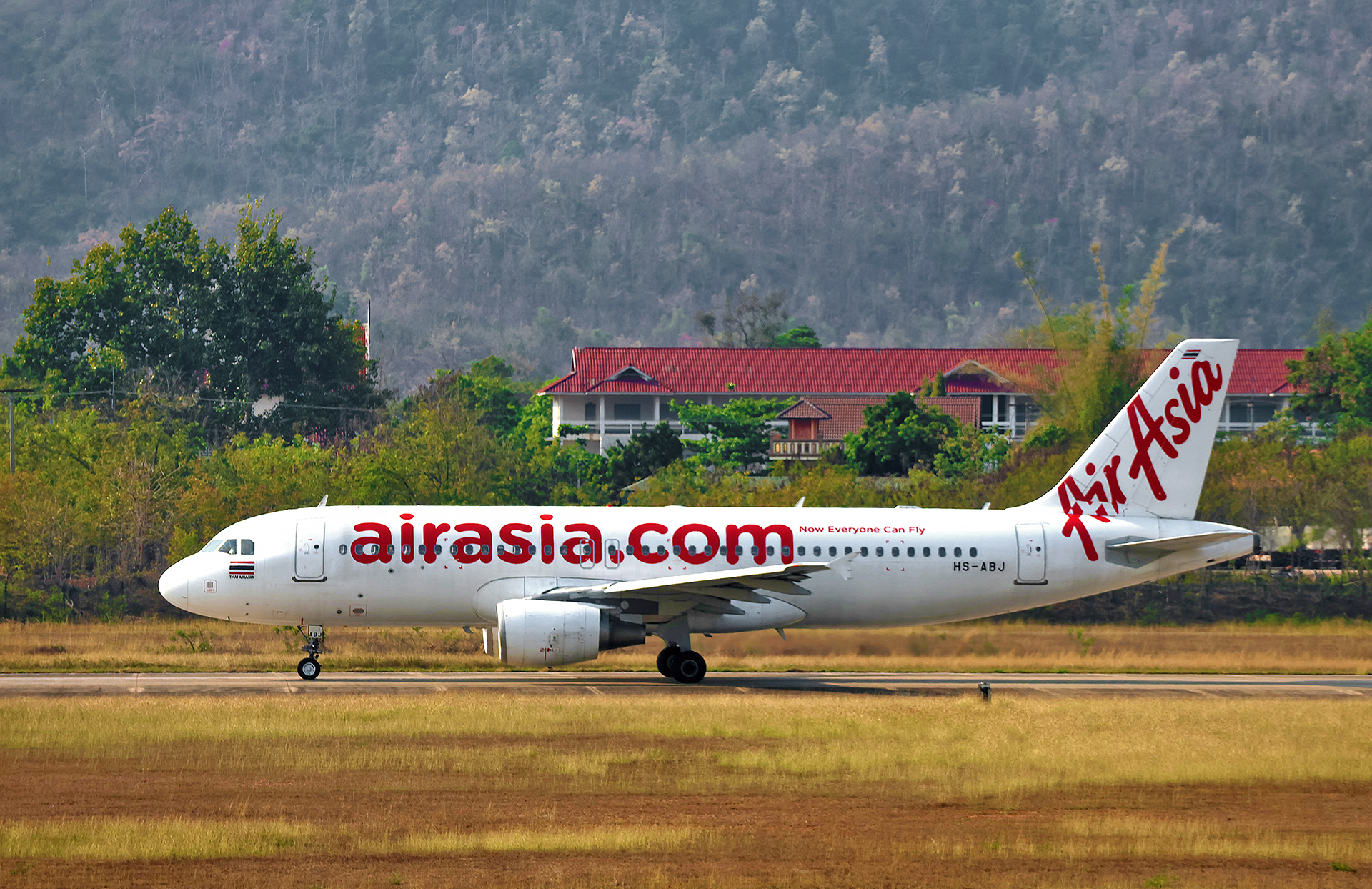

I had no reason to hesitate to return to AirAsia based on past experiences with the airline, whose slogan is Now Everyone Can Fly — but what was my latest experience with a recent flight with the “low fares no-frills” airline that operated as Thai AirAsia?
Return to AirAsia: My Latest Experience With a Recent Flight
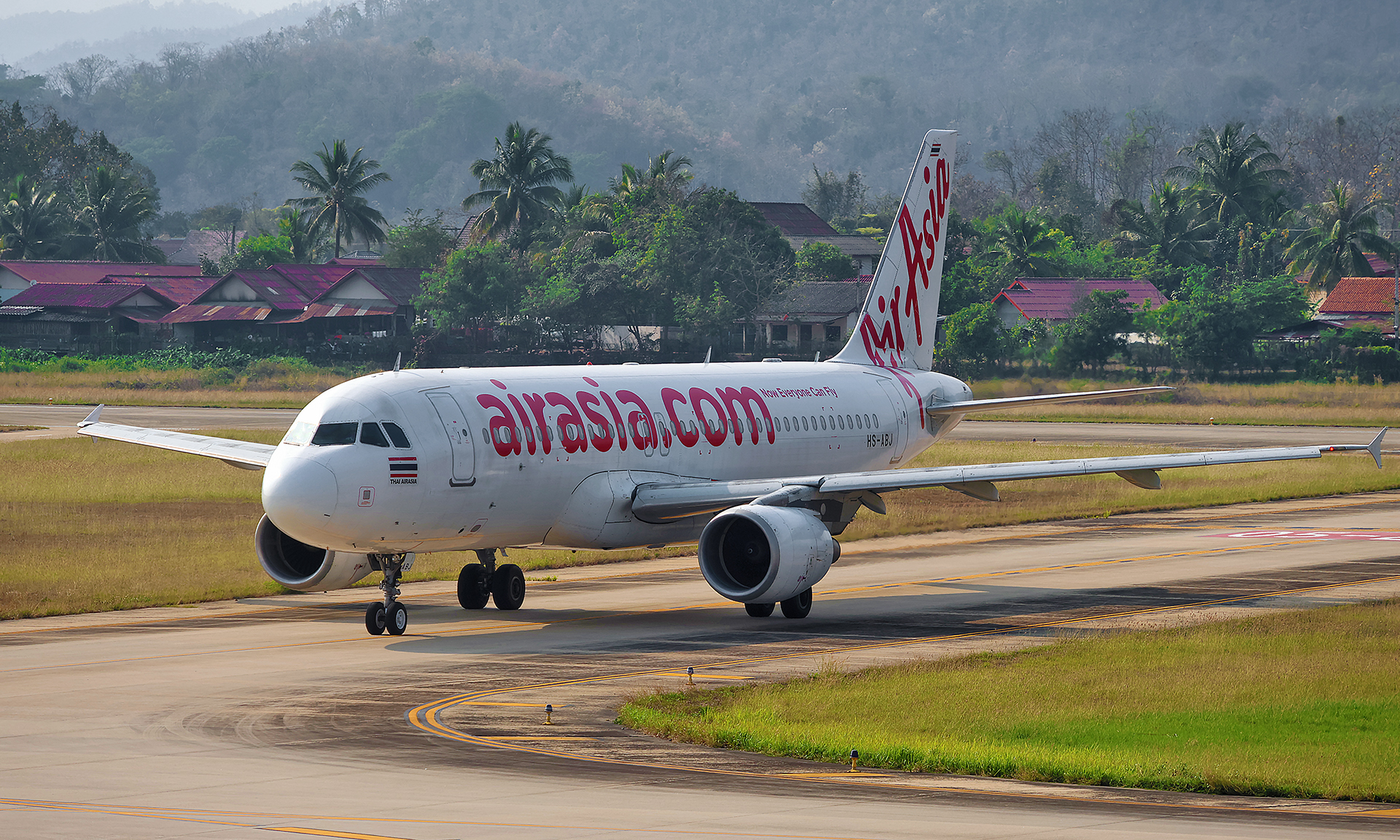
Although AirAsia was founded on Monday, December 20, 1993 as a full-service carrier that was owned by the government of Malaysia, AirAsia was purchased on Wednesday, September 5, 2001 for only one Malaysian ringgit — which is approximately 26 cents in United States dollars — by a company that was operated by Tony Fernandes and Kamarudin Meranun, who are currently chief executive officer and executive chairman of the airline respectively. They envisioned an opportunity to convert the airline to an ultra-low-cost carrier that served Southeast Asia.
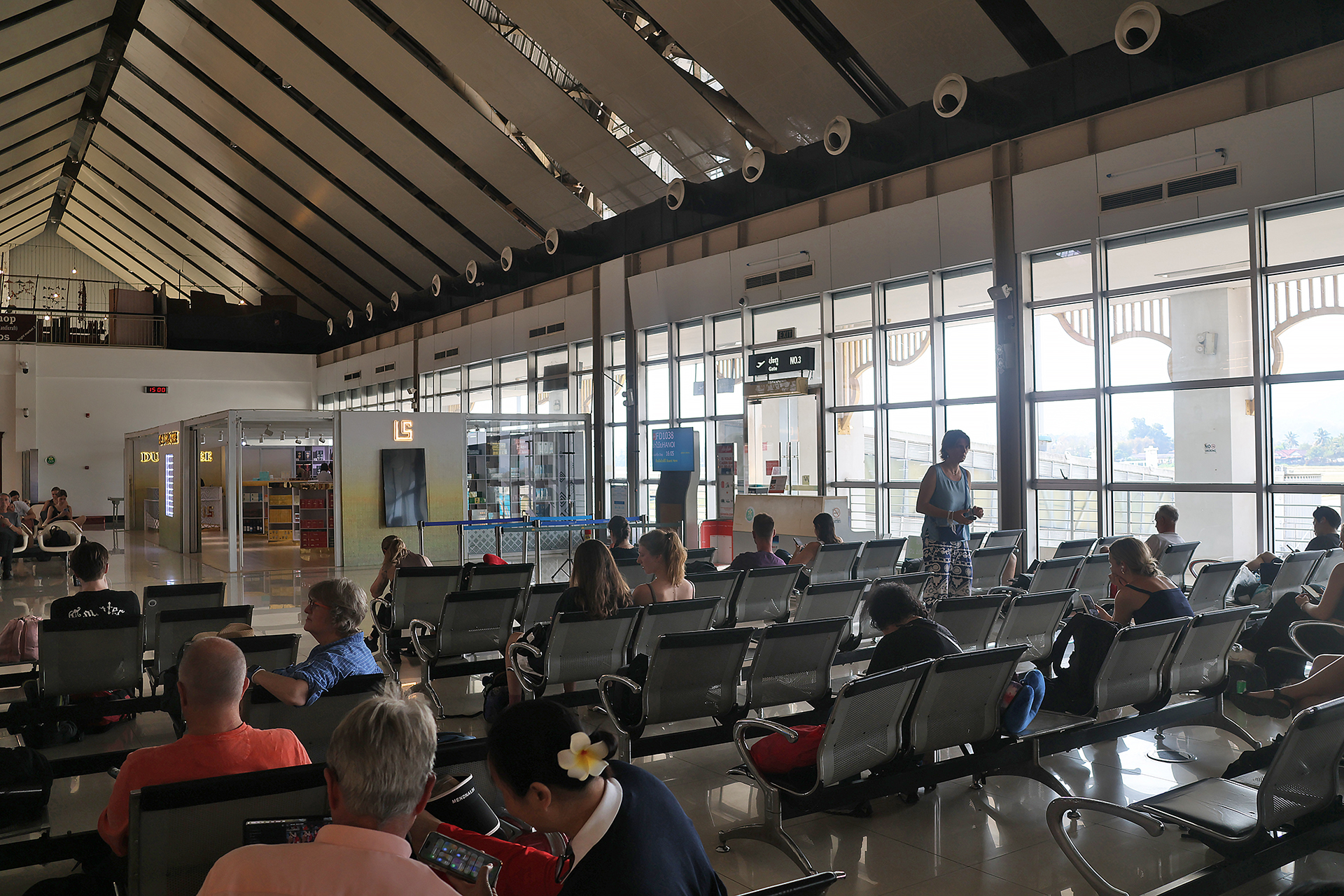
Passengers await the flight at the gate area in Luang Prabang International Airport, which is the second busiest airport in Laos.
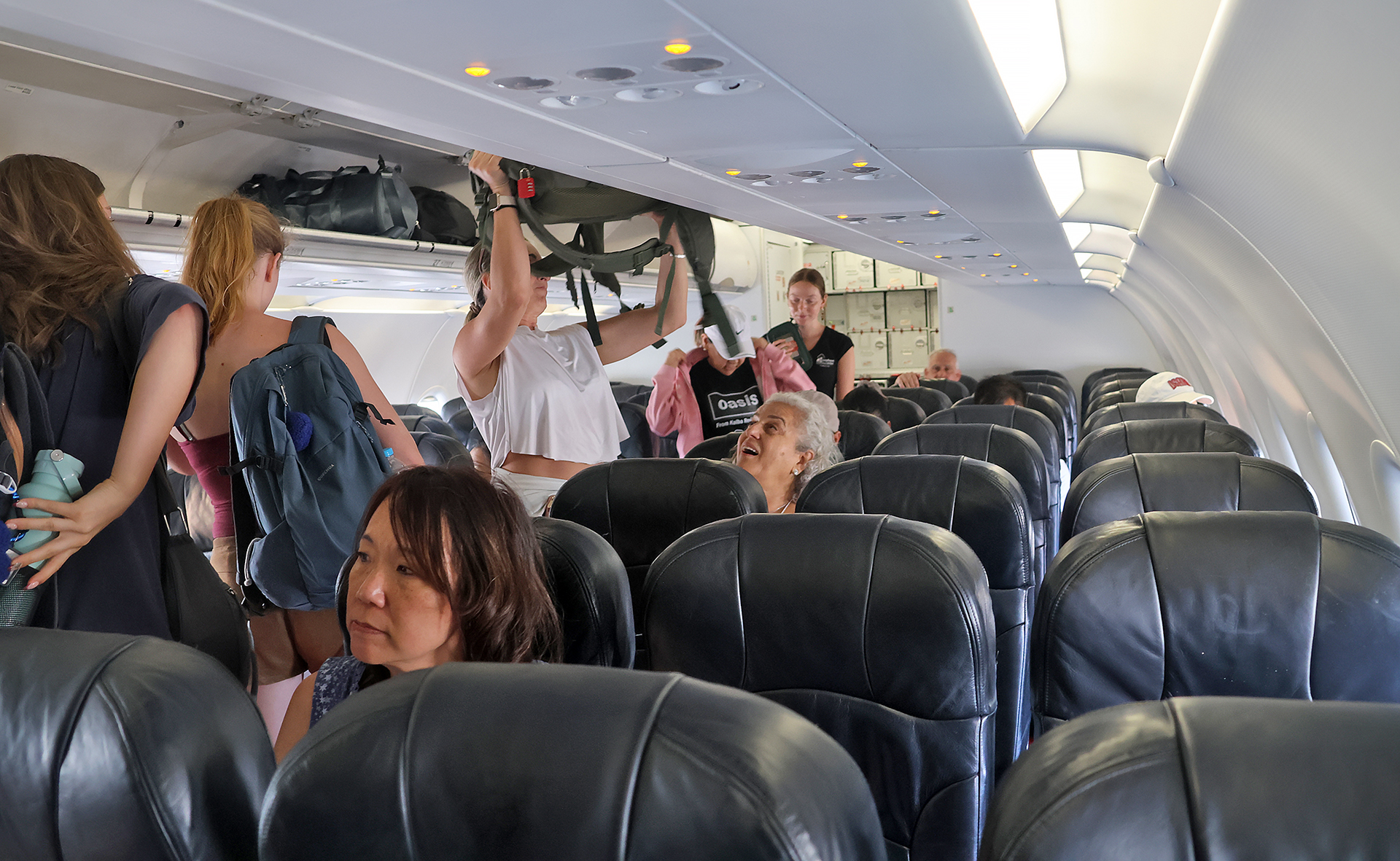
Plenty of room for storage was available in the overhead compartments. The standard weight limit for carry-on bags is seven kilograms for up to two bags, which is almost 15.5 pounds — but an additional seven kilograms can be purchased for a nominal fee, which is what I did.
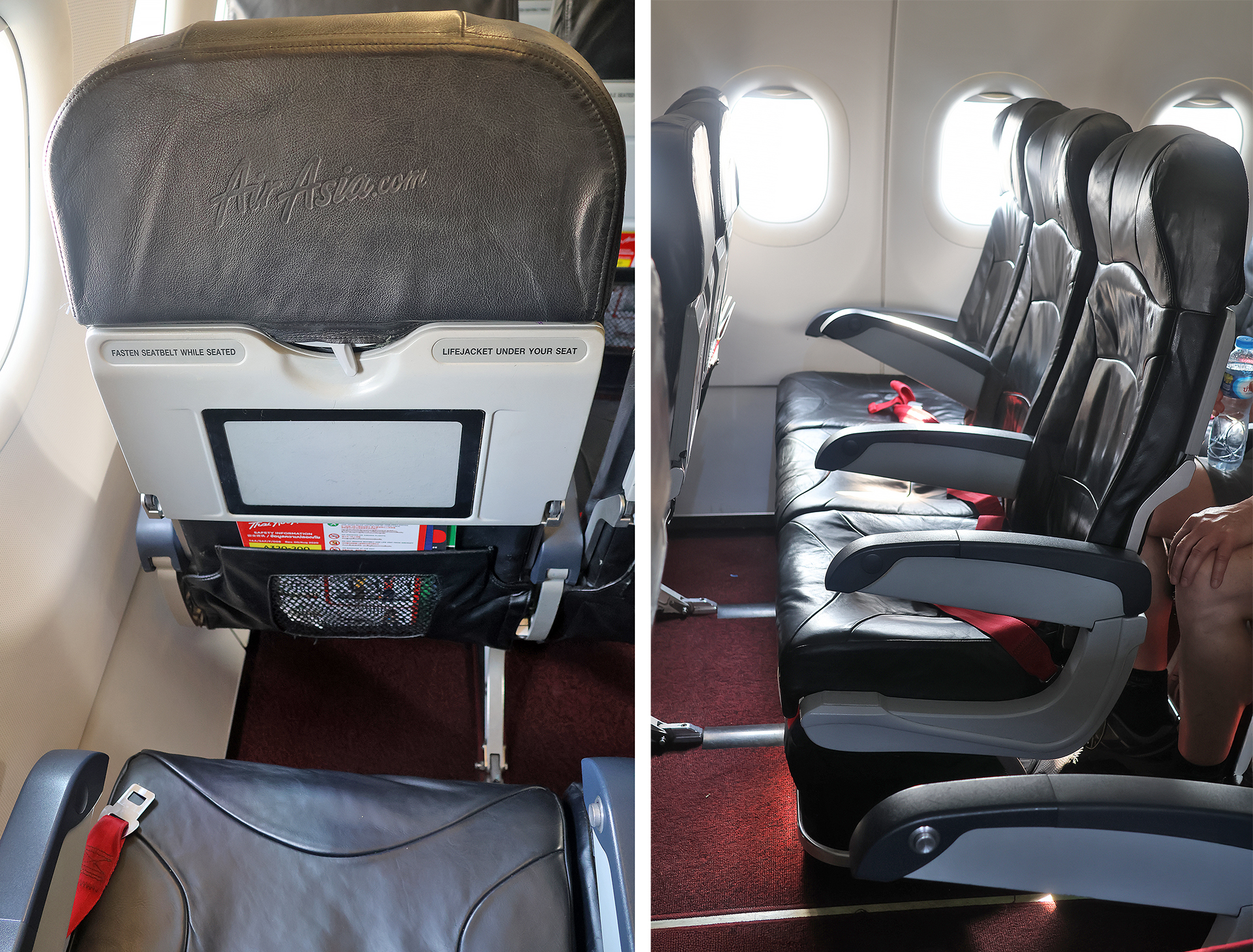
The first flight of the AirAsia Airbus A320-216 airplane on which I flew as a passenger was on Thursday, August 27, 2009; so it was not a new airplane — and even though the interior of the airplane was clearly not modern, it was clean and reasonably comfortable. Note how well-cushioned are the seats.
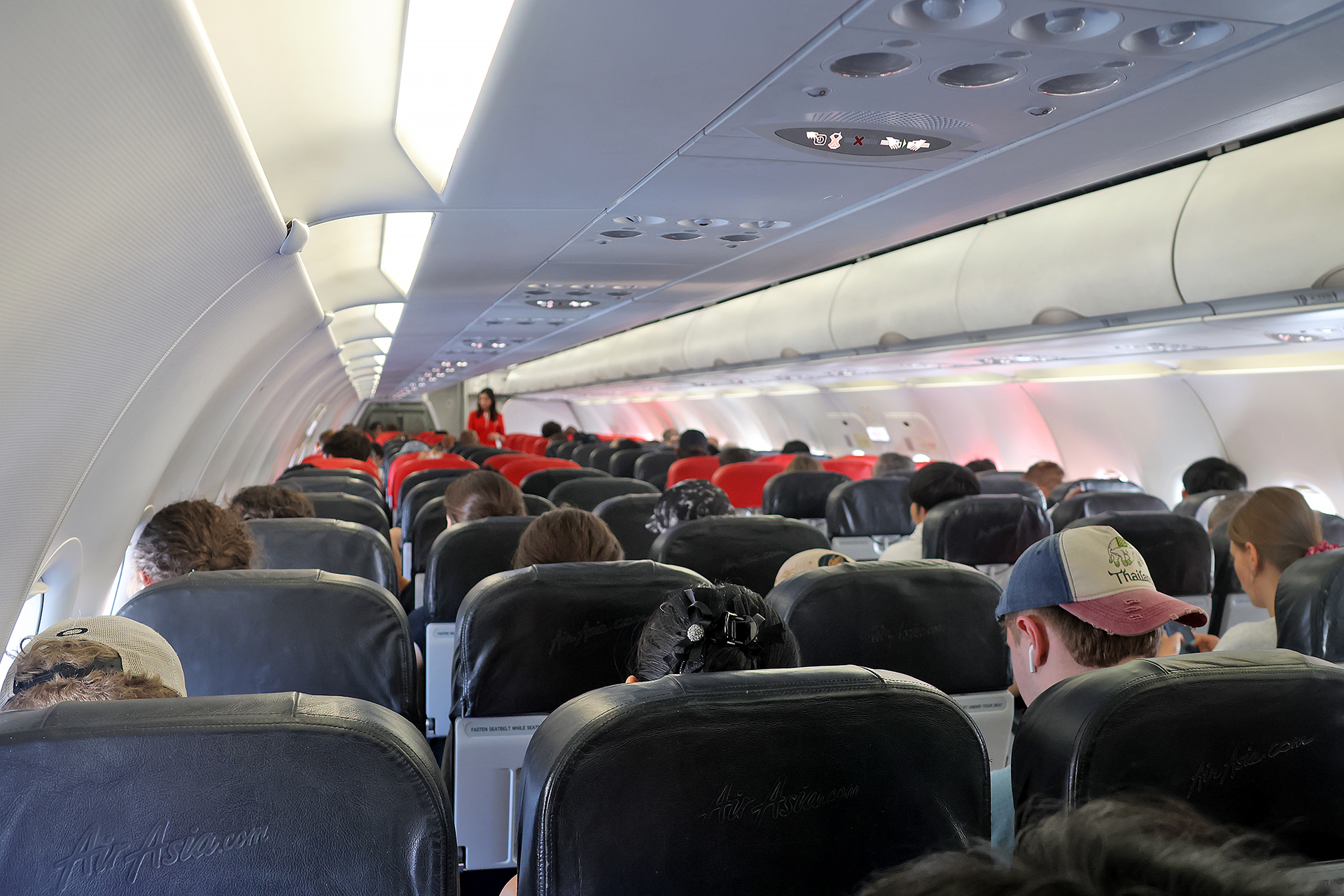
The airplane was not completely full of passengers on the flight from Luang Prabang in Laos to Hanoi in Vietnam.
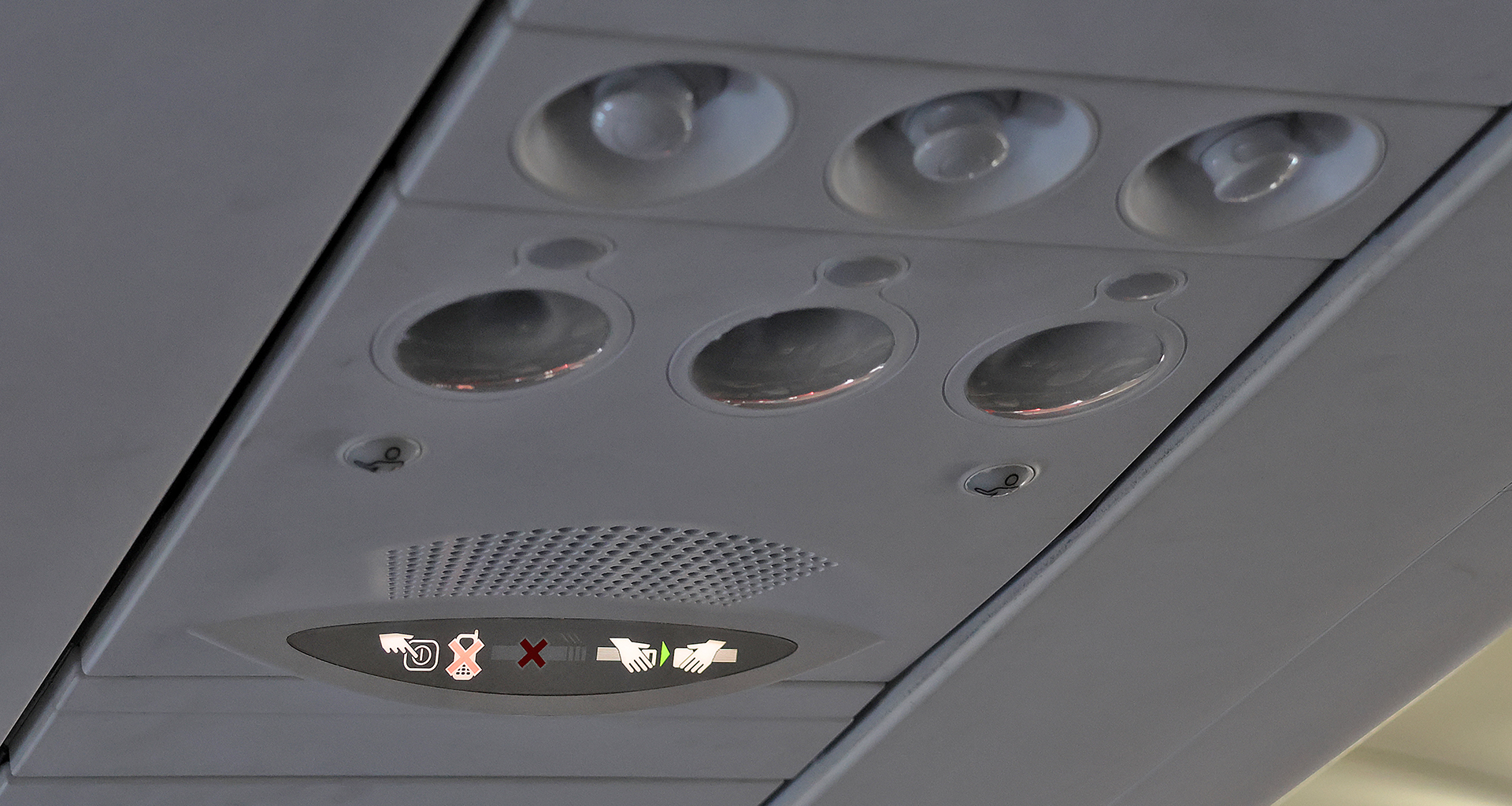
The Passenger Service Unit above the row of seats contained bright lights, adjustable air vents, and two small flight attendant call button for three seats.
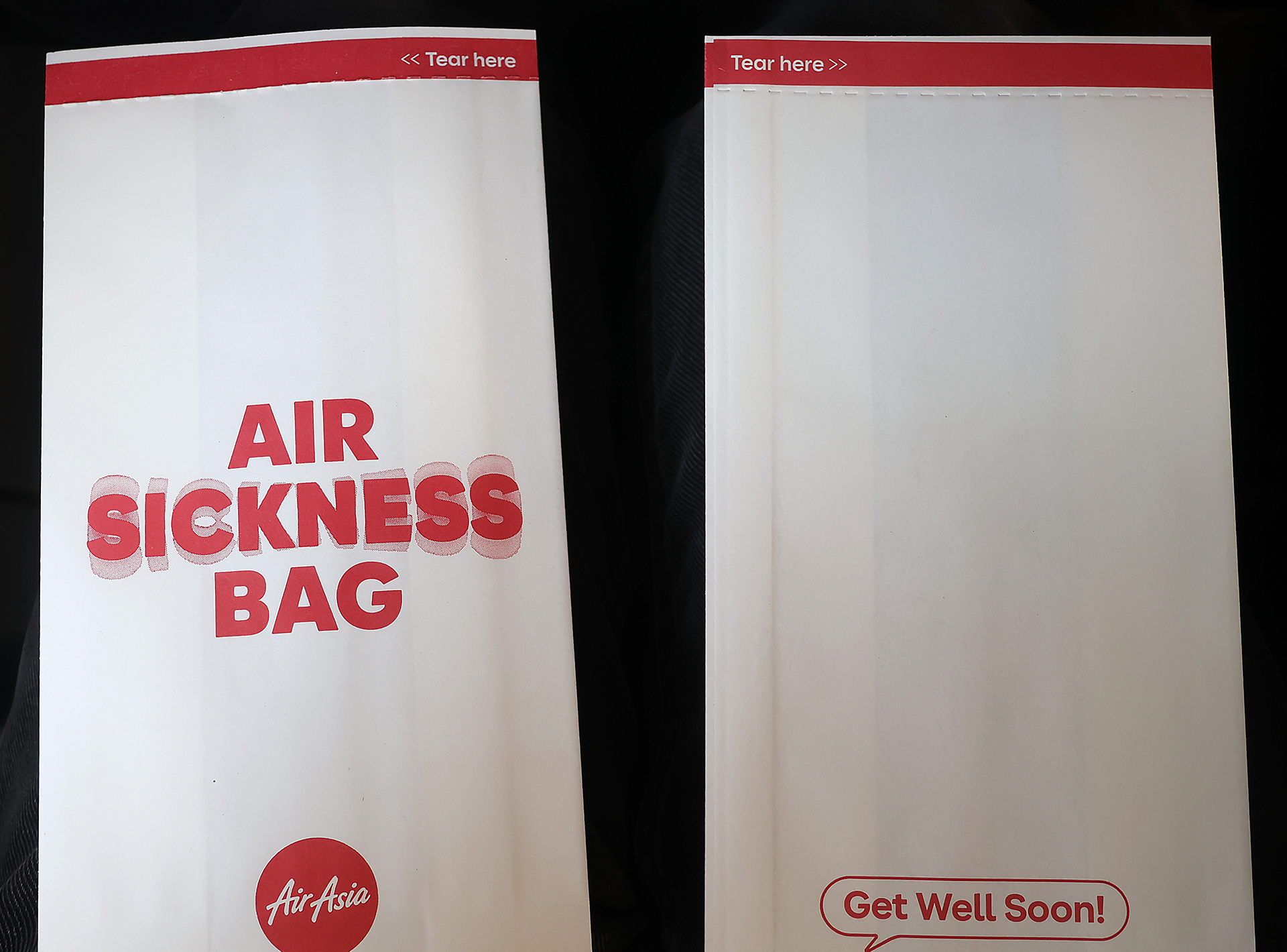
The air sickness bags hope that you will get well soon. I just thought I would throw that up there.
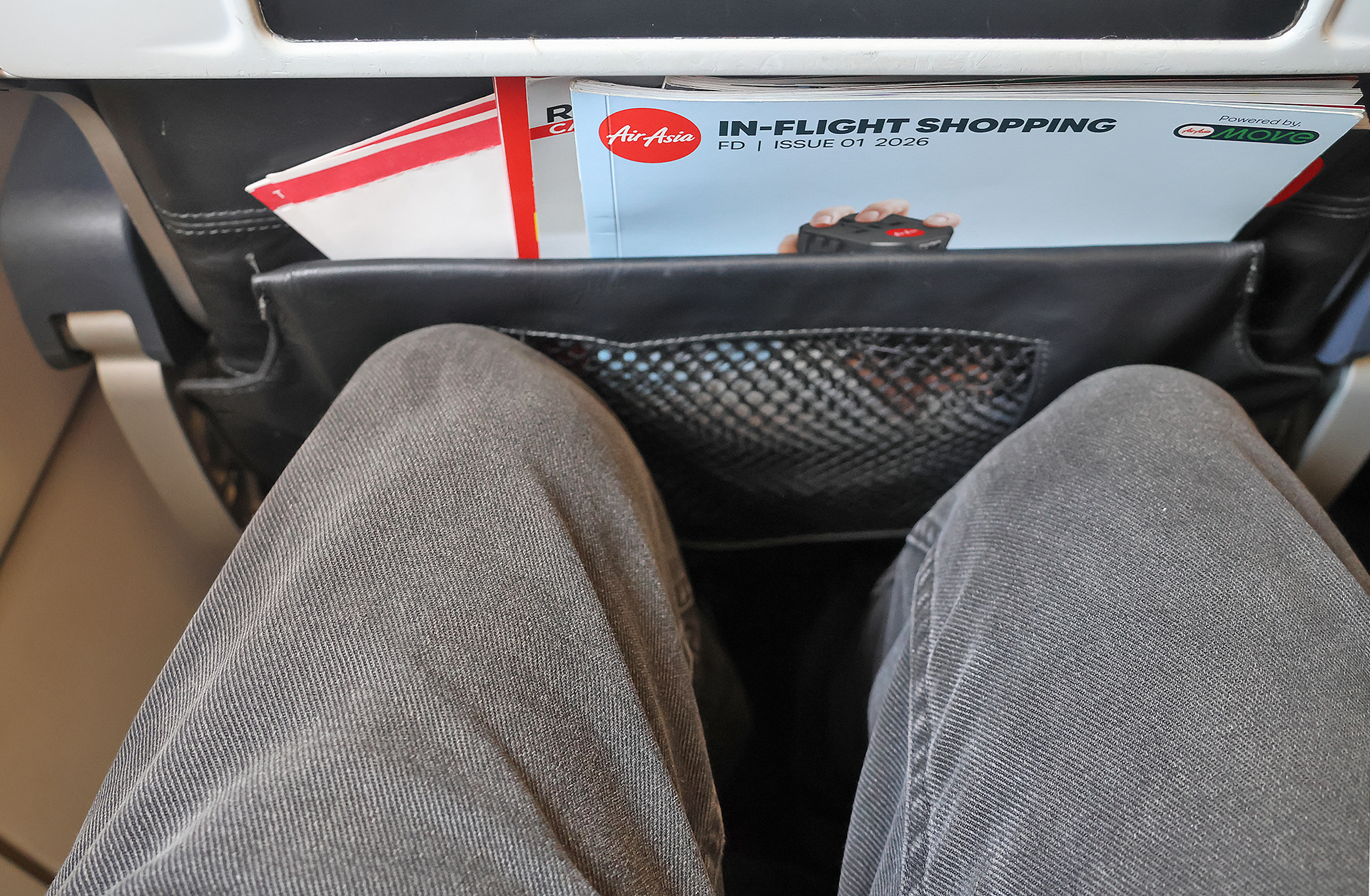
Although the seat was not uncomfortable, I found the leg room to be rather tight, which I did not recall on airplanes in the past on which I was a passenger of AirAsia…
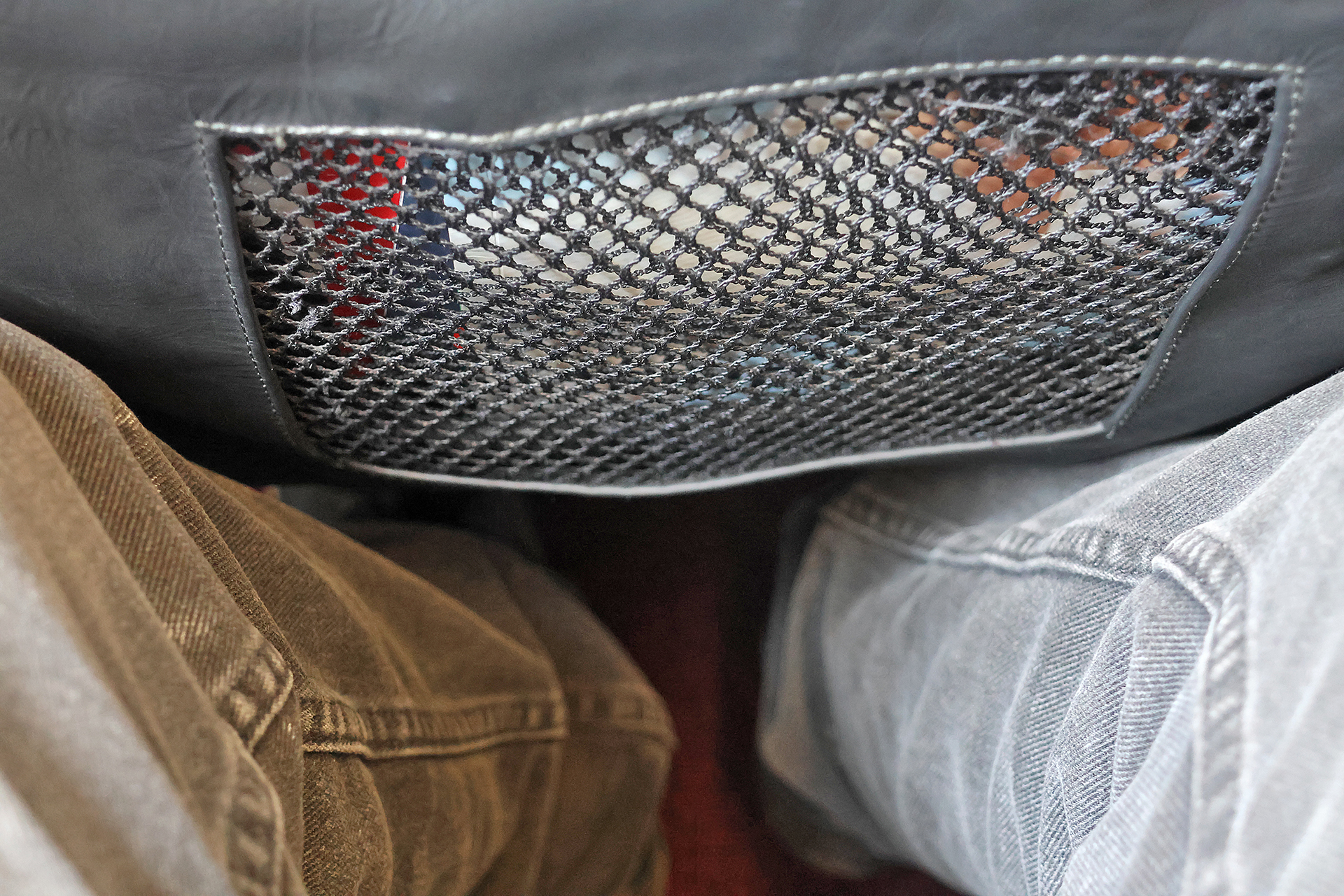
…and for a flight whose duration was only one hour and ten minutes, it was okay — but the tight leg room could potentially be unbearable on a longer flight. The multiple pieces of printed material that were stored in the mesh pocket behind the seat in front of me did not help matters…
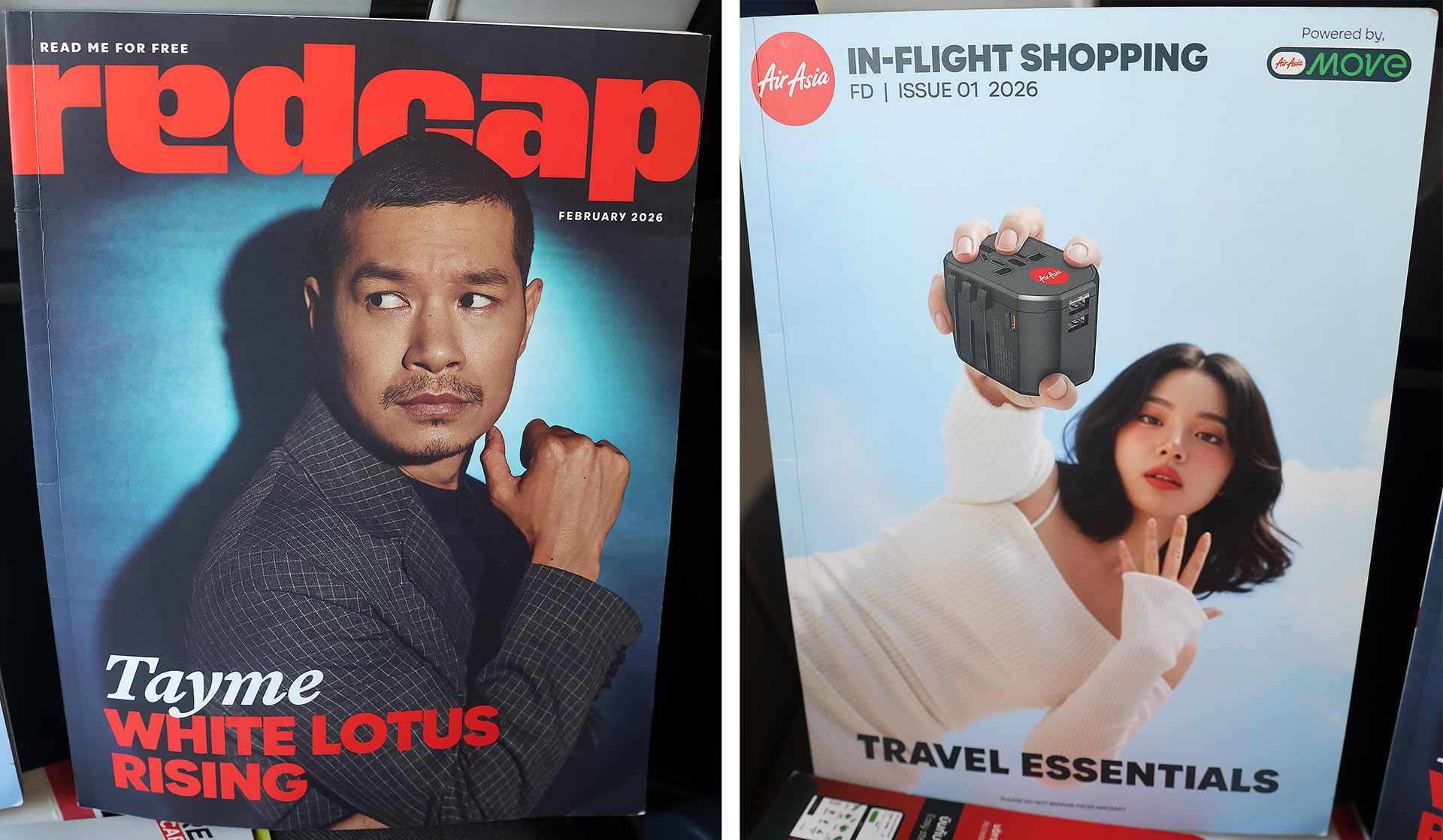
…which included a magazine and a shopping catalog — both of which contained many pages…
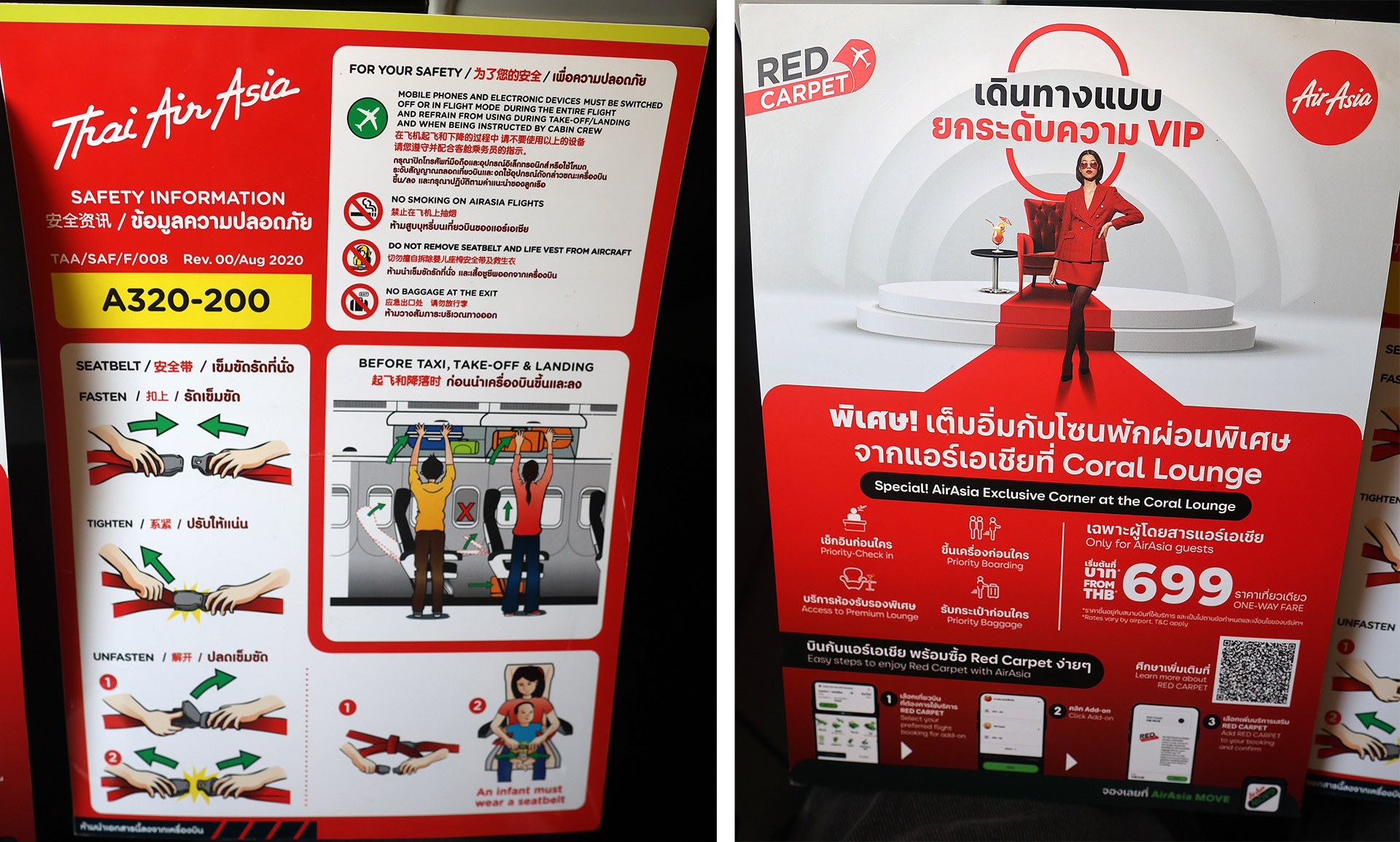
…as well as two laminated cards — one of them being a safety information card.
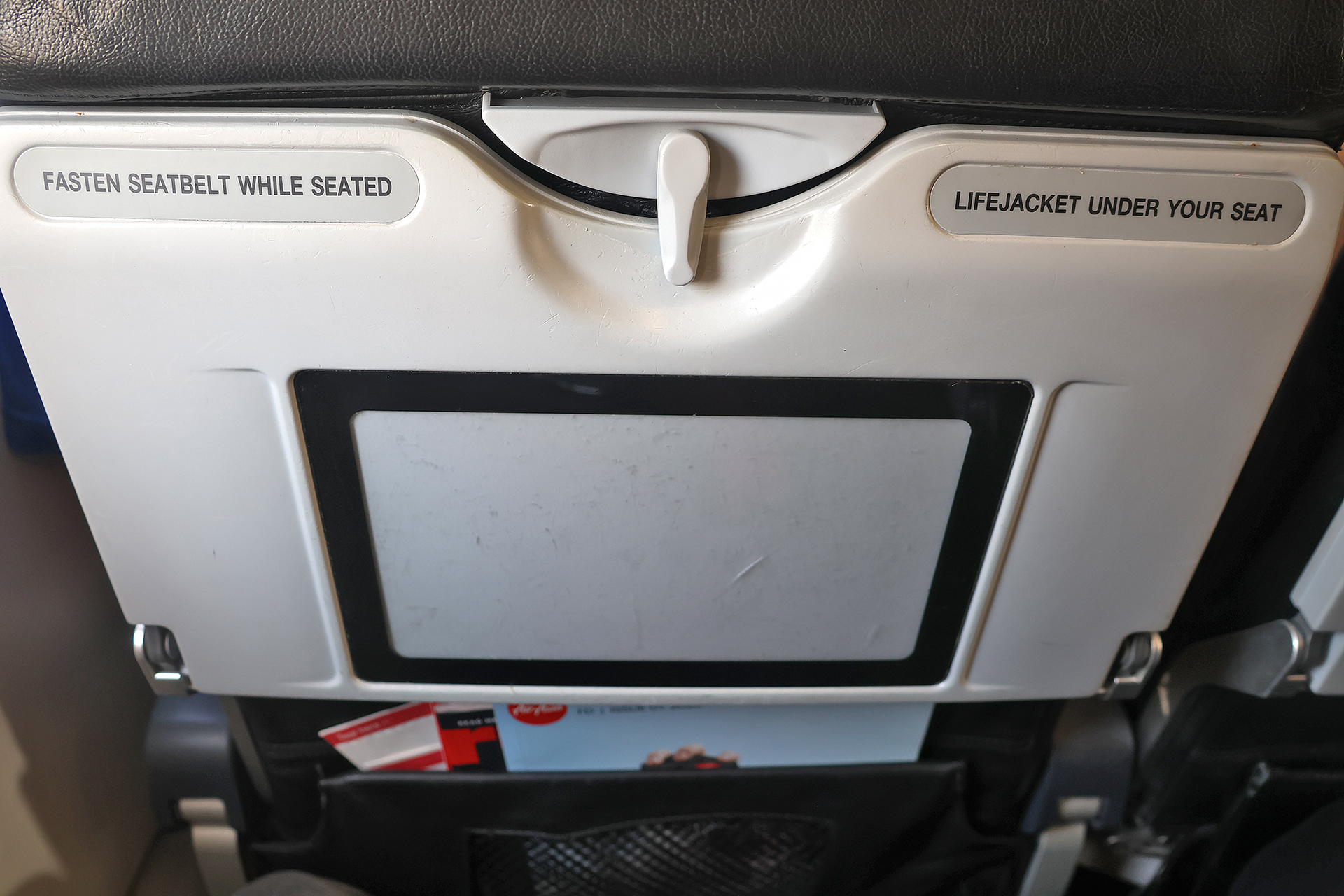
I never did find out exactly what was the purpose of the rectangle on the back of the stowed tray table.
Final Boarding Call
The total cost per passenger was $91.35 in United States dollars — and that was after I purchased an extra baggage allowance for carrying two bags aboard the airplane called Xtra Carry On, as I do not check luggage. That cost was not terrible at all — but I would not exactly call it ultra low cost, either.

AirAsia is a viable alternative to carriers who charge significantly more money for similar flights on competing routes. Despite the interior of the airplane showing its age, it was clean and reasonably comfortable — and the flight was punctual and uneventful.
I liked my experiences as a passenger of AirAsia both years ago and recently; and I currently recommend AirAsia — especially when traveling on a budget in Southeast Asia.
All photographs ©2026 by Brian Cohen.
