
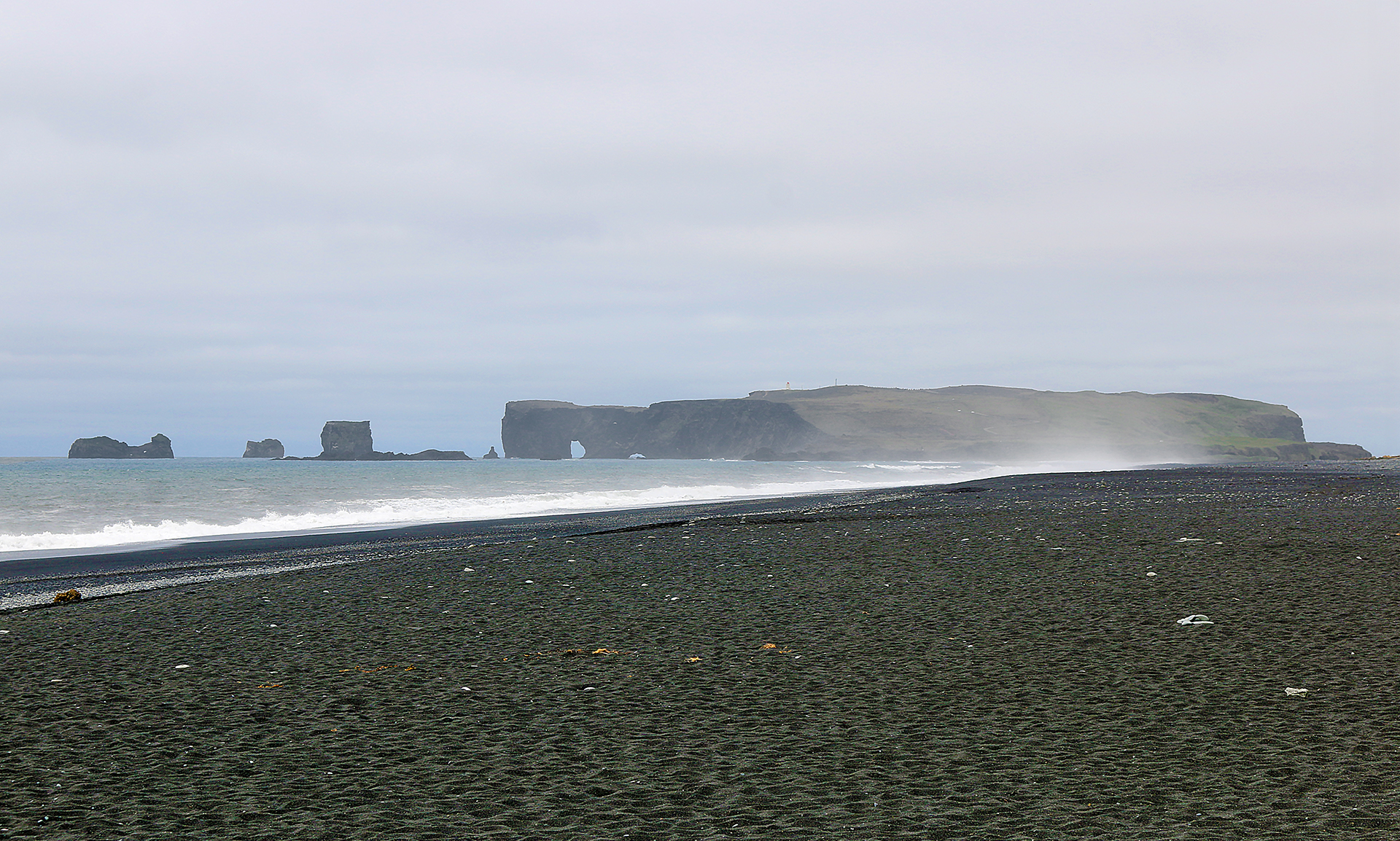

Reynisfjara Beach in Iceland is different now that when I visited it during a cold overcast day because relentlessly powerful ocean currents have eroded the beach to the point where it has significantly changed, as many places on the famous black sand beach are no longer easily accessible.
Reynisfjara Beach in Iceland — Before Powerful Ocean Currents Changed It
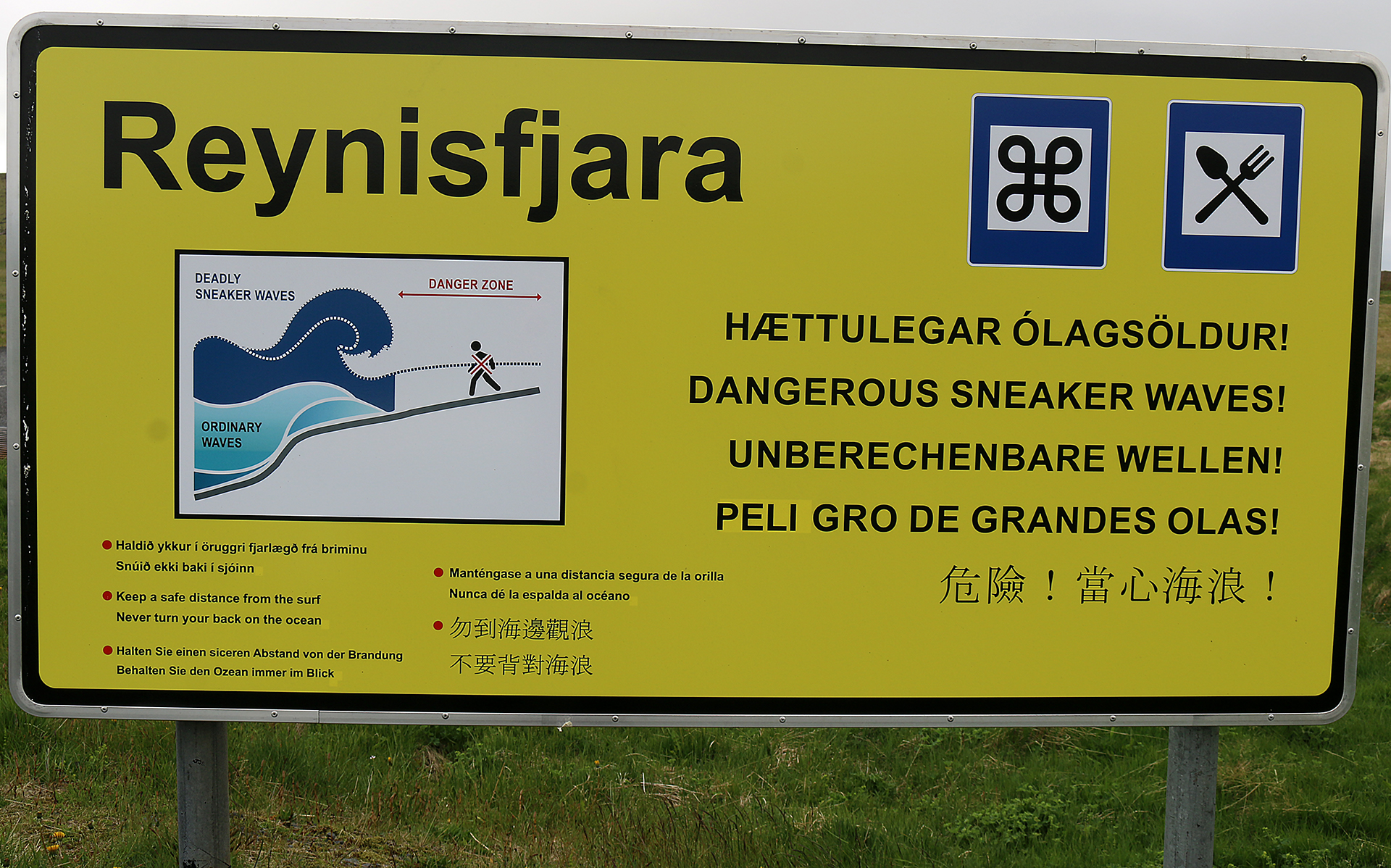
Yellow signs warn in five languages of “DANGEROUS SNEAKER WAVES!” — as well as to “keep a safe distance from the surf” and to “never turn your back on the ocean”.
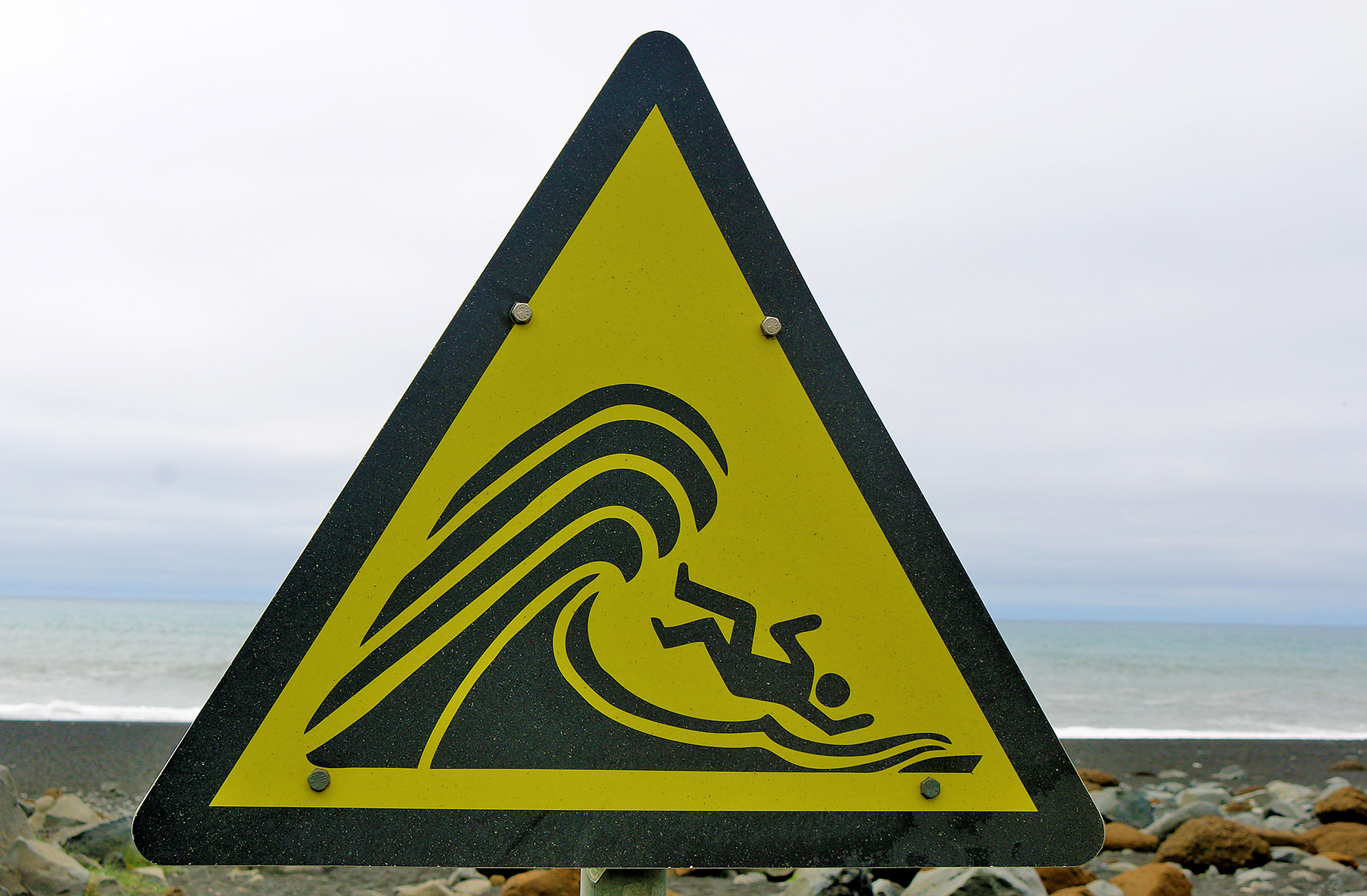
Despite the signs, at least six fatalities have occurred at Reynisfjara Beach between 2007 and 2025, which has led to the adaptation of new safety measures.
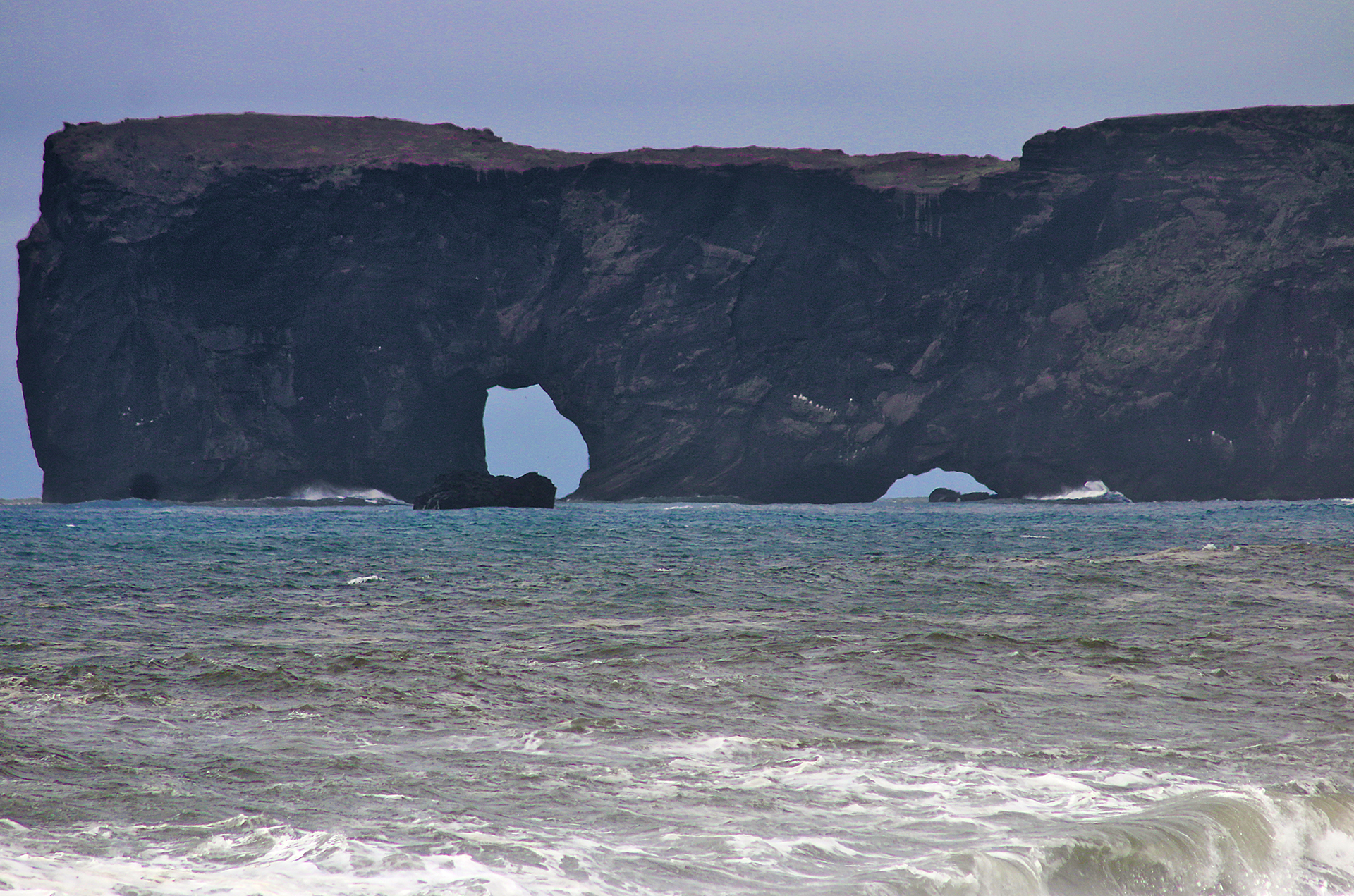
This natural rock promontory located west southwest of Reynisfjara Beach is geographically the southernmost point of mainland Iceland.
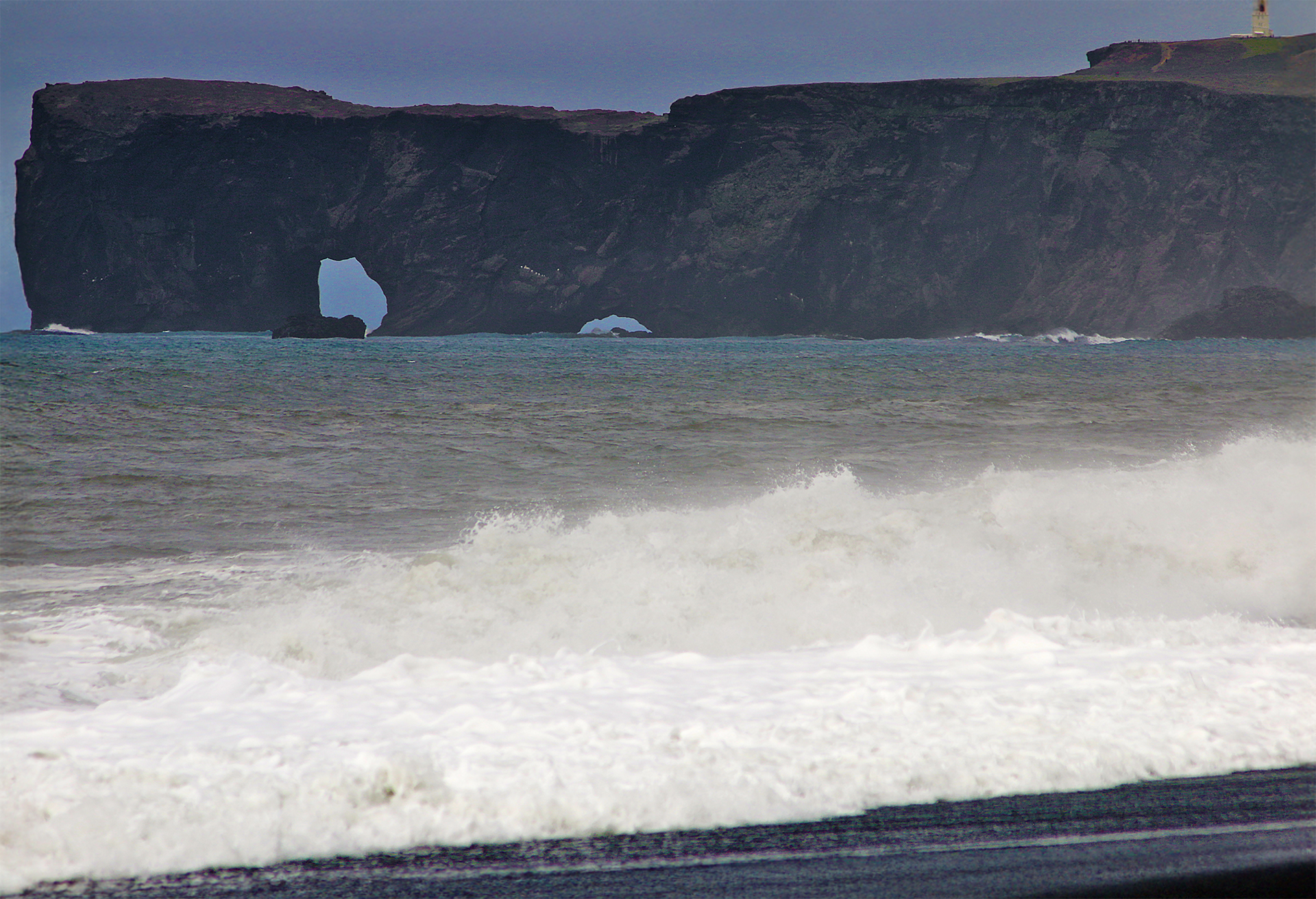
Dyrhólaeyjarviti — which is known in English as the Dyrhólaey Lighthouse — appears near the upper left corner of the photograph above.
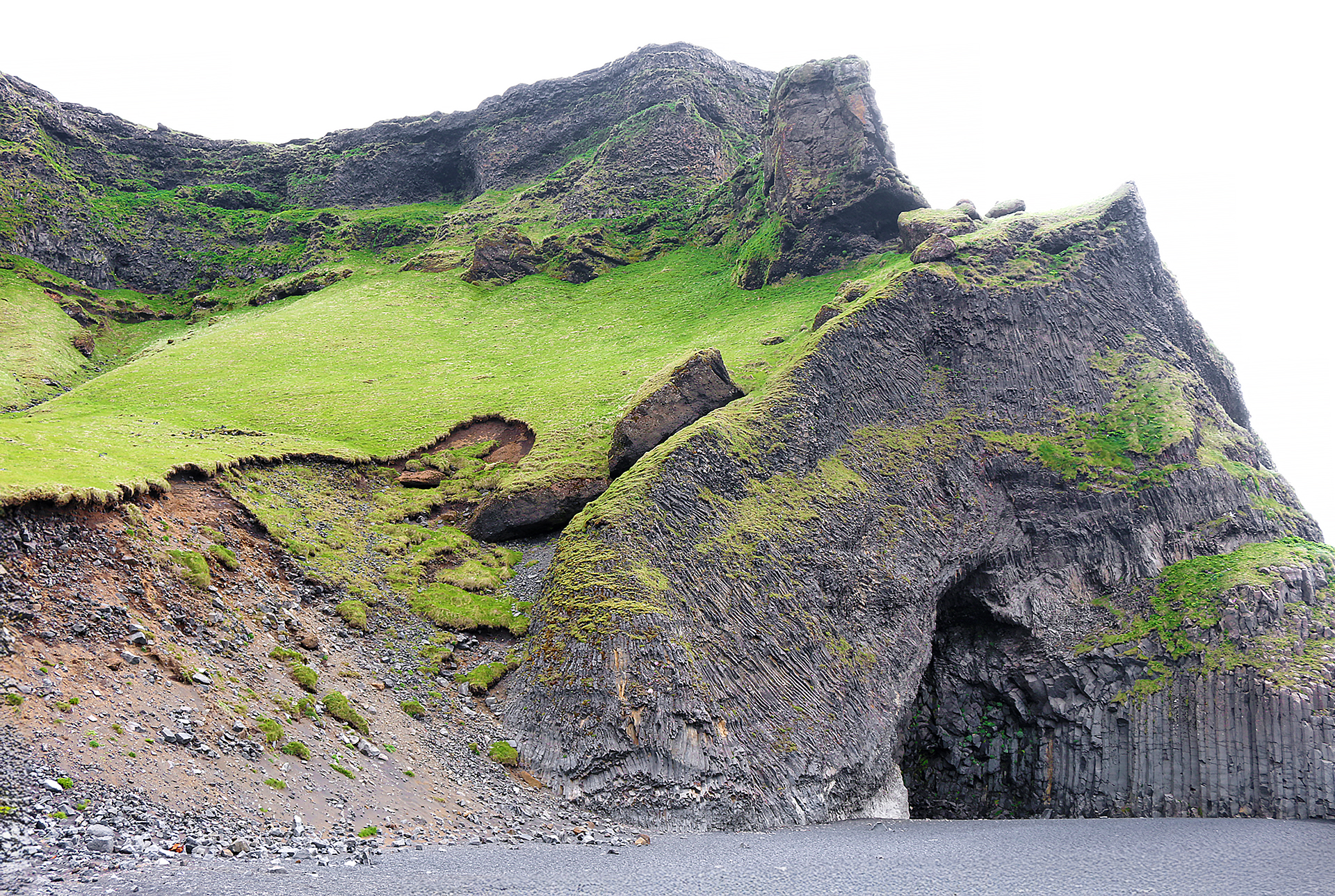
Hálsanefshellir Cave is part of Reynisfjara Beach. Most of this area is currently under water; and large boulders are now strewn about on the west side of the cave, which is on the left in the photograph above.
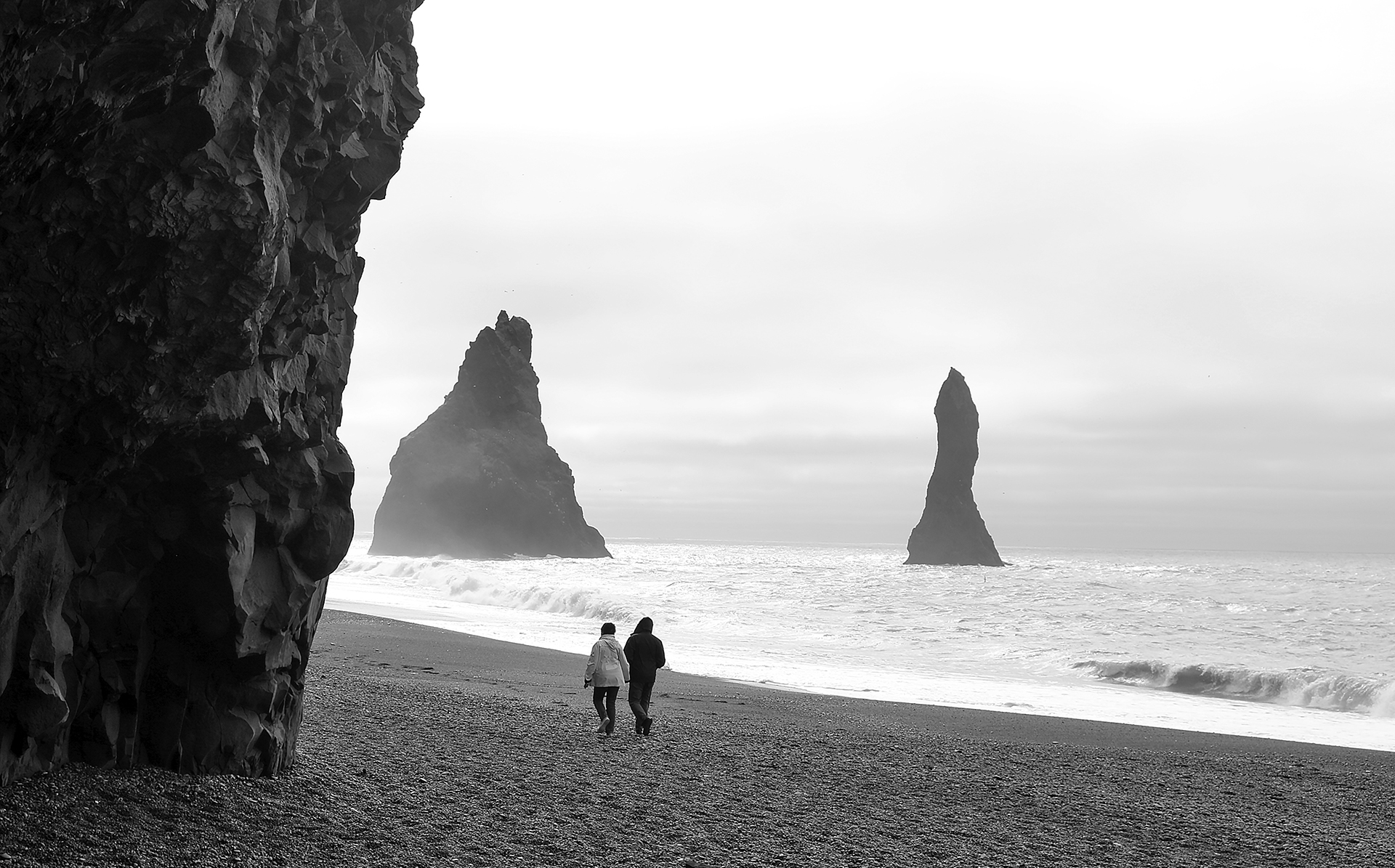
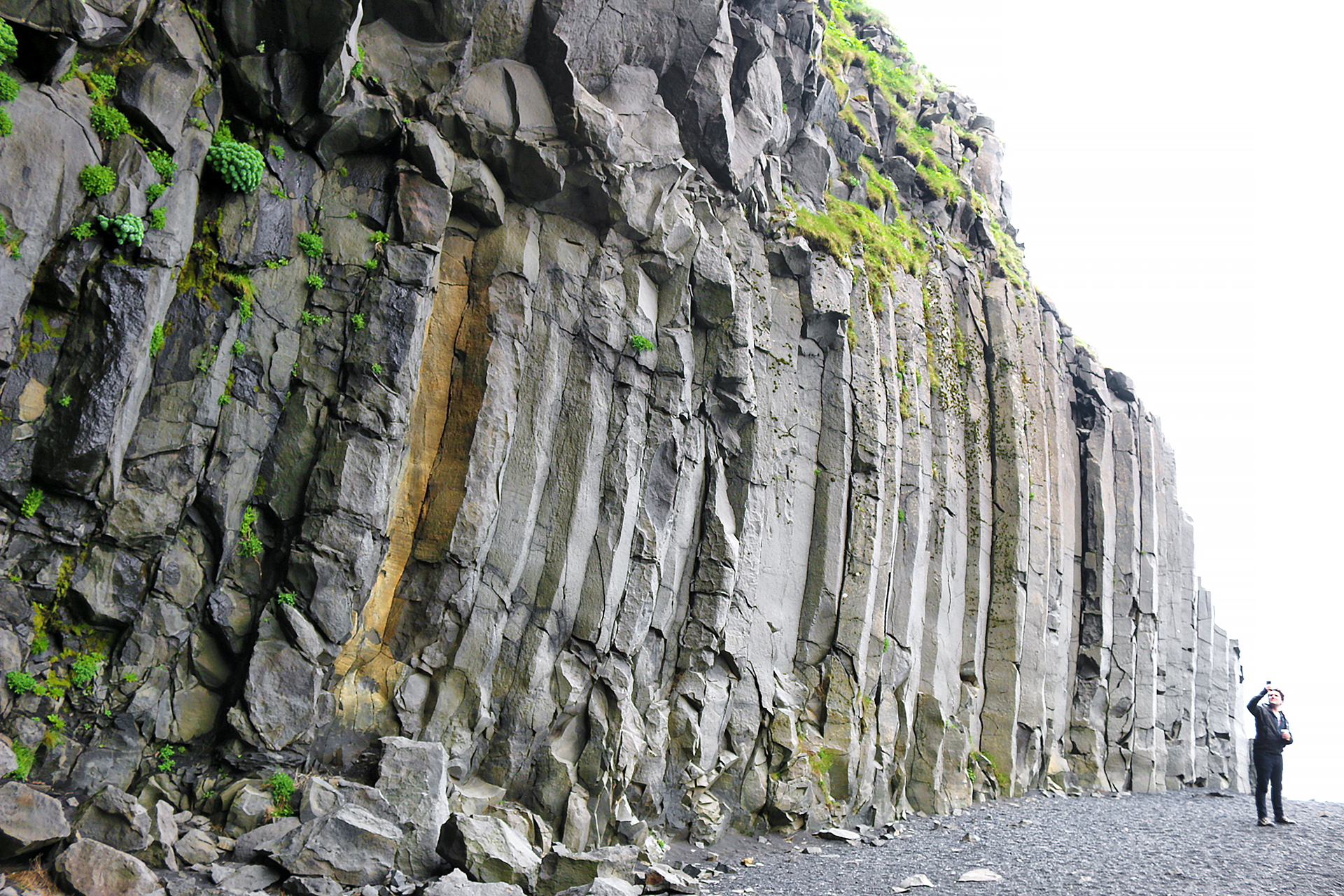
Simply walking right up to the Basalt Columns and Hálsanefshellir Cave at the beach was once possible — but the sea currently covers the land in those areas. The immense force of the surf violently tosses the aforementioned large heavy stones back and forth in the sand below the high erosion bank, which has replaced the shoreline that was once exposed.
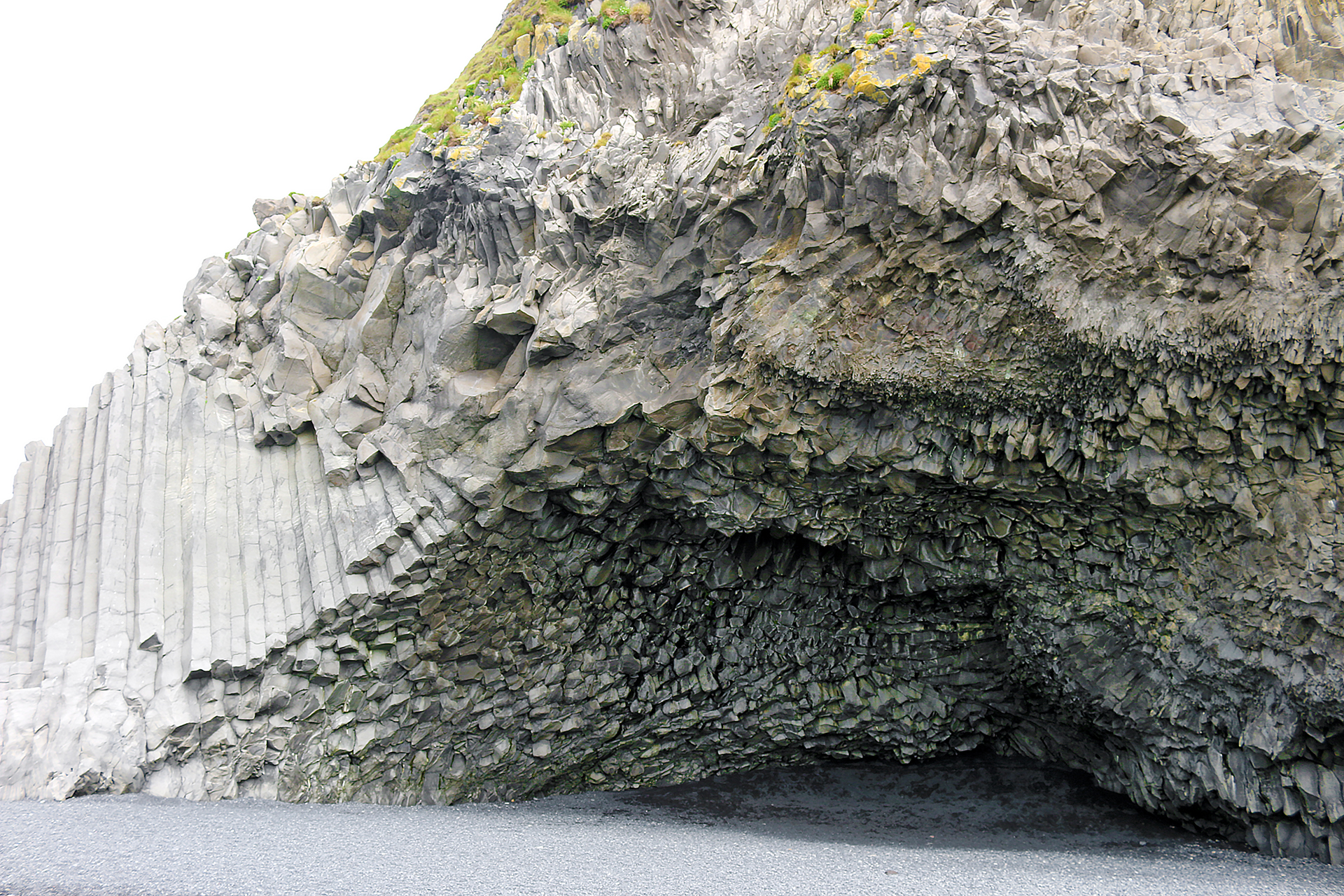
I kept one eye on the Atlantic Ocean behind me as I took a photograph of the interior of Hálsanefshellir Cave from outside.
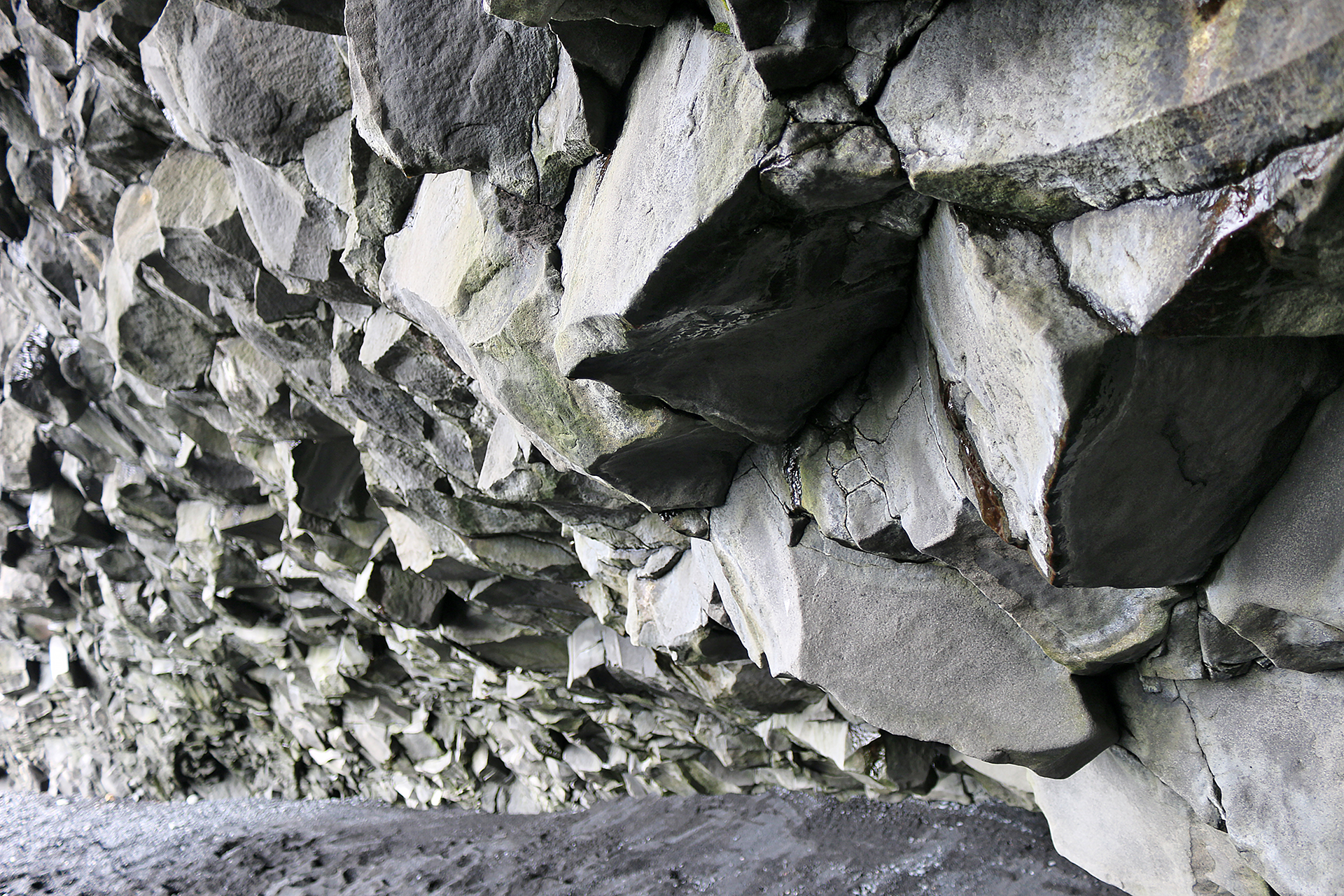
The photograph above shows a view of the western wall inside of Hálsanefshellir Cave.
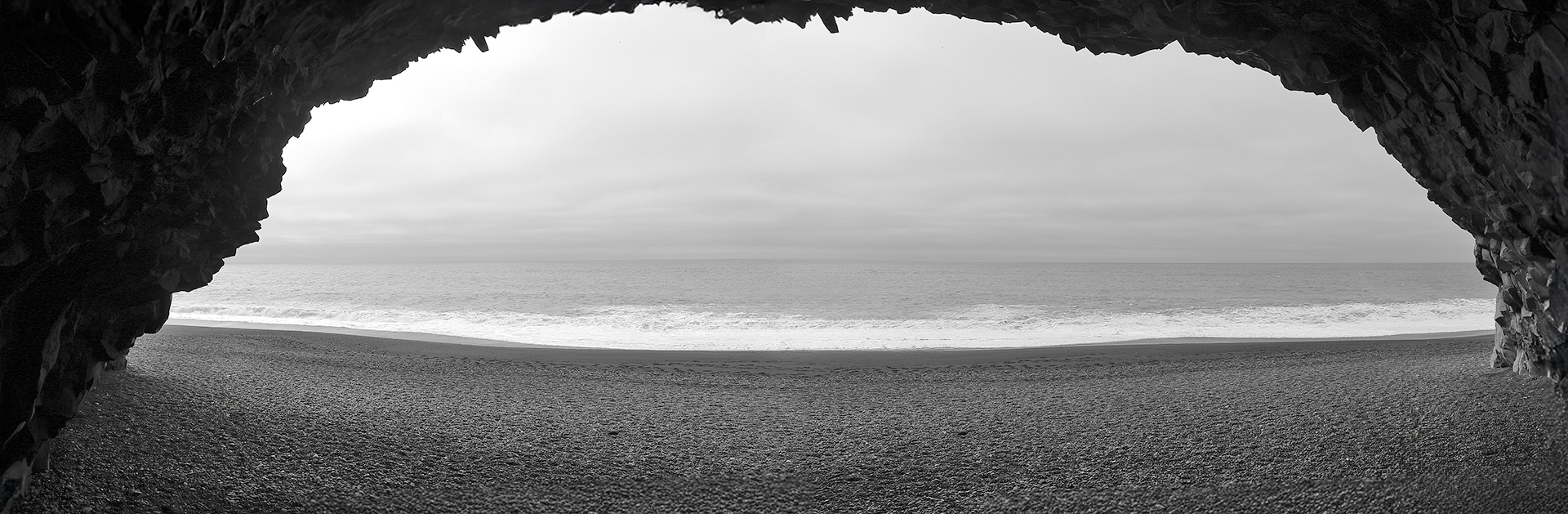
I was able to easily walk inside of Hálsanefshellir Cave. This entire area inside and outside of the cave is now covered in water from the Atlantic Ocean.
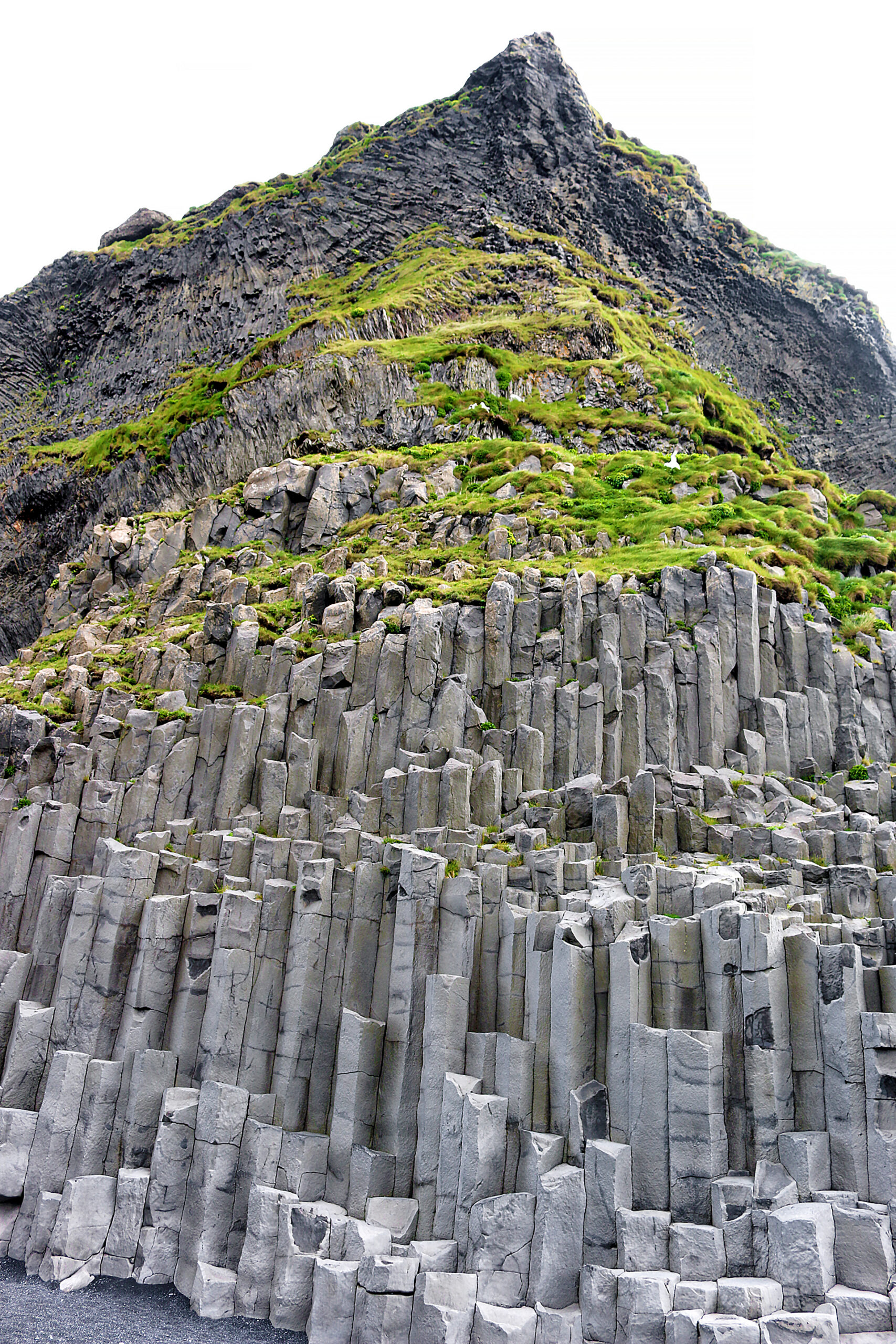
The natural basalt rock column formations of Hálsanefshellir Cave — both inside and outside — inspired awe.
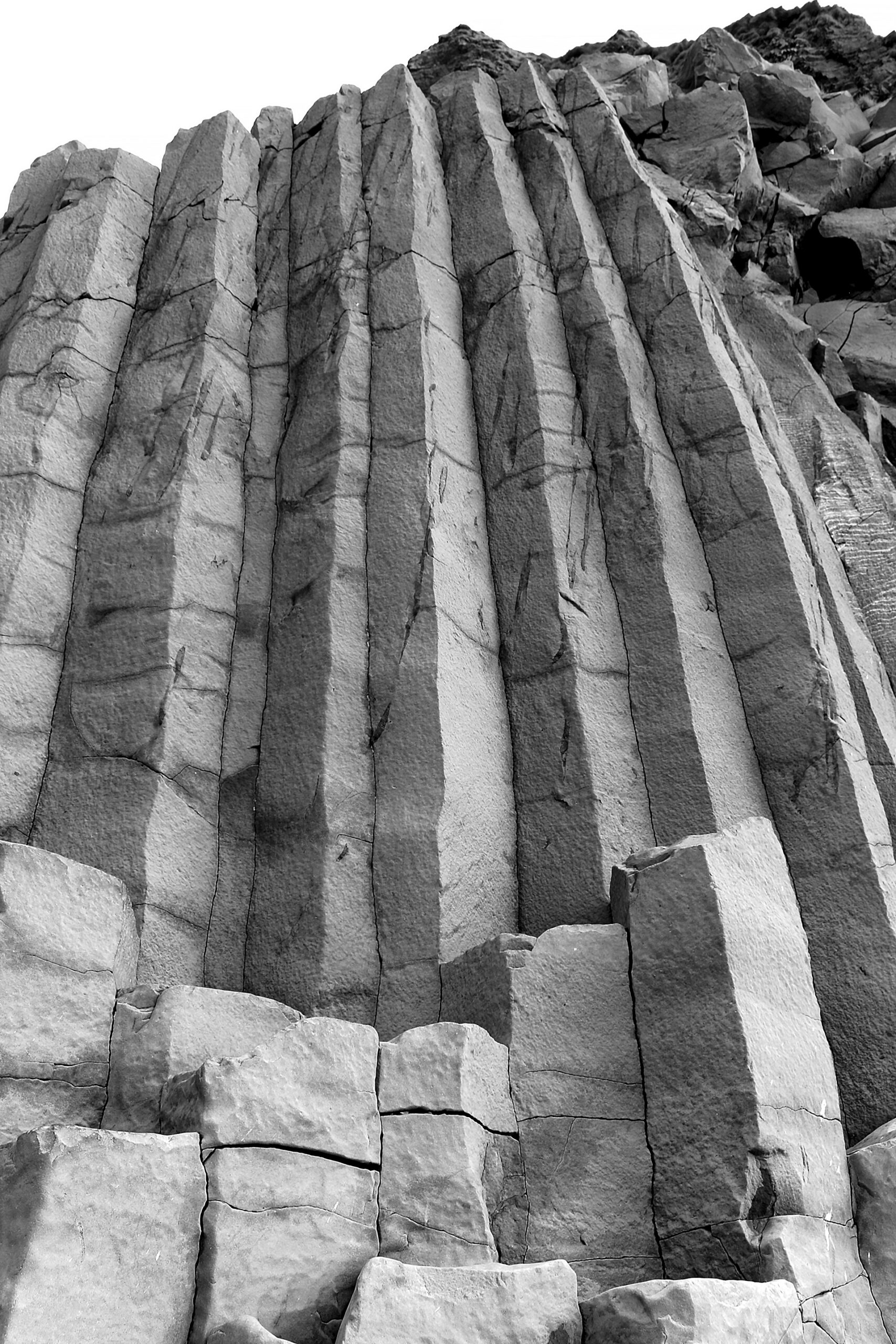
The relentless force of the Atlantic Ocean over the millennia have carved out the basalt pillars that frame Hálsanefshellir Cave.
Final Boarding Call
Reynisfjara Beach is located on privately owned land adjacent to the southernmost tip of mainland Iceland near the town of Vík í Mýrdal. It is part of the Katla Global Geopark of the United Nations Educational, Scientific, and Cultural Organization. The drive of 188 kilometers from Reykjavik can take almost two hours and 40 minutes.
No facilities are available at Reynisfjara Beach; and no admission fee is charged. You can stay as long as you like, as it is technically open 24 hours per day, 365 days per year — except when Hálsanefshellir Cave and that Basalt Columns are closed during Red Warnings at the beach — but as mentioned earlier in this article, the surf can potentially be treacherous…
…and even deadly. Please be careful if you do visit Reynisfjara Beach.
All photographs ©2018 by Brian Cohen.
