
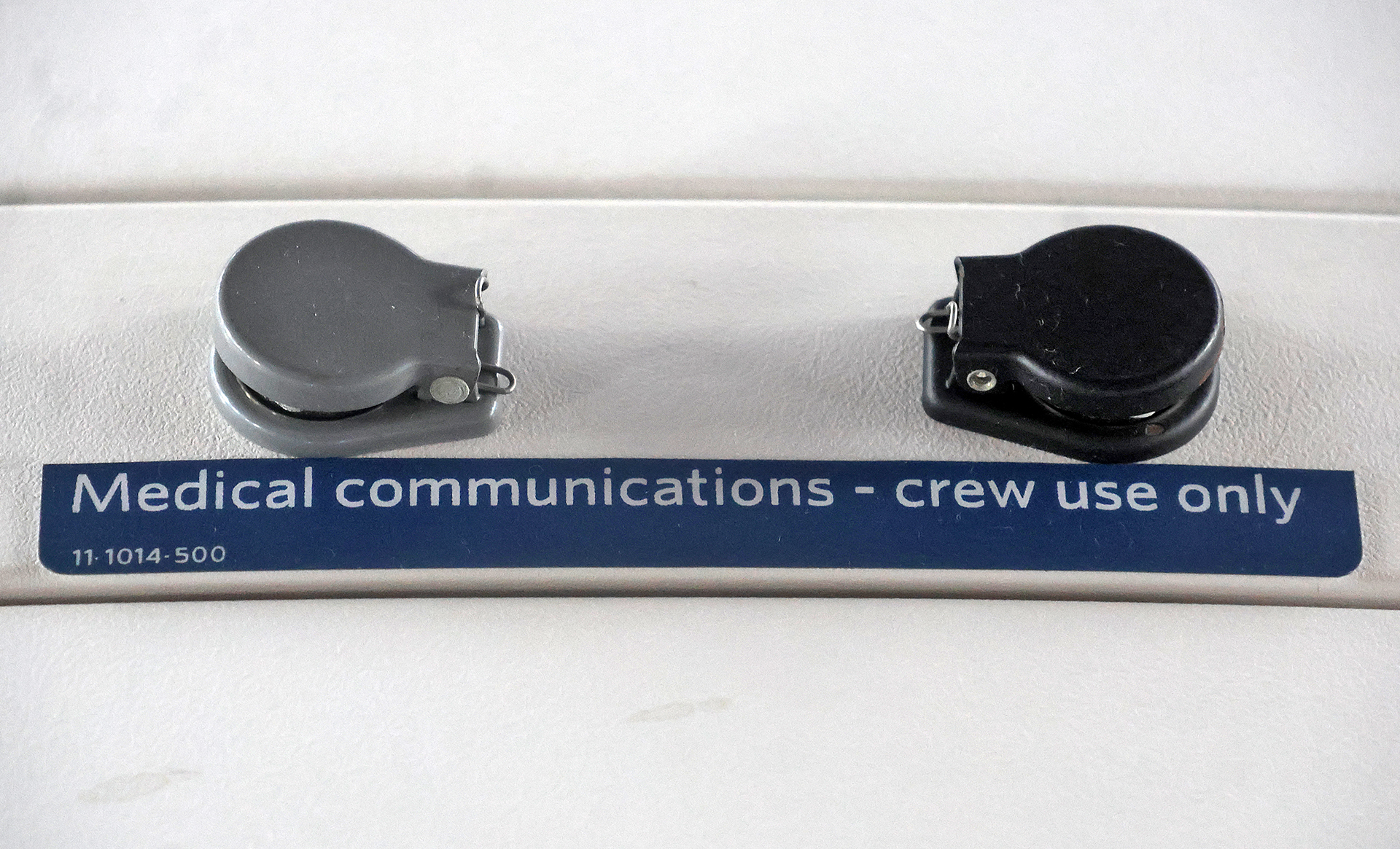

On the ceiling in the passenger cabin aboard an airplane above a row seats in front of mine during a recent flight were two ports that were marked “Medical communications – crew use only”, which I personally had never seen before.
What Is “Medical communications – crew use only”?
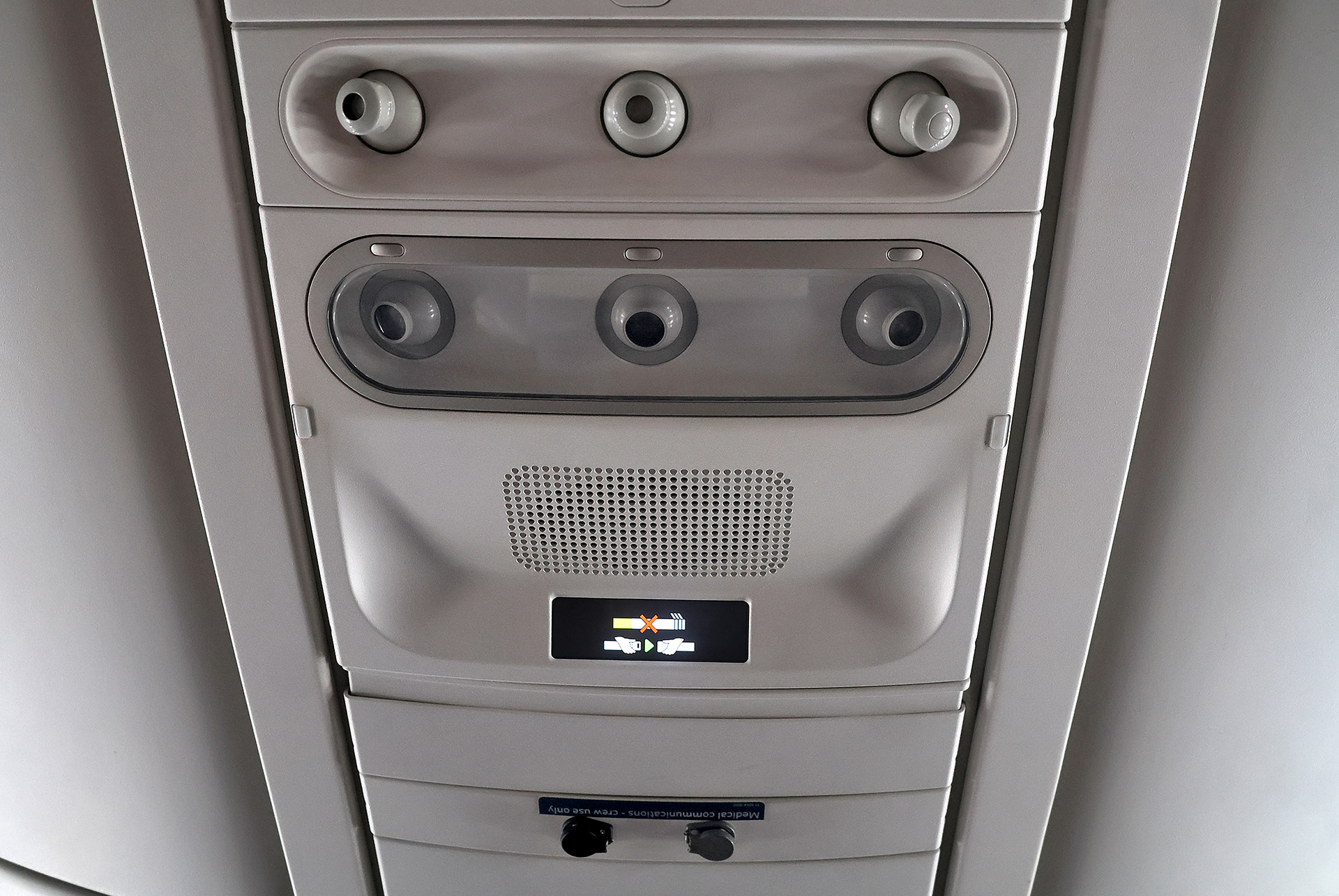
The two ports that are marked “Medical communications – crew use only” are general connections for a standard aviation headset, which includes a headphone plug and a microphone plug. When each plug is inserted into each port, the member of the flight crew can then be directly connected to pilots in the cockpit during a medical emergency or priority medical condition in order to keep the pilots informed and updated as to what is occurring aboard the airplane.
Additionally, members of the flight crew — or doctors or other medical professionals who may be aboard the airplane at the time — aboard airplanes that are operated by commercial airlines may also be patched in via the pilots to the control tower at the arrival airport, who in turn can contact physicians with a medical consulting service and patch them into the discussion.
In most cases, the communication link is just to ensure that arriving emergency personnel have the correct information. One of numerous examples of what could happen is the following scenario:
- The captain of the airplane contacts the control tower to say “We have a medical emergency on board.”
- The control tower responds to the captain: “Okay, emergency services are on their way.”
- An ambulance and other emergency vehicles will meet the aircraft as soon as it lands at the airport.
- A member of the flight crew then plugs in the headset and says to the control tower, “The passenger says she is allergic to nuts. A doctor here aboard the airplane says it appears to be anaphylactic shock.”
- The control tower — with 911 on the line — responds: “Hello. It looks like our passenger is allergic to nuts and going into anaphylactic shock.”
- 911 personnel then contacts ambulance via radio and says, “Patient is allergic to nuts and may be experiencing anaphylactic shock.”
The principle behind this is that personnel with some basic training — members of the flight crew as one example — are connected to a doctor. They describe the condition of the patient and the symptoms to the doctor, who then advises on a course of treatment which can begin immediately and hopefully give the patient a better chance of survival.

Final Boarding Call
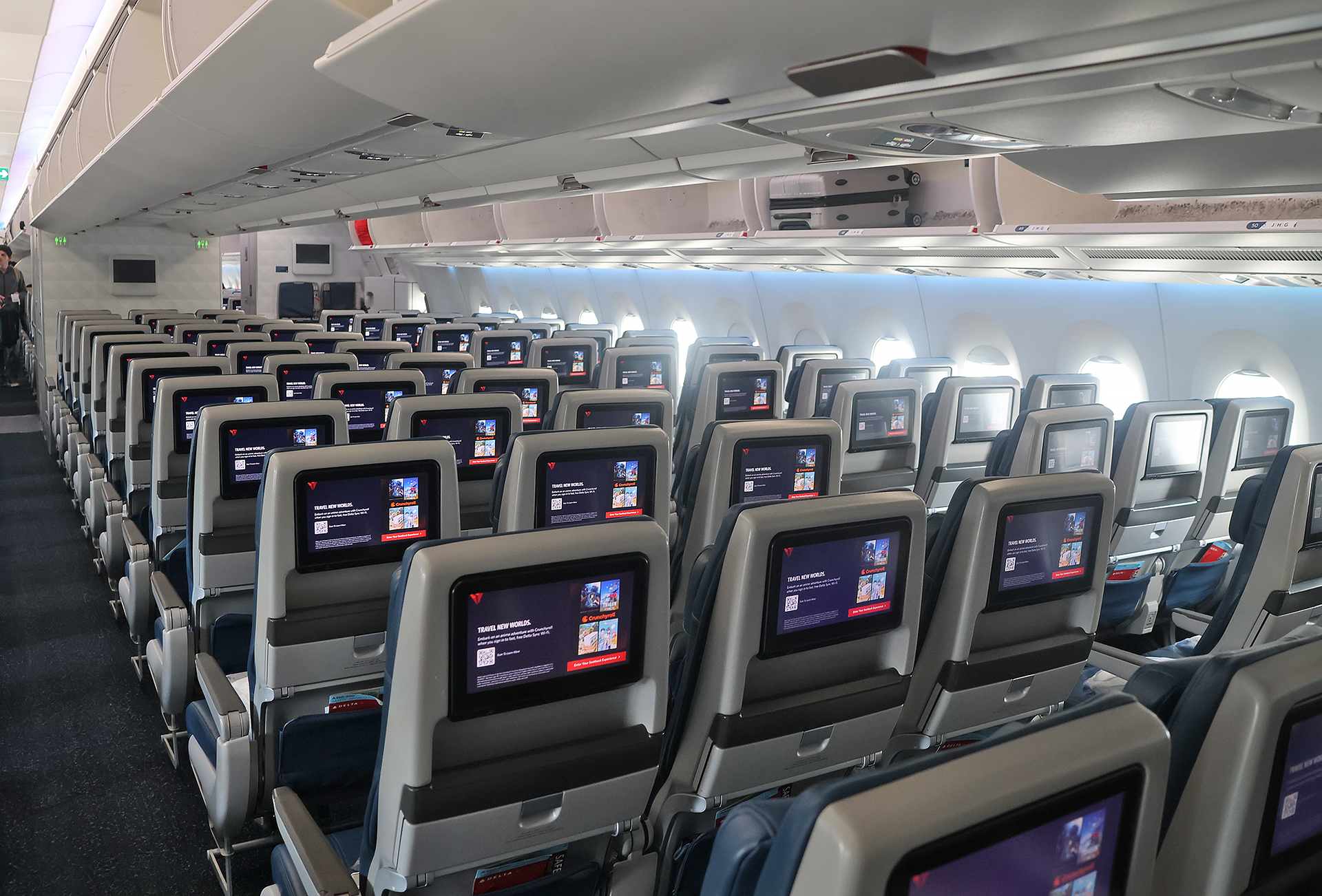
Hopefully, neither you nor I will ever see the medical communications ports in action — but if a medical emergency unexpectedly occurs, knowing that they are there can provide some sense of solace.
All photographs ©2026 by Brian Cohen.
