


Preparing for a trip to Antarctica is not the same as preparing for virtually any other travel experience. Antarctica is a hostile and untamed environment that — save for scientists and researchers — is uninhabited by human beings. No store is available if you have forgotten something. Medical emergencies take on a whole new meaning in Antarctica. The weather can change substantially and unexpectedly…
Preparing For a Trip to Antarctica
…so the axiom for preparing for a trip to Antarctica is to be prepared. Do research on what the operator of the expedition provides as part of the total cost — as well as what optional items are available — and what is required prior to embarking on the trip. Once you board the vessel, your options are extremely limited.
Prior To Your Trip — and After Your Trip Has Concluded
Keep in mind that you will not be traveling from your home directly to the vessel; so prepare for the weather and other conditions in places that you will be staying prior to the expedition and after the expedition has completed. One typical example is that expeditions to Antarctica usually occur from late spring through early autumn — which is from November through March — and in the western hemisphere, vessels typically depart from Ushuaia. This typically means transportation is needed from Buenos Aires, at which the temperature can reach as high as 95 degrees Fahrenheit during the day.
Items Which You May Not Need to Bring With You On Your Trip

Let us start with items that may be provided by the operator of the expedition at no additional charge that you may not need to bring with you for your trip. Check with the operator of your expedition for additional details to ensure whether the following items are provided, which may include:
- Parka as an outer layer for the upper half of your body. Participants usually get to keep the parkas and take them home — and if so, ensure that you have enough room in your baggage to transport them home with you.
- Waterproof bag in which to keep a camera and other items.
- Metal container may be included with the aforementioned waterproof bag to have water available while away from the vessel, as bringing plastic bottles onto Antarctica is typically prohibited.
- Waterproof muck boots or snow boots to keep feet warm and dry — although participants typically must return waterproof boots to the operator at the end of the expedition.
- Certain toiletries — such as soap, shampoo, conditioner, moisturizing lotion for dry skin, and tissues as five of many examples — as your stateroom aboard the vessel may provide these toiletries so you may not need to bring these items with you.
- Electric hair dryer may be provided in your stateroom.
- Hiking poles when on land.
- Snow shoes — although activities which require snow shoes may be an available option at an extra cost.
- Binoculars for viewing wildlife, as some operators provide them — although you might be able to instead use the zoom lens or telephoto lens of your camera or portable electronic device.
- Pen and paper for taking notes may be provided on the desk in your stateroom.
Clothing While Aboard the Vessel
Ensure that you have the following items of clothing to wear while aboard the vessel:
- Clothing in which you are typically comfortable — such as jeans, sneakers, socks, undergarments, and shirts or blouses, as the vessel will likely be warm and comfortable. Slippers and robes may be provided by the operator of the expedition; so you may not need to bring similar items.
- Bathing suit if you are brave enough to partake in what is called a Polar Plunge: the operator of the expedition will likely offer a supervised and controlled activity in which participants plunge into the icy Southern Ocean while wearing nothing more than a bathing suit. Additionally, the vessel might be equipped with a hot tub, a sauna, a swimming pool, or any combination of these items for which a bathing suit is required.
- Garments for formal events for which casual clothing may not be appropriate — such as dining at the table of the captain of the vessel. If formal events are planned during the itinerary, take clothing that can pass for either casual or formal — such as newer sneakers that resemble dress shoes or black jeans which can pass for dress pants — so that you do not overpack by including clothing that can only be worn for formal events. Note that operators of expeditions discourage wearing shoes with high heels aboard their vessels.
Clothing for Expeditions Off of the Vessel

Dressing in layers is key to braving the elements of Antarctica, as it not only allows the wearer to add or remove clothing as necessary; but layers of clothing are also more effective at staying warm and dry versus one huge coat and one thick pair of pants.
- Waterproof snow pants that are also windproof are necessary as an outer layer for the lower half of your body if you plan on leaving the ship via an inflatable smaller boat which is known as a Zodiac for wet landings on islands or the continent itself. Denim jeans and other clothing that is manufactured from cotton are not good because they cannot wick water away and can lead the wearer to feeling colder.
- Long underwear or leggings for both tops and bottoms to act as a basic layer underneath the exterior layers of clothing.
- Sweatshirt, hoodie, fleece jacket, or wool sweater for a middle layer of clothing for the upper part of your body.
- Sweatpants, fleece pants, or hiking pants for a middle layer of clothing for the lower part of your body.
- Thick pair of wool socks, which will keep feet warmer than average socks or thinner socks.
- Lightweight down jacket or some other outer layer of clothing for the upper part of your body.
- Sunglasses or ski goggles that are rated to filter out ultraviolet rays, as the stark and endless white of the snow and ice can result in snow blindness.
- Sunscreen or suntan lotion with a sun protection factor of at least 30+, as the sun can be strong enough to burn your skin — even on cloudy days — as you will be outside for an extended period of time and constantly exposed to ultraviolet rays that are reflected by the snow and ice.
- Waterproof gloves or mittens to keep hands warm and dry — although photographing the experience must be taken into account, as taking pictures with hands covered by mittens can be rather difficult to do. Lightweight gloves that are thin yet keep hands warm and dry are best for photographers — but try them on for the best fit before purchasing them. Instead of a second pair of thicker gloves or mittens, you may want to purchase some hand warmers to stick inside of your gloves to keep your hands warm.
- Scarf, neck gaiter, hat, headband, or other accessories to cover your ears and other parts of your body that may otherwise be exposed to the elements.
- Small backpack that is resistant to water — especially if a waterproof bag is not provided by the operator of the expedition.
Insurance and Medical
Ensure that you are indeed in good enough health to take on the rigors of participating in an expedition in Antarctica — and be prepared for any emergency.
- Enough prescription medication to last throughout the duration of the trip, as no full-service pharmacy will be available throughout the expedition. Bring some extra medication just in case you may need it.
- Motion sickness tablets or patches to help combat sea sickness — but be aware of any side effects that can potentially be worse than motion sickness itself. Bands that wrap around the wrist can also combat motion sickness. You can also simply hold one wrist tightly with your other hand — ensuring that your thumb places pressure across and underneath your wrist — as shown and explained in greater detail in this article.
- Lip balm to protect lips against cold dry windy conditions — as well as the sun.
- Travel insurance policy with at least a million dollars for repatriation in case you need to be evacuated due to a medical emergency. Leaving Antarctica at the last minute is never inexpensive; and a travel insurance policy is typically required by the operator of the expedition.
- Medical clearance to travel via either a signed note from your doctor or an interview with a doctor of the operator of the expedition. Note that a fee is typically required for an interview with a doctor of the operator of the expedition, which can cost approximately $150.00.
Required Documents
The following documents may be required by the operator of the expedition:
- Medical form — although the operator might instead have an electronic copy of your medical form that you may not need to bring with you.
- Passport — as well as a copy of your passport — as your passport will likely be held by the operator for the duration of the expedition.
- Prescription medication in case of an emergency.
Electronic Devices and Equipment
Electronic devices that you should consider bringing with you to Antarctica include but are not limited to:
- Camera with accessories — including but not limited to:
- Case to protect the camera.
- Charger to ensure that you always have power for your batteries.
- Extra battery in case you are off the vessel and the power in the battery is depleted.
- Memory cards so that you have enough space to store your photographs. This is critical, as you may be surprised how many people wind up permanently deleting photographs from prior trips to create room for new photographs.
- Zoom lens or telephoto lens for capturing wildlife — but unless you plan on profiting off of your photographs, do not go overboard with a lens that is too big or bulky to carry with you.
- Microfiber lens cloth for the lens of your camera, sunglasses, eyeglasses, or portable electronic devices, as the water of the sea, snow, and ice will likely need to be wiped and cleared from the lens.
- Outlet converter — especially if you are on a foreign vessel; so confirm with the operator of the vessel as to what electrical outlets are available.
- Mobile telephone, which can operate as a backup camera.
- Charger for the mobile telephone. Many vessels are now equipped with Universal Serial Bus ports; so confirm with the operator of the vessel as to what types of USB ports are available.
- Computers and portable electronic devices — but keep in mind that access to Wi-Fi is usually available but not guaranteed and can be expensive and unreliable. If the Wi-Fi is good enough and inexpensive enough, you may be able to upload some or all of your photographs to a safe remote location — as well as be able to access the Internet for work or for leisure.
While Aboard the Vessel
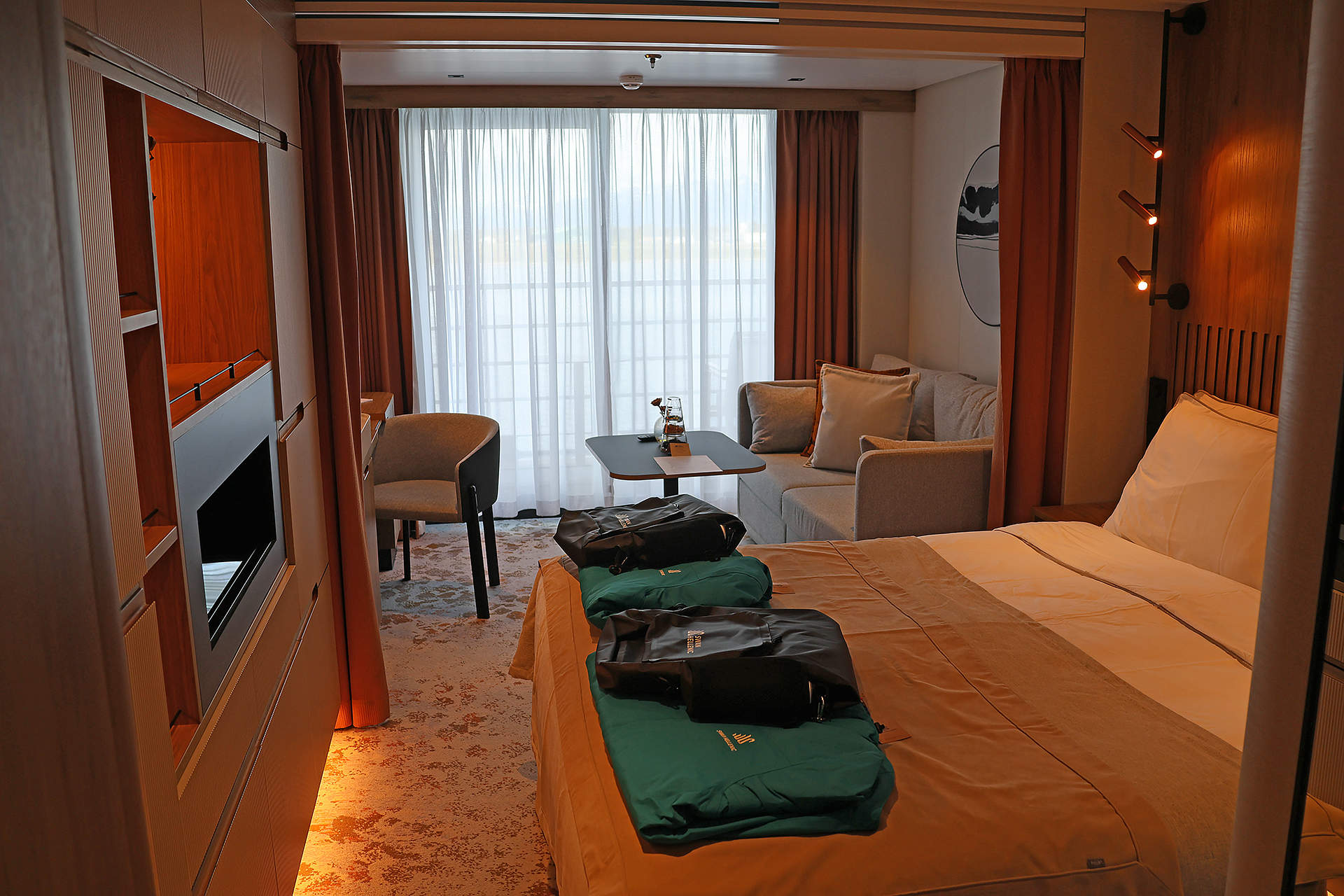
The good news is that technology allows for vessels to provide its passengers with a vast assortment of amenities — such as:
- Comfortable accommodations which resemble — and, in some ways, surpass — a typical room at a hotel or resort property.
- Dining options which include at least one restaurant and a bar. The restaurant may offer a buffet or a formal sit-down dining experience with menus for breakfast, lunch, and dinner. Bars offer a wide variety of beverages. Other areas of the vessel may offer snacks and beverages between meal hours — including green apples to help alleviate motion sickness.
- Basic medical care — a doctor is aboard the vessel to not only handle minor and basic medical care; but also to proactively prevent maladies from occurring. The doctor has a medical office aboard the vessel.
- Gift Shop and store — if you have forgotten certain items or if you want to purchase an item, they may be available at the small store aboard the vessel — but be prepared to pay top dollar for them, as no competition is available.
Miscellaneous
Other items that you might want to keep in mind include:
- Personal toiletries — such as a toothbrush, toothpaste, mouthwash, and shaving cream.
- Things to keep you occupied while at sea, such as a deck of cards or puzzles — although you likely will not need them depending on which operator you choose for your expedition to Antarctica and what activities and amenities are offered.
- Laundry — check to see if the vessel is equipped with washing machines and clothes driers. If so, find out how much using this facility might cost. With some operators, self-service laundry is available at no extra cost, which will allow to you bring fewer clothes if you do not mind taking a little time out of your schedule to do laundry.
- Cash and payments — Most operators will provide an identification card after you board the vessel that you should keep with you at all times. These cards can double as keys to your stateroom; may have your information printed on them; and they may be attached to a lanyard for your convenience. If you should need to purchase anything aboard on the ship — such as certain alcoholic beverages or souvenirs from the gift shop as two of many examples — use your identification card; and your credit card that is on file will be charged. Depending on your location before the trip and after the expedition has concluded, you may also want to bring currency to exchange for Argentinian pesos. Note that only cash is accepted for tips and gratuities at some dining establishments in Argentina — otherwise, credit cards are widely accepted.
Final Boarding Call
Note that the aforementioned list is a general list; and that what is requested or required of an operator for its expeditions may vary. Also, this list is for expeditions in Antarctica and not for cruises to Antarctica during which passengers never leave the vessel.

As with any other trip, do not overpack. You want to strike that delicate balance of having everything you need that is essential to your comfort and well-being without having to lug items around that you never needed in the first place.
Believe it or not, I successfully packed for my trip to Antarctica without having to check any baggage either way. Not only was I not missing anything; but I also had a few items that I never used because the weather in Antarctica was unexpectedly pleasant — but I would have likely needed those items if the weather worsened.
Details of my trip to Antarctica — and the expedition while I was there — are forthcoming in future articles…
All photographs ©2025 by Brian Cohen.
