
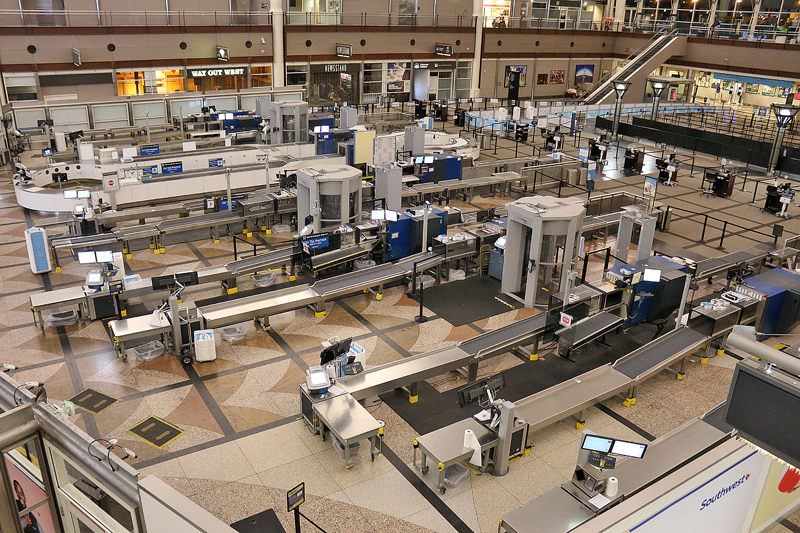

Is TSA Gold+ the future of aviation security? Will travel by air be easier or more confusing? What exactly is TSA Gold+ and how will it work?
Is TSA Gold+ the Future of Aviation Security?

“TSA Gold+ is a new public-private partnership aimed at modernizing aviation security at select airports across the United States. TSA Gold+ will pair the Screening Partnership Program with TSA’s innovation authorities to enable cutting-edge aviation security solutions”, according to the official Internet web site of TSA Gold+. “Under TSA Gold+, TSA will continue to set the standards for aviation security using outcome-based measures that both drive performance and security. Long-term Screening Partnership Program (currently a TSA private screener contract model) contracts will redirect funds into the investable partnerships where leading industry operators can manage both technology and screening workforce.”
No fewer than 20 airports currently operate under the existing Screening Partnership Program by using private security contractors instead of federal employees of the Transportation Security Administration while still operating under the oversight of the Transportation Security Administration. Those 20 airports include:
- Atlantic City International Airport Atlantic City, New Jersey
- Charles M. Schulz–Sonoma County Airport Santa Rosa, California
- Dawson Community Airport Glendive, Montana)
- Frederick Douglass Greater Rochester International Airport Rochester, New York
- Great Falls International Airport Great Falls, Montana
- Glacier Park International Airport Kalispell, Montana
- Havre City-County Airport Havre, Montana
- Kansas City International Airport Kansas City, Missouri
- L. M. Clayton Airport Wolf Point, Montana
- Orlando Sanford International Airport Sanford, Florida
- Portsmouth International Airport Portsmouth, New Hampshire
- Punta Gorda Airport Punta Gorda, Florida
- Roswell Air Center Roswell, New Mexico
- San Francisco International Airport San Francisco, California
- Sarasota Bradenton International Airport Sarasota, Florida
- Sidney-Richland Regional Airport Sidney, Montana
- Sioux Falls Regional Airport Sioux Falls, South Dakota
- Tupelo Regional Airport Tupelo, Mississippi
- Wokal Field – Glasgow/Valley County Airport Glasgow, Montana
- Yellowstone Airport West Yellowstone, Montana
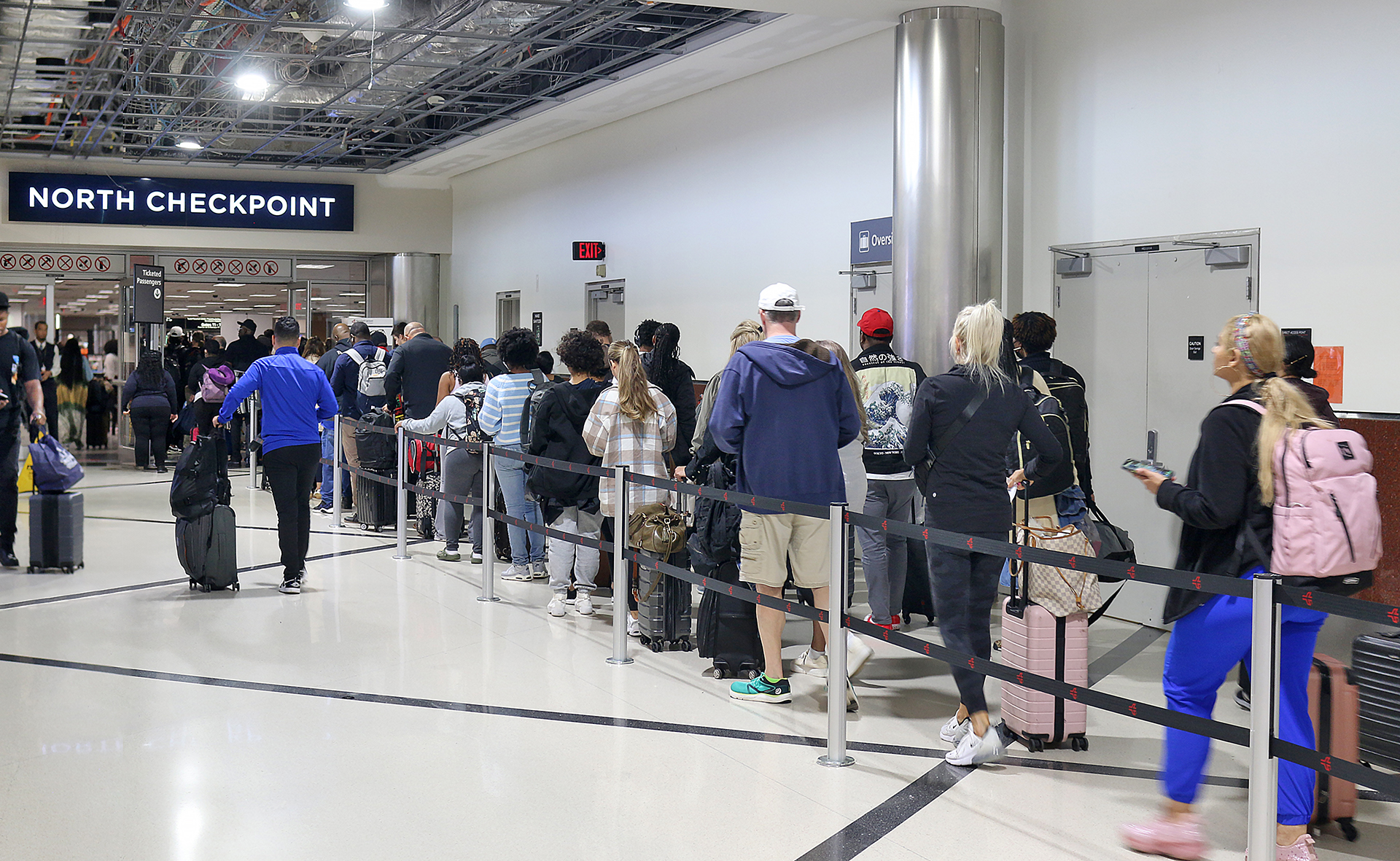
Under the current structure, private contractors handle passenger screening while simultaneously following the rules, procedures, federal security standards, and compliance of the Transportation Security Administration — but Gold+ would also allow private operators to play a larger role in the security screening process at airports for:
- Staffing security checkpoints at airports
- Deploying screening technology
- Maintaining equipment
- Managing parts of operations at security checkpoints
The goal of the TSA Gold+ initiative is to modernize the process of screening passengers at airport security checkpoints faster than the federal budget process typically allows while simultaneously reducing the repeated operational disruptions that airports typically experience during shutdowns of the federal government of the United States — ensuring that employees that conduct the screening procedures are paid during those shutdowns that usually result from funding crises — and shortages of employees and staff. TSA Gold+ could also accelerate upgrades to technology and improve the physical layouts of security checkpoints more quickly — as well as improve the throughput of travelers at security checkpoints at airports nationwide.
Airports throughout the United States have reportedly been briefed on TSA Gold+ — and some airports are considering participating in the initiative.
Final Boarding Call
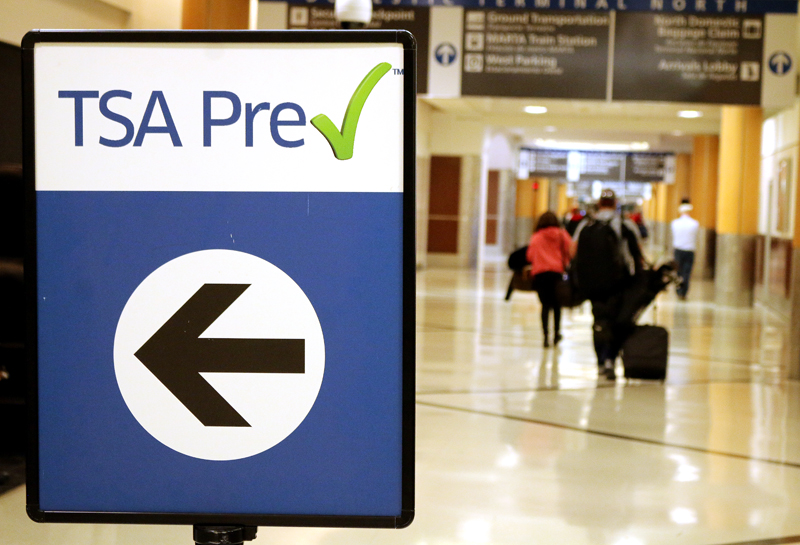
When I first heard about TSA Gold+, I initially thought it was an elite trusted traveler program that was above TSA Pre✓ — but TSA Gold+ does not replace TSA Pre✓, CLEAR, or the standard screening rules and procedures of the Transportation Security Administration in general. Passengers would still be required to go through security procedures that are regulated by the federal government of the United States — even if private contractors are handling operations locally.
TSA Gold+ has reportedly revived a long-running debate pertaining to whether airport screening should remain primarily a federal function or operate more like a public-private partnership. For example, one tradeoff of TSA Gold+ is that the screening experience could be less standardized — and, therefore, less consistent and uniform — than the current screening process and procedures at airports throughout the United States with which travelers generally know what to expect.
A broader privatized model — which the TSA Gold+ initiative encourages — could create more systems that are specific to airports, approaches on how to handle staffing, and experiences of travelers in general. The result might be that the experience at some airports could potentially feel more efficient and modern; while the experience at other airports may feel disjointed or inconsistent.
Motivation for profit is among the strongest criticism of partial privatization. Introducing more private-sector incentives into airport security could result in creating pressure to reduce labor costs or prioritize efficiency metrics over the quality of security. Workforce turnover, training consistency, and accountability are also concerns. Another possibility is that the structure of security checkpoints at airports could eventually become more tiered, with wealthier airports receiving better staffing and technology while smaller airports would lag behind and not have enough resources to keep up.

Some countries in Europe are already successfully using private airport screening contractors successfully — along with the aforementioned airports in the United States that have participated in the Screening Partnership Program for years without major disruptions — so TSA Gold+ has precedence to also potentially be successful.
In any event, you will likely not notice any significant changes — and certainly not immediately — as a result of the implementation of the TSA Gold+ initiative, which is expected to be gradual if it proceeds.
I am all for the least expensive, most convenient, and fastest way to implement procedures at security checkpoints at airports as possible — as long as the security itself is not compromised…
…but I am not quite sure that TSA Gold+ is the solution…
All photographs ©2016, ©2020, and ©2023 by Brian Cohen.
