
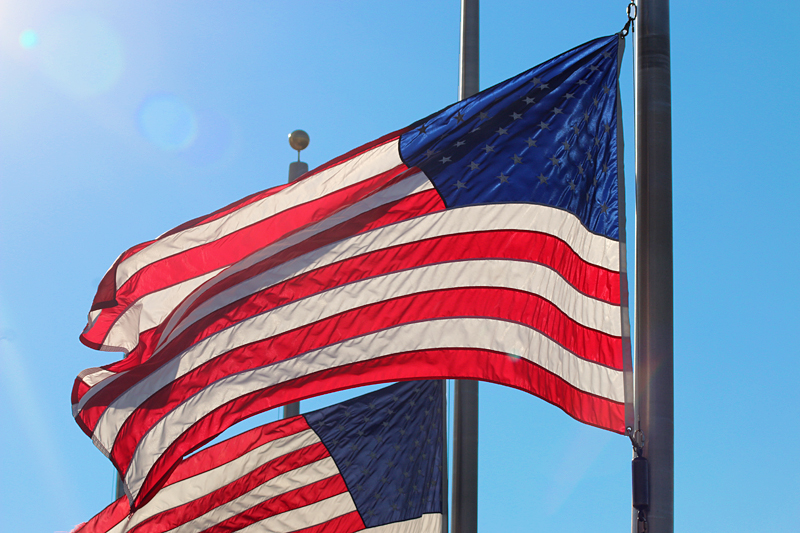

Respecting the flag of the United States of America was the focus of a controversy at Frost Bank Center in San Antonio prior to the start of Game 1 of the 2026 NBA Finals last night on Wednesday, June 4, 2026, when only two members of the San Antonio Spurs professional basketball team placed their hands over their hearts while the Star Spangled Banner was sung by Tori Kelly.
Controversy: Respecting the Flag of the United States of America
At the center of the controversy was that Victor Wembanyama stood with his arms crossed during the singing of the national anthem; but even though he is very handsomely compensated for playing for a professional team of the National Basketball Association in the United States, the official citizenship of “Wemby” — as he is more popularly known — is of France and not the United States.
Should Victor Wembanyama have placed his hand over his heart while the national anthem was sung?
First, important to note is that The Pledge of Allegiance to the Flag of the United States of America and the Star Spangled Banner are two different patriotic customs of honoring the United States — but the official flag of the United States is usually the focus of the reciting of the Pledge and the singing of the national anthem; and placing the hand over the heart is customary during both.
The following text is the manner of delivery pertaining to The Pledge of Allegiance to the Flag from Section 4 of the Flag Code of the United States:
The Pledge of Allegiance to the Flag: “I pledge allegiance to the Flag of the United States of America, and to the Republic for which it stands, one Nation under God, indivisible, with liberty and justice for all.”, should be rendered by standing at attention facing the flag with the right hand over the heart. When not in uniform men should remove any non-religious headdress with their right hand and hold it at the left shoulder, the hand being over the heart. Persons in uniform should remain silent, face the flag, and render the military salute. Members of the Armed Forces not in uniform and veterans may render the military salute in the manner provided for persons in uniform.
The original version of the Pledge of Allegiance to the Flag was written in August of 1892 by Francis Bellamy — who was a Baptist minister — and its text was as follows:
I pledge allegiance to my Flag and the Republic for which it stands, one nation, indivisible, with liberty and justice for all.
The original official gesture to the flag — as described in 1892 by Bellamy — began with a military salute; and after reciting the words to the flag, the arm was extended toward the flag. “Shortly thereafter, the pledge was begun with the right hand over the heart, and after reciting ‘to the Flag,’ the arm was extended toward the Flag, palm-down”, according to this article at UShistory.org. “In World War II, the salute too much resembled the Nazi salute, so it was changed to keep the right hand over the heart throughout.”
During rendition of the national anthem when the flag is displayed, all present except those in uniform should stand at attention facing the flag with the right hand over the heart. Men not in uniform should remove their headdress with their right hand and hold it at the left shoulder, the hand being over the heart. Persons in uniform should render the military salute at the first note of the anthem and retain this position until the last note. When the flag is not displayed, those present should face toward the music and act in the same manner they would if the flag were displayed there.
The Star Spangled Banner was written by Francis Scott Key, who was born in Frederick County in Maryland and was a young lawyer in Georgetown. Key was quoted as saying “Then, in that hour of deliverance, and joyful triumph, the heart spoke; and, Does not such a country, and such defenders of their country, deserve a song?” A fascinating and detailed history which prompted Key to write the Star Spangled Banner is at the official Internet web site of the National Park Service of the United States — and it all began with an arrest.

Only the first verse of the Star Spangled Banner is recited at sporting events and other activities. Do you know the lyrics to the remaining three verses? Click on the aforementioned link for the lyrics to the entire national anthem.
Final Boarding Call
Some people chose to take this controversy way too far — even including derogatory remarks pertaining to race and skin color. That is not the point nor the issue, in my opinion. Rather, this is all about respect.
When I travel and visit other countries, I usually attempt to respect at least the basic customs that are followed in those countries. I often learn from the customs of other people. If those customs contradict what I believe, I may choose not to engage in them and find another way to be respectful.
As for Victor Wembanyama, he was under no obligation to place his hand over his heart during the rendition of the national anthem — which is his right, as doing so is a custom and not a requirement — although as a public figure, he could have chosen to lead by example. However, I do consider him crossing his arms during the rendition of the national anthem as disrespectful.
By the way, the New York Knicks won Game 1 against the San Antonio Spurs by a score of 105 to 95…
Photograph ©2015 by Brian Cohen.
