
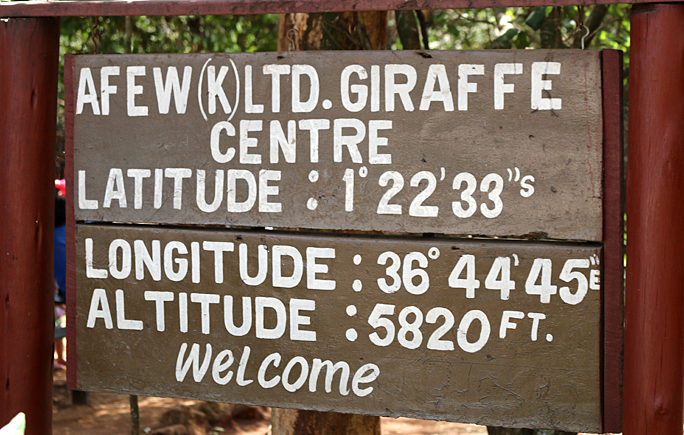

When I went on safari in Kenya years ago, I was located basically just south of one degree latitude, which is just south of that imaginary line on our planet that is equidistant from the South Pole and North Pole known as the Equator; which means that it was technically summer when I was there during that February.
In Which Direction Does Water Drain at the Equator?
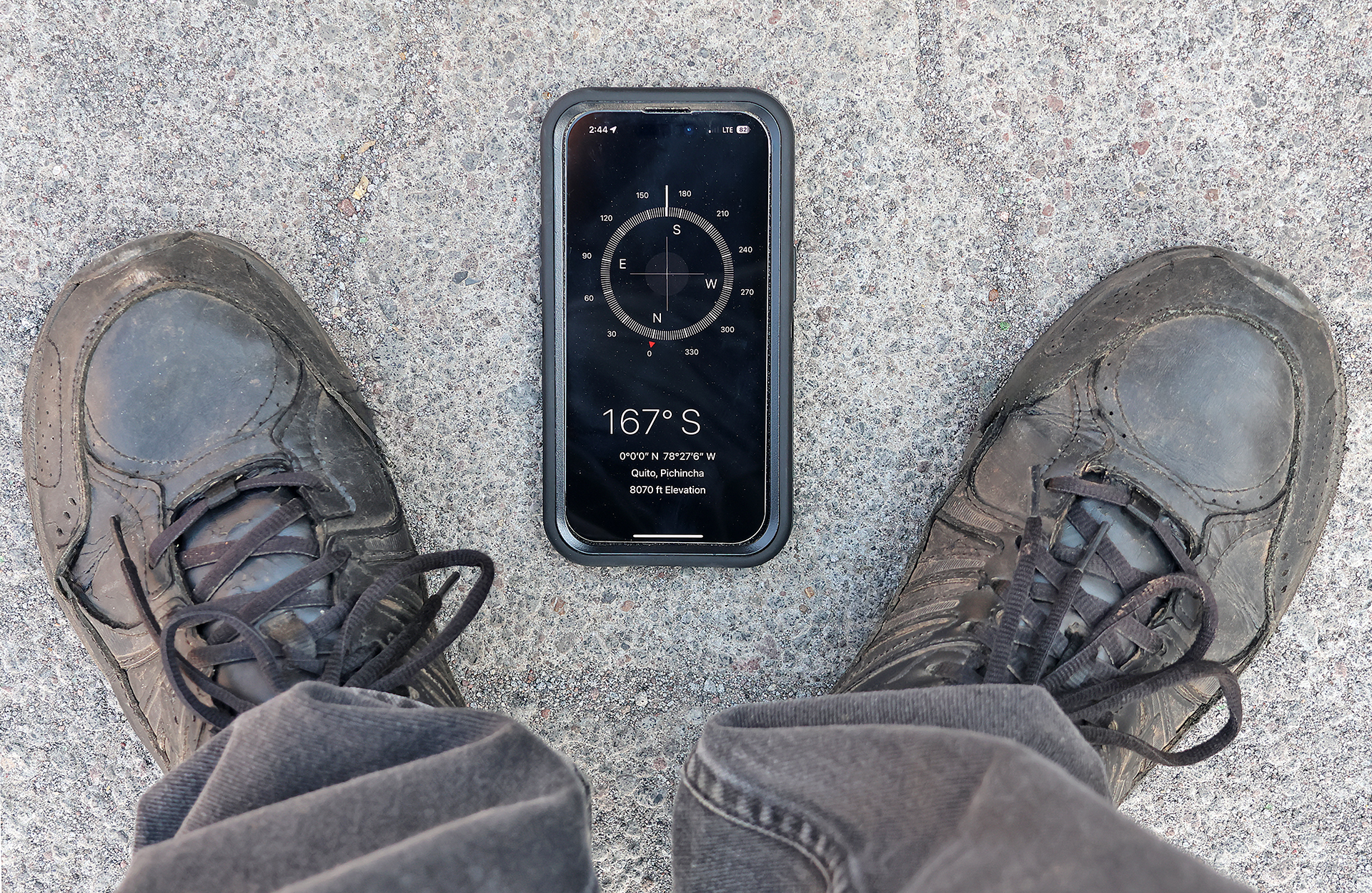
People had been asking me whether I was north or south of the Equator when I was in Kenya; and I would respond that I was always south of the Equator and never crossed over it by land at that time — despite having been so close to it more than once in Kenya and other places. I have since been on and crossed the Equator multiple times on land in Ecuador and have already been on and crossed the Arctic Circle on land in the United States and Finland; but I hope to one day also have been on and cross — other than by airplane — the Tropic of Cancer, Tropic of Capricorn, Antarctic Circle, and the International Date Line. Additionally, I would also like to be at the South Pole and all five North Poles — geographic, instantaneous, celestial, magnetic, and north geomagnetic. That last goal is not necessarily one I need to accomplish before I die — but it would be nice just the same.
By the way, I have been to North Pole in Alaska — but I do not count that as a legitimate North Pole; and I do realize that at least one of the aforementioned North Poles is a moving target. However, that is a possible topic for a future article — but I digress.
One of the people who asked me about whether or not I was north or south of the Equator in Kenya also asked me about in which direction does water drain at the Equator. People generally believe that water drains counterclockwise in the northern hemisphere and clockwise in the southern hemisphere in accordance with the Coriolis Effect, which is defined in this article from the official Internet web site of the Library of Congress of the United States as “the observed curved path of moving objects relative to the surface of the Earth” and is caused by the rotation of the earth.
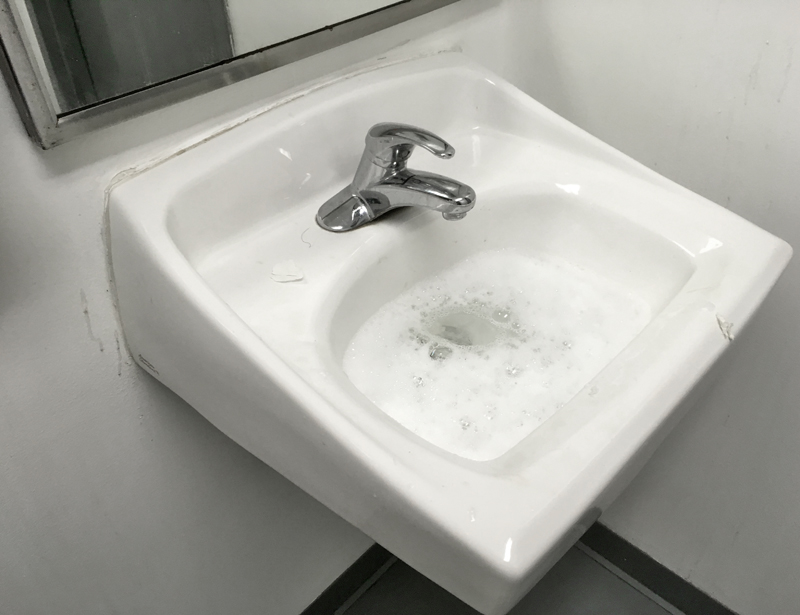
I had seen what I thought was proof of the Coriolis Effect myself when emptying a sink full of water — which drained clockwise — in New Zealand; but in reality, the direction in which water drains “depends upon how the water was introduced and the geometric structure of the drain” — despite countless videos supposedly proving otherwise.
One of the biggest misconceptions that is associated with the Coriolis Effect is that its force causes and dictates the direction of the rotation of water down the drain of a sink or toilet — but this is not truly the cause of the movement of the water. The force that is generated by the Coriolis Effect is simply too weak to affect such small bodies of water, as the water itself is simply moving too fast down the drain to allow for the Coriolis Effect to have any significant impact.
Rather, a more obvious demonstration of the Coriolis Effect can be found in tropical cyclones such as hurricanes and typhoons, which spin counterclockwise in the northern hemisphere and clockwise in the southern hemisphere…
…and if you want to live in a place where you do not want to be concerned about tropical cyclones threatening to destroy your home, consider living within five degrees of the Equator, as the force of the Coriolis Effect is not only too weak to operate on the moving air at the Equator; but also steers tropical cyclones away from the Equator.
This eliminates the question of what would happen if a tropical cyclone which originated in the southern hemisphere crossed the Equator in the northern hemisphere: would it stop spinning in one direction momentarily and start to spin in the other direction? There is no answer to that question, as that scenario theoretically could not possibly happen.
Despite what I witnessed in New Zealand and in other places located within the southern hemisphere, I have also seen the draining of water in both the northern and southern hemispheres where the direction of the draining of the water was either questionable or what appeared to me to be in the opposite direction.
Final Boarding Call
I did not mean to burst your bubble if you were passionate about the direction of water when it drains depending on which hemisphere it is located; but there are still plenty of people who are adamant in their beliefs pertaining to the Coriolis Effect on draining water — and you can apparently doctor any drain and introduce water in a certain way to appease those people in the reassurance of that belief…

…so in answer to the question posed in the title of this article: in which direction does water drain at the Equator?
The answer depends on numerous factors — although some people will assure you that the water simply goes straight down the drain and does not rotate in either direction when draining; and they will use an experiment shown on video to prove their point…
…but now it is time for me to take a break, as I am drained for the moment…
All photographs ©2015, ©2020, and ©2025 by Brian Cohen.
