


Permanent Daylight Saving Time is one step closer to becoming reality, as the majority of members of the House of Representatives of the United States voted in favor of H.R.139, which is also known as the Sunshine Protection Act of 2025 on Tuesday, July 14, 2026. The vote was not unanimous, as 22 Republicans and 95 Democrats voted against the measure.
Permanent Daylight Saving Time One Step Closer to Becoming Reality in the United States

The bill was then read to members of the Senate of the United States the next day, which was yesterday, Wednesday, July 15, 2026. Voting has not commenced yet. If members of the Senate vote in favor of the Sunshine Protection Act, then Donald J. Trump — who is the current president of the United States and has been known to support this initiative — must sign the bill as the last remaining step for it to officially become law.
“My bipartisan Sunshine Protection Act will bring us one step closer to ending the outdated and unpopular practice of changing our clocks twice a year. Americans across the country are tired of the biannual clock change, and the evidence is clear that permanent daylight saving time can improve public health, reduce traffic accidents, lower crime and encourage more outdoor activity”, according to the official Internet web site of Vernon Buchanan, who represents the sixteenth district in Florida as a Republican member of Congress. “I’ve advocated for this change for years because it’s clear that year-round daylight saving time is a popular, commonsense reform that will improve everyday life for millions of Americans. I encourage all of my colleagues to vote for this crucial bipartisan bill to lock the clock for good.”
Buchanan has introduced the Sunshine Protection Act in each Congress since 2018. Ironically after it failed to become law in both 2018 and 2019, Vernon Buchanan and Marco Rubio were successful in ensuring that the Sunshine Protection Act of 2021 — which was also known as House of Representatives Bill 69 and Senate Bill 623 — was passed unanimously by all members of the Senate who voted on the bill; and now the bill is awaiting the vote of members of the Senate as to whether it should become law.
If the bill actually becomes law, what is now known as Daylight Saving Time will become the new permanent standard time, which meant that clocks across the United States would no longer need to be changed twice per year: once in the spring; and once in the fall. The date as to when it would become effective is still yet to be determined at the time this article was written; but it would likely be Sunday, November 1, 2026, which is when the clocks are to gain an hour for Standard Time.
This would not be the first time when the United States would experience Daylight Saving Time all year round: In an effort to conserve fuel during the oil embargo by the Organization of Arab Petroleum Exporting Countries in 1973, members of the House of Representatives enacted a trial period of Daylight Saving Time all year round, which began on Sunday, January 6, 1974 and was supposed to end on Sunday, April 27, 1975. Due to its unpopularity — chiefly fueled by the belief that children were in more danger of getting injured or killed while leaving for school while the sky was still dark prior to the sun rising, as well as a potential increase in accidents at construction worksites — the trial period was rescinded on Monday, April 7, 1975; and the United States returned to observing Daylight Saving Time during that spring.
A Brief History of Daylight Saving Time in the United States
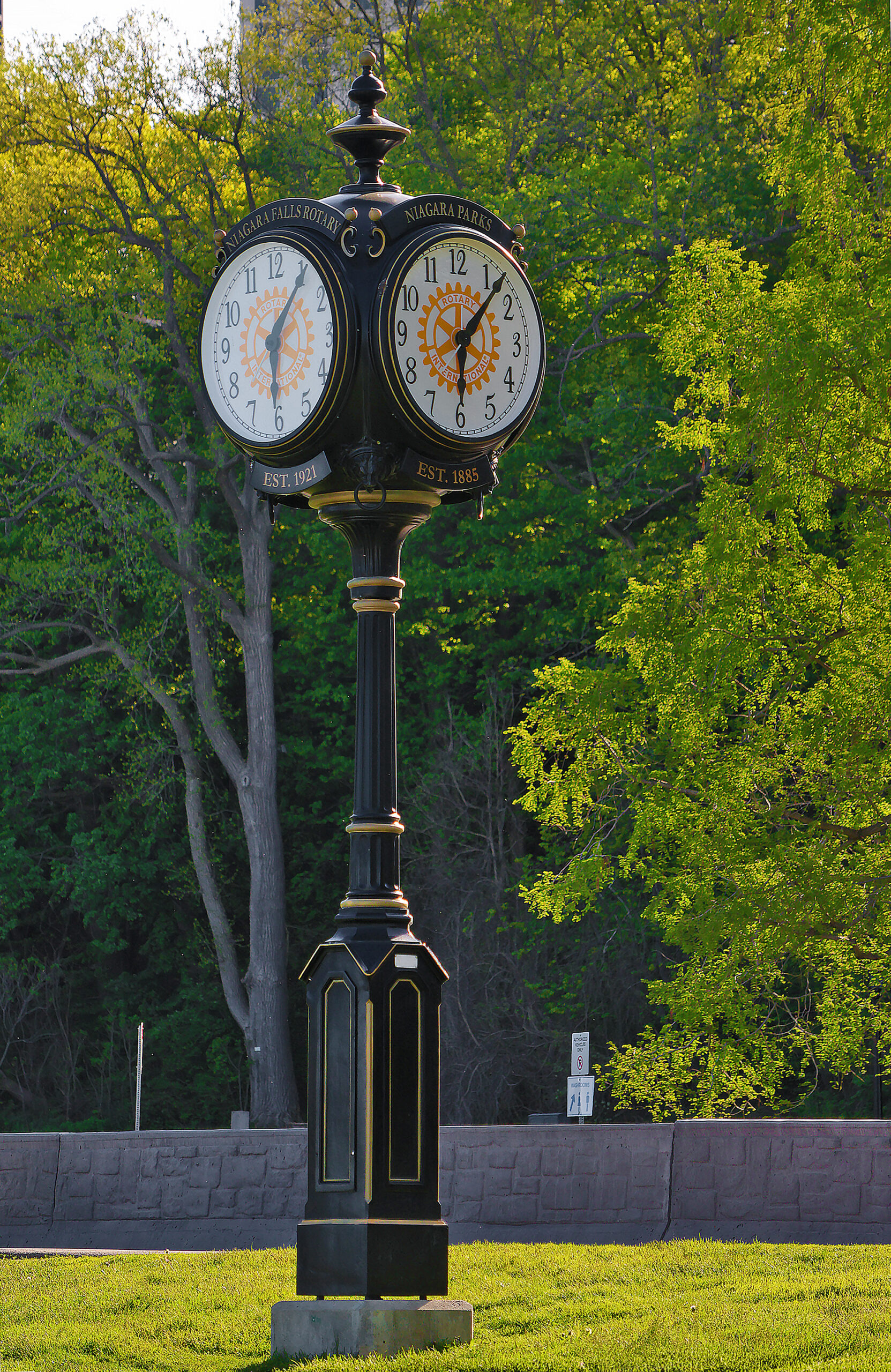
The concept of time zones was first introduced in the United States by railroad companies in 1883.
In an effort to conserve fuel during World War I, countries in Europe followed the lead of Germany in observing Daylight Saving Time effective as of Monday, May 1, 1916. The rest of Europe soon followed. Although parts of the United States inconsistently also observed some form of Daylight Saving Time in 1916, the plan itself was not adopted nationwide until the Standard Time Act of 1918 was adapted on Tuesday, March 19, 1918, which confirmed the existing standard time zone system and set Daylight Saving Time to occur effective as of Sunday, March 31, 1918 and continue through Sunday, October 27, 1918, when standard time was back in effect.
For much of its history, Daylight Saving Time in the United States lasted approximately six months — from May through October of each year — and standard time was in effect for the remaining six months. However, the duration of Daylight Saving Time was extended at least twice:
- Members of the House of Representatives amended the Uniform Time Act in 1986 by changing the beginning of Daylight Saving Time to the first Sunday in April and having the end remain on the last Sunday in October, effective from 1987 to 2006. The time was adjusted at 2:00 in the morning local time.
- Daylight Saving Time was extended again in 2007 due to the Energy Policy Act of 2005 to begin on the second Sunday of March and end on the first Sunday of November. During years when April 1 falls on Monday through Wednesday, these changes result in a Daylight Saving Time period which is five weeks longer; in all other years, the Daylight Saving Time period is instead four weeks longer. Daylight Saving Time ended at 2:00 in the morning — which became 1:00 in the morning standard time — on Sunday, November 2, 2008; and on Sunday, March 8, 2009, Daylight Saving Time began at 2:00 in the morning standard time, which became 3:00 in the morning Daylight Saving Time.
Final Boarding Call

I do not suffer from jet lag; so changes in time zones — coupled with Daylight Saving Time — never did bother me; and I never had a strong opinion pertaining to the changing of clocks twice per year. I wish I could say the same for my one stint in southern Indiana years ago when I thought I arrived at an appointment 15 minutes early but instead wound up being 45 minutes late. To me, that was the worst part of visiting the state of Indiana.

When I originally asked for your thoughts in this article — which was published on Thursday, March 17, 2022 — as to whether Daylight Saving Time should be in effect all year round; should the current system remain intact; or should Daylight Saving Time be eliminated altogether, none of the readers of The Gate With Brian Cohen expressed support for the change in time twice per year.
“Eliminate Daylight Savings Time, and put the country on Standard Time year-round”, Tracy S opined.
“I am not terribly time dependent – I never really notice the change – but I hate the back and forth, never remembering which period we are in and how it relates to areas that do not change”, NB_ga commented. “So, as far as I am concerned, pick one, either one, and stay there.”
I cannot argue with those opinions…
All photographs ©2026 by Brian Cohen.
