
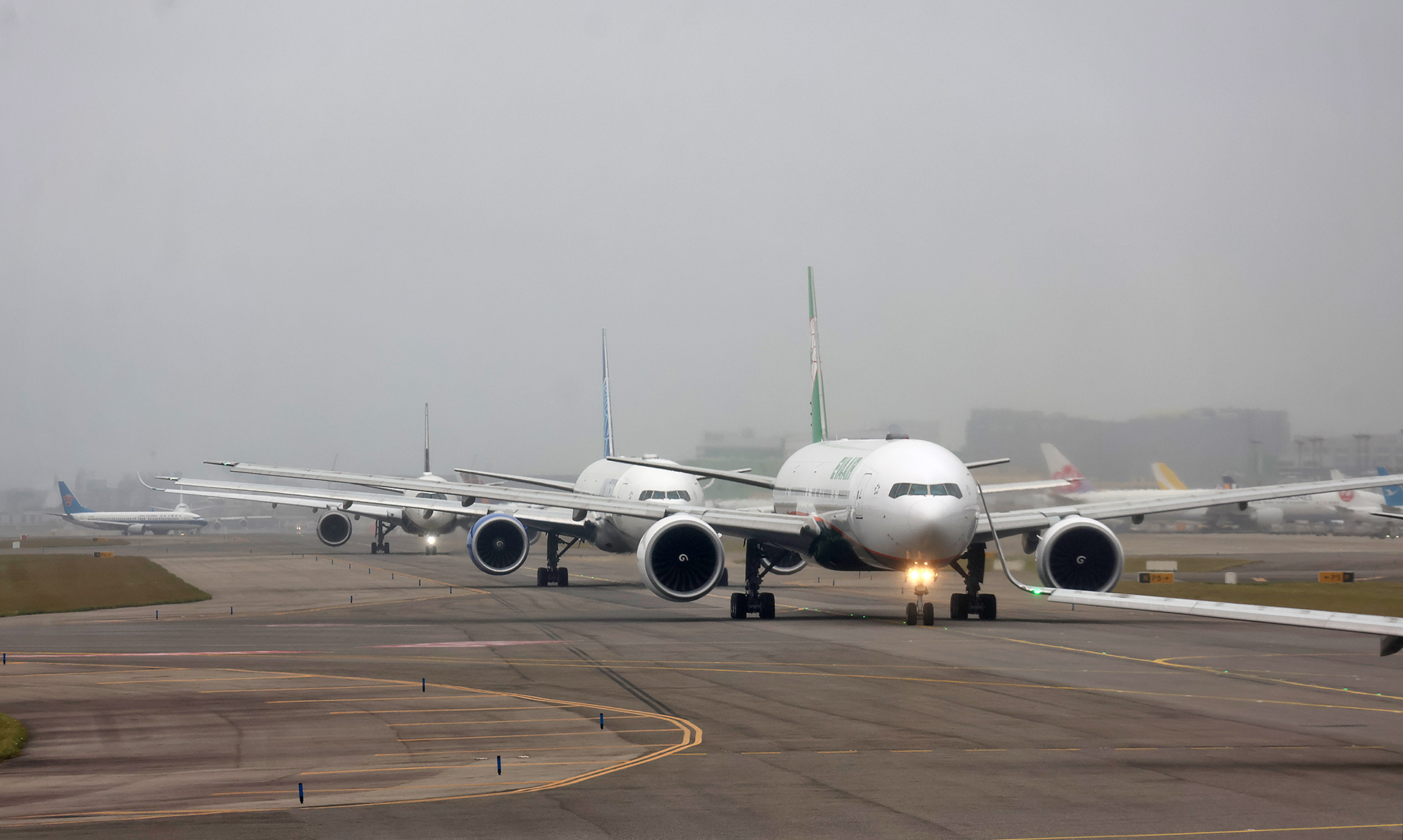

Wildfires in Canada bring poor air quality to United States in this July 2026 travel alert, which has led to hazy orange skies and closures or cancellations of events — such as the cancellation of the nightly fireworks display at Niagara Falls effective as of Wednesday, July 15, 2026 as one of numerous examples.
Wildfires in Canada Bring Poor Air Quality to United States: July 2026 Travel Alert
At least 150 of the 950 wildfires that have been reported in Canada in 2026 are currently classified as “out of control”, according to this official Internet web site of the government of Canada.
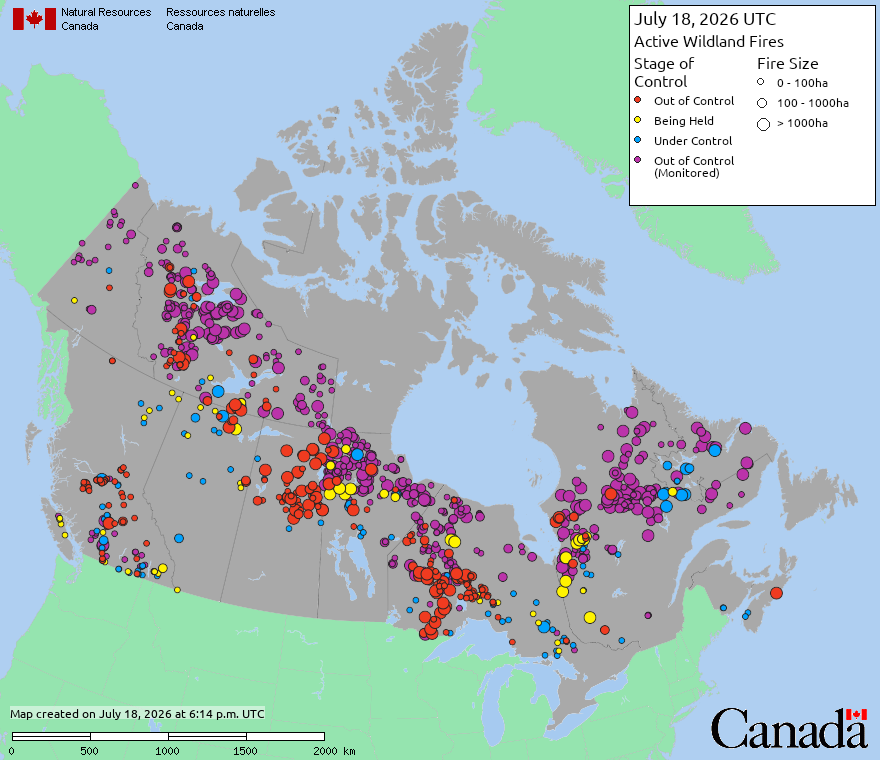
Worse is that many of the fires that are out of control — which are indicated by the red and purple dots in the map shown above — are in remote areas that are difficult to reach. Diverting resources from more popular areas — such as Banff National Park as one example — would largely be a waste of effort and money; and could result in a worse situation if a wildfire suddenly started and quickly became out of control in that national park. This means that in regions such as the northern parts of Manitoba, Ontario, and Québec, little more can be done than to let the wildfires burn themselves out, as many of the areas that are indicated with purple dots can only be monitored.
Air quality emergencies are currently in effect in at least 21 states in the United States — including Maryland, which is under a Code Red quality condition as ordered by its governor.
Winds in the atmosphere are carrying the smoke southeast into the United States, where many regions have reported poor air quality. In some areas, the air quality was so poor that people were advised to stay indoors with their climate control systems set to recirculate air as smoke and fine particles produced from the wildfires continue to spread over the region.
People who are sensitive to the degraded quality of air should consider limiting the time they spend outdoors and avoid prolonged or heavy exertion until the air quality improves. Anyone who is sensitive to air pollution — including young children, older adults, people with respiratory problems such as asthma, or people with heart conditions — should avoid outdoor exertion altogether. People who must be outside — such as outdoor workers — should wear a mask; and be alert for symptoms such as difficulty breathing.
The following statement is at the official Internet web site of Niagara Falls Tourism:
The Niagara Falls Fireworks program has been paused in response to ongoing wildfire smoke and air quality advisories affecting many parts of Canada, including the Niagara region. The program will remain paused until air quality conditions improve. Niagara Falls Fireworks stakeholders recognize the significant toll this wildfire season is taking on residents, firefighters, military personnel, and first responders, as well as their families, and extend their gratitude for their sacrifice and service. Further updates on the resumption of the fireworks program will be shared as conditions develop. The air quality alert will remain in effect until a cancellation notice is issued. For the most up to date information on air quality, please go to: AirHealth.ca or AirQualityOntario.ca.
Click here to find out the quality of air where you are located.
If all of this was not bad enough, the northeastern United States is also expecting severe weather in the form of thunderstorms, which all hopefully wash much of the smoky air out of the atmosphere — if only temporarily.
Flight Waivers, Delays and Cancellations
If you are traveling to, from, or within the northeastern United States over the next few days, expect delays and cancellations of flights. Keep up to date on the latest information pertaining to the wildfires which may adversely affect your travel plans, as wildfires are unpredictable and can change on a moment’s notice. Better yet, postponing or canceling your trip might be a better option — no matter which mode of travel you plan on taking.
If you have a flight scheduled, your flight may be delayed or canceled — and you may be eligible for a waiver of a fee to change your itinerary.
Here are seven airlines which have issued travel alerts as a result of the wildfires — as well as severe weather in the northeastern United States:
- American Airlines has issued travel alerts for:
- 18 airports in five states due to poor air quality for Thursday, July 16, 2026 through Saturday, July 18, 2026; and Tuesday, July 21, 2026 is the last day on which tickets must be reissued and rebooked travel must begin.
- Eleven airports in eight states due to severe weather for Friday, July 17, 2026 through Saturday, July 18, 2026; and Wednesday, July 22, 2026 is the last day on which tickets must be reissued and rebooked travel must begin.
- Delta Air Lines has issued travel alerts for:
- 13 airports in three states due to poor air quality for Thursday, July 16, 2026 through Saturday, July 18, 2026; and Tuesday, July 21, 2026 is the last day on which tickets must be reissued and rebooked travel must begin.
- Newark and three airports in New York due to severe weather for Thursday, July 16, 2026 through Saturday, July 18, 2026; and Tuesday, July 21, 2026 is the last day on which tickets must be reissued and rebooked travel must begin.
- United Airlines has issued travel alerts for:
- Toronto and 16 airports in four states due to poor air quality for Friday, July 17, 2026 through Saturday, July 18, 2026; and Monday, July 20, 2026 is the last day on which tickets must be reissued and rebooked travel must begin.
- Nine airports in seven states due to severe weather for Saturday, July 18, 2026; and Wednesday, July 22, 2026 is the last day on which tickets must be reissued and rebooked travel must begin.
- Southwest Airlines has issued travel alerts for:
- Cleveland, Detroit, Grand Rapids, Milwaukee, and Minneapolis-Saint Paul due to poor air quality for Friday, July 17, 2026 through Saturday, July 18, 2026; and Saturday, August 1, 2026 is the last day on which tickets must be reissued and rebooked travel must begin.
- Eight airports in seven states due to severe weather for Saturday, July 18, 2026; and Saturday, August 1, 2026 is the last day on which tickets must be reissued and rebooked travel must begin.
- JetBlue Airways has issued travel alerts for:
- Buffalo, Cleveland, Detroit, Milwaukee, Rochester, and Syracuse due to poor air quality for Friday, July 17, 2026 through Saturday, July 18, 2026; and Thursday, July 23, 2026 is the last day on which tickets must be reissued and rebooked travel must begin.
- Newark and three airports in New York due to severe weather for Saturday, July 18, 2026; and Thursday, July 23, 2026 is the last day on which tickets must be reissued and rebooked travel must begin.
- Air Canada has issued travel alerts for:
- Four airports in Ontario and Québec and five airports in four states for Saturday, July 18, 2026.
- Newark for Saturday, July 18, 2026 through Sunday, July 19, 2026.
- Porter Airlines has issued travel alerts for both airports which serve Toronto for Saturday, July 18, 2026.
Final Boarding Call
If you are traveling to, from, or within portions of the eastern United States over the next several days or so, delays and cancellations of flights could occur — and even if no travel waivers have officially been issued by any of the airlines, cancellations or closures of events are still possible; and the quality of the air will be unhealthy for people who are sensitive. Keep up to date on the latest information pertaining to the wildfires which may adversely affect your travel plans.
Although some relief is expected later today, air quality will continue to be questionable as long as the wildfires continue out of control in Canada.
If you have a flight scheduled, your flight may be delayed or canceled — and you may be eligible for a waiver of a fee to change your itinerary.
Be sure to contact your airline or transportation provider for the latest information pertaining to your travels — if they are adversely affected — and do not be surprised if new travel waivers are issued or existing travel waivers are extended.
If you are traveling by motor vehicle, roads could potentially be temporarily closed due to smoke and fire.
Just be sure to please travel safely.
Photograph ©2017 by Brian Cohen.
