

The number of hotel and resort properties that house multiple brands has been increasing over the years — especially as multinational lodging companies continue to introduce new brands — and this article discusses the advantages and disadvantages to this concept of lodging.
Hotel Properties With Multiple Brands: Advantages and Disadvantages
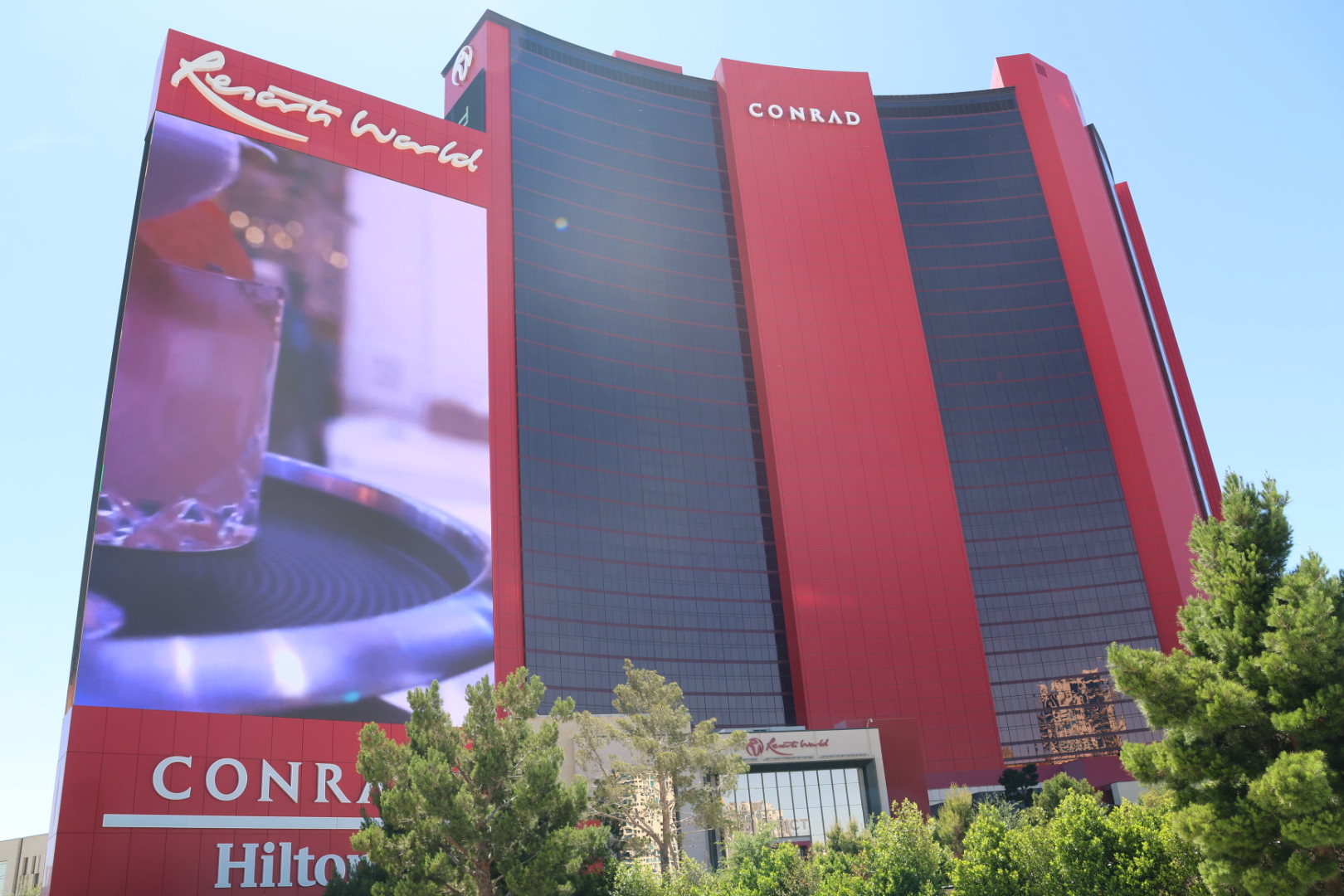
I am currently staying at Resorts World Las Vegas, which is comprised of three brands of Hilton: Conrad, Hilton, and LXR — which reminded of me of this article titled Are Dual-Branded Hotel Properties Becoming More Popular?, which was published at 2:38 in the morning on Monday, April 24, 2017…
…but as is the case with Resorts World Las Vegas, multiple brands can exist at a single property.
When Brands From Different Lodging Companies Share the Same Building
Two brands of the same lodging company may not be so unusual; but two brands of different lodging companies might seem quirky. Consider the project that was announced in August of 2015 in which Hilton and Hyatt Hotels Corporation partnered in sharing a new hotel property — to house a Canopy by Hilton and a Hyatt House — with almost 300,000 square feet and 413 rooms, which opened sometime during the autumn of 2017 in a development known as The Wharf on the shore of the Potomac River in southwestern District of Columbia.
Since that opening, I visited the Canopy by Hilton Washington DC The Wharf hotel property.
Hotel and resort properties that house multiple brands is certainly not a new concept. “Dual-brand properties in the Hilton and Hyatt systems are essentially each two complete hotels joined together”, according to this article written back in 2013 by Ed Watkins of Hotel News Now. “Choice Hotels International has a different strategy in which elements of two of its brands (Sleep Inn and the extended stay MainStay Suites) are combined into one property, typically with between 60 and 120 rooms.”
The trend for hotel and resort properties that house multiple brands — basically considered an anomaly fewer than 20 years ago — has been increasing in recent years. Developers like the concept because it allows them to tie up the market. Multinational lodging companies — such as Marriott International, Incorporated — have been known to locate different properties within sight of each other, which force two separate owners to compete for guests. As one of many examples, the developer can go after both the select-service and extended-stay hotel customers with one property — with less chance of local competition — with multiple brands.
Both purchasers and investors favor hotel and resort properties that house multiple brands because of their better chance at cash flow, as owners like multiple brands because they bring in more guests, operators like it for efficiency, and brands are amenable — yet wary — to the strategy.
Advantages to Hotel Properties That House Multiple Brands
Brands and owners see a variety of potential advantages for hotel and resort properties that house multiple brands:
- Land Costs: Some of the most attractive locations for hotel properties — such as a central location within a major city — are also some of the costliest locations due to a number of factors which include limited land area. Locating two brands on a single site may potentially lead to the more efficient use of that limited land area. A particular location might support two different brands with 150 rooms each better than a single hotel property with 300 rooms.
- Construction Costs: Similar to land costs, two hotel properties at a single location may be able to share back of the house facilities, fitness centers, swimming pools, parking, and even common areas or front desk space. Moreover, costs related to plans, permits, fees, and entitlements can be shared, which potentially results in greater efficiencies.
- Operating Savings: Two hotel properties may be able to share personnel who would otherwise be underutilized — such as members of the engineering staff or maintenance personnel. Overall lower staffing levels may also be potentially possible by allowing one hotel property to “borrow” personnel from another hotel property to address higher occupancy.
- Premium Pricing: Although little more than anecdotal evidence is available, the managers of brands will often argue that where a lower chain scale property is matched with a higher one — an upper midscale property with a midscale property as one example — the lower scale property will see higher rates, rather than depressing the rates of the higher scale.
Disadvantages to Hotel Properties That House Multiple Brands
Potential disadvantages for hotel and resort properties that house multiple brands include the following:
- Limited Choice: Multinational lodging companies are loathe to allow their brands to mix with those of other lodging companies. For example, they may insist on separate external entrances — despite sharing a building. This could lead to the potential of fewer choices among hotel brands — although the proliferation of different brands by multinational lodging companies may at least partially offset that limitation.
- Choosing the Brands: When two hotel brands are located within the same building, the owner must consider not only which is the right brand; but also how to choose brands which complement each other while simultaneously not cannibalizing the business of each other.
- Duplication of Services and Facilities: Sharing facilities and services could save money between the two brands; but enough differences may exist between brands where duplication of services and facilities is required — leading to two sets of fitness centers, swimming pools, front desks, and elevators dedicated to each hotel brand; as well as dedicated personnel to ensure that brand standards are strictly observed for each hotel property.
- Property Maintenance: Brand upgrades and improvements may be difficult to coordinate due to potentially different schedules, which can result in conflicts where the two brands overlap — especially for the aforementioned sharing of facilities and services.
- Maintaining Separate Identities: Keeping guest experiences separate is critical for maintaining the brand identity of each hotel property within the same building — as well as measuring the performance of each hotel property. For example, a Ritz Carlton sharing the same building with a Fairfield Inn can be difficult if nothing completely physically separates the two hotel properties — which basically defeats the purpose of sharing the building in the first place and could negate any cost savings.
- Legal Issues: Is terminating one brand agreement and not the other possible? What are the consequences of that termination on hoped-for benefits of multi-branding? For a management company, will performance standards — including both incentive fees and termination rights — be calculated on the basis of combined performance, or the individual performance of each property? These are questions for which there is little precedence and need to be addressed.
How You Can Benefit From Hotel Properties That House Multiple Brands
If you engage in a practice called hotel hopping, the benefit to you is obvious: if the multiple hotel concepts participate in the same frequent guest membership program, then you can easily accelerate your earning of elite level status.
Earning points in different frequent guest membership programs is also easier if the brands of the different hotels are part of different lodging companies if you are active in more than one frequent guest loyalty program.

When different concepts share the same building, you can try them more easily if you are staying for two or more nights at a certain location. The larger lodging companies can have up to 40 different brands in their portfolios.
Final Boarding Call
According to my personal experience, another benefit to guests is that I stayed at a hotel property that housed both the Tru by Hilton and Home2 Suites by Hilton brands a couple of years ago. I stayed as a guest on the Tru by Hilton side; but the complimentary breakfast offering was clearly improved because it was shared with Home2 Suites by Hilton. I do not recall the room rates at Tru by Hilton being noticeably expensive.
I have also stayed at a Caption by Hyatt hotel property in Memphis — I was the very first guest of that brand — which shared amenities with the Hyatt Centric hotel property next door; but they were still physically connected. Guests at each hotel property could share the amenities that were offered by the other hotel property.
Economics seems to be the primary factor in the concept, with no discernible disadvantages to the consumer — but the concept is a winner when those economics translate to more choices at reasonable prices for customers.
Have you stayed at hotel and resort properties that house multiple brands? If so, what are your thoughts pertaining to your experience?
Photograph ©2026 by Brian Cohen.
